NEC Laboratories America

Integrated Systems | Kunal Rao

Kunal Rao

Kunal Rao

Researcher

Integrated Systems

Linkedin Logo

About

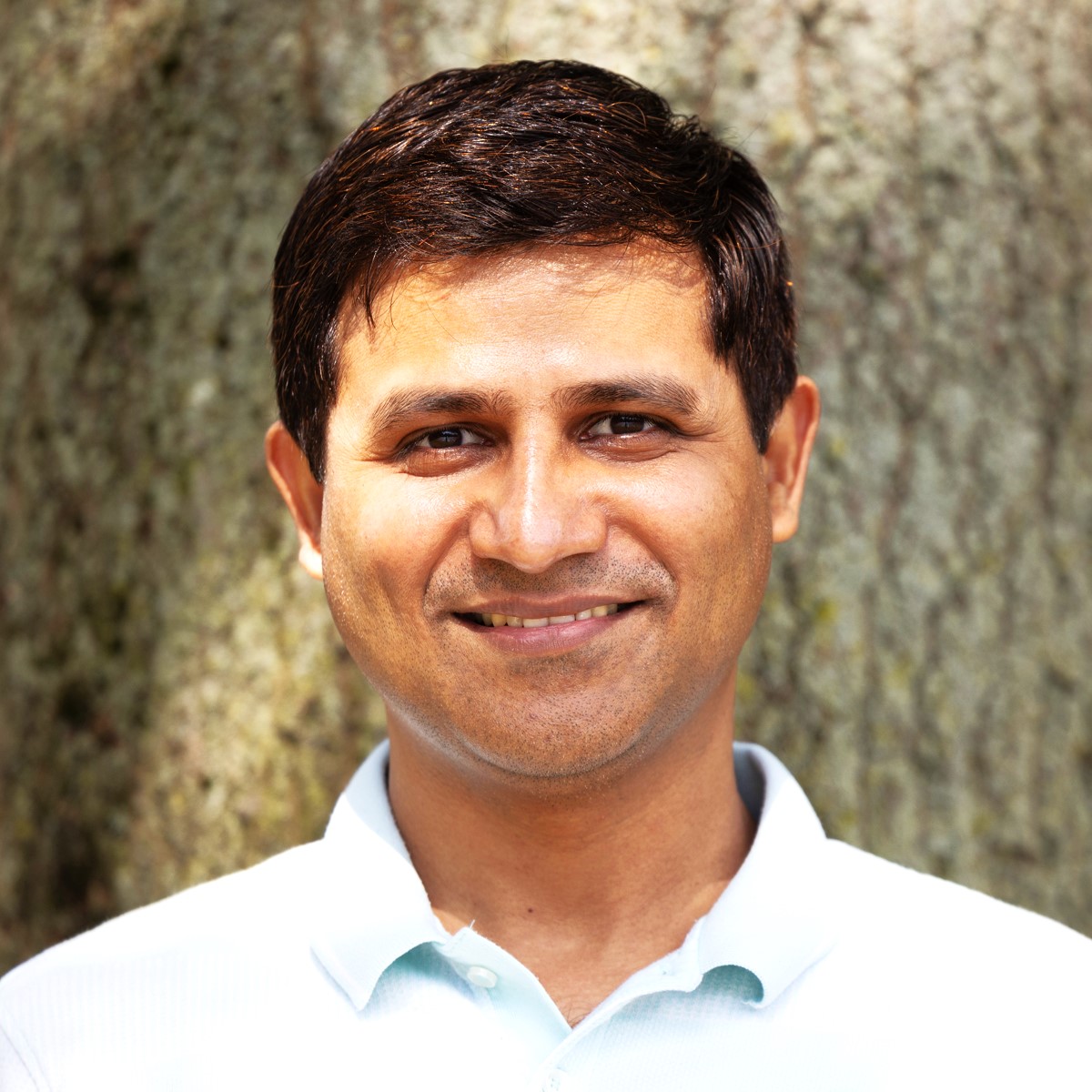
Kunal Rao is a Researcher in the Integrated Systems Department at NEC Laboratories America in Princeton, New Jersey. He earned his Bachelor of Technology from COEP Technological University and his M.S. in Electrical and Computer Engineering from the University of Florida.

Kunal has led multiple research and development initiatives from concept to deployment, spanning early system design, prototyping, customer-facing proofs of concept, and production-ready implementations. His work has resulted in several technical recognitions and awards. His recent work focuses on AI/ML-driven systems, including Generative AI applications and platforms. More broadly, his research interests include distributed systems, edge and cloud computing, real-time processing, video analytics pipelines, graph computing and analytics, and middleware for high-performance, parallel, and heterogeneous computing.

Over the course of his research career, Kunal has authored or co-authored more than 30 peer-reviewed conference and journal publications. He is also an inventor or co-inventor for over 30 granted U.S. and international patents, with many additional patent applications pending.

Publications

Giuseppe Coviello Presents at HiPES 2026 | Euro-Par in Pisa, Italy on August 25th

Giuseppe Coviello of NEC Laboratories America presents “Völ: A Domain-Specific Language and Runtime for AI-Native Workflows” at HiPES 2026, held alongside Euro-Par in Pisa, Italy on August 25th. Völ lets developers describe AI workflows declaratively, leaving execution to the runtime.

RunAgent: Interpreting Natural-Language Plans with Constraint-Guided Execution (IEEE)

Humans solve problems by executing targeted plans, yet large language models (LLMs) remain unreliable for structured workflow execution. We propose RunAgent, a multiagent plan execution platform that interprets natural-language plans while enforcing stepwise execution through constraints and rubrics.

Future of Cloud Computing with GenAI: Kunal Rao at Cloud Computing 2026

Generative AI is transforming cloud computing. At Cloud Computing 2026, Kunal Rao will chair the GenAI4Cloud track and deliver a keynote on software engineering in the AI era, exploring how AI agents, LLMs, and intelligent infrastructure are redefining the cloud stack.

Agentic Placement of Microservices on the Computing Continuum

Deploying microservices across the computing continuum (edge–cloud) requires placement decisions that adapt to workload variation and heterogeneous infrastructure, yet existing solutions often rely on static policies or opaque heuristics. We present Bellona a system for reliable and auditable Large

TacTool: Tactical Tool usage in Agentic AI Systems

Large language models (LLMs) are becoming the centerpiece in the design and deployment of Agentic artificial intelligence (AI) systems. AI agents typically have (a) reasoning ability to analyze and think through the given task, (b) context/memory to remember things in the short-term and long-term, and

TalentScout: Multimodal AI-Driven Expert Finding in Organizations

Identifying subject-matter experts within organizations remains a challenging task due to the scale, heterogeneity, and unstructured nature of enterprise knowledge assets. We present TalentScout, an AI-driven expert identification system that constructs a unified, skill-centric knowledge graph by ingesting

SlideCraft: Context-aware Slides Generation Agent

Creating effective slide presentations requires adapting both content and structure to match the communication context e.g. whether the presentation is for summarizing to executives, or reporting progress to research supervisors. In research and enterprise environments, this need for context-sensitive

Murugan Sankaradas presents TalentScout: Multimodal AI-Driven Expert Finding in Organizations at PICom2025 on October 21st

Murugan Sankaradas (presenting virtually) will present “TalentScout: Multimodal AI-Driven Expert Finding in Organizations” at the IEEE International Conference on Pervasive Intelligence and Computing (PICom2025) on Tuesday, October 21 (10:30am–12pm JST) | Monday, October 20 (9:30–11pm ET) in

Kunal Rao presents SlideCraft: Context-Aware Slides Generation Agent at PICom 2025 on October 21st

Kunal Rao (presenting virtually) will present “SlideCraft: Context-Aware Slides Generation Agent” at the IEEE International Conference on Pervasive Intelligence and Computing hashtag#PICom2025 on Tuesday, Oct 21 (10:30am–12pm JST) | Monday, Oct 20 (9:30–11pm ET) in Hokkaido, Japan. SlideCraft

Bifröst: Peer-to-peer Load-balancing for Function Execution in Agentic AI Systems

Agentic AI systems rely on Large Language Models (LLMs) to execute complex tasks by invoking external functions. The efficiency of these systems depends on how well function execution is managed, especially under heterogeneous and high-variance workloads, where function execution times can range from

XPF: Agentic AI System for Business Workflow Automation

In this paper, we propose a novel agentic AI system called XPF, which enables users to create “agents” using just natural language, where each agent is capable of executing complex, real-world business workflows in an accurate and reliable manner. XPF provides an interface to develop and iterate over

Latency-driven Execution of LLM-generated Application Code on the Computing Continuum

Latency-critical applications demand quick responses. Ideally, detailed insights are preferable for the best decision making and response actions. However, in situations when detailed insights cannot be provided quickly, even basic information goes a long way in tackling the situation effectively. For

LLM-based Distributed Code Generation and Cost-Efficient Execution in the Cloud

The advancement of Generative Artificial Intelligence (AI), particularly Large Language Models (LLMs), is reshaping the software industry by automating code generation. Many LLM-driven distributed processing systems rely on serial code generation constrained by predefined libraries, limiting flexibility

CAMTUNER: Adaptive Video Analytics Pipelines via Real-time Automated Camera Parameter Tuning

In Video Analytics Pipelines (VAP), Analytics Units (AUs) such as object detection and face recognition operating on remote servers rely heavily on surveillance cameras to capture high-quality video streams to achieve high accuracy. Modern network cameras offer an array of parameters that directly influence

DiCE-M: Distributed Code Generation and Execution for Marine Applications – An Edge-Cloud Approach

Edge computing has emerged as a transformative technology that reduces application latency, improves cost efficiency, enhances security, and enables large-scale deployment of applications across various domains. In environmental monitoring, systems such as MegaSense[49], use low-cost sensors to gather

DiCE: Distributed Code generation and Execution

Generative artificial intelligence (GenAI), specifically, Large Language Models (LLMs), have shown tremendous potential in automating several tasks and improving human productivity. Recent works have shown them to be quite useful in writing and summarizing text (articles, blogs, poems, stories, songs,

ECO-LLM: LLM-based Edge Cloud Optimization

AI/ML techniques have been used to solve systems problems, but their applicability to customize solutions on-the-fly has been limited. Traditionally, any customization required manually changing the AI/ML model or modifying the code, configuration parameters, application settings, etc. This incurs too

CLAP: Cost and Latency-Aware Placement of Microservices on the Computing Continuum

For microservices-based real-time stream processing applications, computing at the edge delivers fast responses for low workloads, but as workload increases, the response time starts to slow down due to limited compute capacity. Abundant compute capacity in the cloud delivers fast responses even for

LARA: Latency-Aware Resource Allocator for Stream Processing Applications

One of the key metrics of interest for stream processing applications is “latency”, which indicates the total time it takes for the application to process and generate insights from streaming input data. For mission-critical video analytics applications like surveillance and monitoring, it is of paramount

Scale Up while Scaling Out Microservices in Video Analytics Pipelines

Modern video analytics applications comprise multiple microservices chained together as pipelines and executed on container orchestration platforms like Kubernetes. Kubernetes automatically handles the scaling of these microservices for efficient application execution. There are two popular choices for

AnB: Application-In-A-Box To Rapidly Deploy and Self-Optimize 5G Apps

We present Application in a Box (AnB) product concept aimed at simplifying the deployment and operation of remote 5G applications. AnB comes pre-configured with all necessary hardware and software components, including sensors like cameras, hardware and software components for a local 5G wireless network,

Elixir: A System To Enhance Data Quality For Multiple Analytics On A Video Stream

IoT sensors, especially video cameras, are ubiquitously deployed around the world to perform a variety of computer vision tasks in several verticals including retail, health- care, safety and security, transportation, manufacturing, etc. To amortize their high deployment effort and cost, it is desirable

Content-aware auto-scaling of stream processing applications on container orchestration platforms

Modern applications are designed as an interacting set of microservices, and these applications are typically deployed on container orchestration platforms like Kubernetes. Several attractive features in Kubernetes make it a popular choice for deploying applications, and automatic scaling is one such

APT: Adaptive Perceptual quality based camera Tuning using reinforcement learning

Cameras are increasingly being deployed in cities, enterprises and roads world-wide to enable many applications in public safety, intelligent transportation, retail, healthcare and manufacturing. Often, after initial deployment of the cameras, the environmental conditions and the scenes around these

DataX Allocator: Dynamic resource management for stream analytics at the Edge

Serverless edge computing aims to deploy and manage applications so that developers are unaware of challenges associated with dynamic management, sharing, and maintenance of the edge infrastructure. However, this is a non-trivial task because the resource usage by various edge applications varies based

Enhancing Video Analytics Accuracy via Real-time Automated Camera Parameter Tuning

In Video Analytics Pipelines (VAP), Analytics Units (AUs) such as object detection and face recognition running on remote servers critically rely on surveillance cameras to capture high-quality video streams in order to achieve high accuracy. Modern IP cameras come with a large number of camera parameters

Why is the video analytics accuracy fluctuating, and what can we do about it?

It is a common practice to think of a video as a sequence of images (frames), and re-use deep neural network models that are trained only on images for similar analytics tasks on videos. In this paper, we show that this “leap of faith” that deep learning models that work well on images will also

DataXc: Flexible and efficient communication in microservices-based stream analytics pipelines

A big challenge in changing a monolithic application into a performant microservices-based application is the design of efficient mechanisms for microservices to communicate with each other. Prior proposals range from custom point-to-point communication among microservices using protocols like gRPC to

Application-specific, Dynamic Reservation of 5G Compute and Network Resources by using Reinforcement Learning

5G services and applications explicitly reserve compute and network resources in today’s complex and dynamic infrastructure of multi-tiered computing and cellular networking to ensure application-specific service quality metrics, and the infrastructure providers charge the 5G services for the resources

ROMA: Resource Orchestration for Microservices-based 5G Applications

With the growth of 5G, Internet of Things (IoT), edge computing and cloud computing technologies, the infrastructure (compute and network) available to emerging applications (AR/VR, autonomous driving, industry 4.0, etc.) has become quite complex. There are multiple tiers of computing (IoT devices, near

DataXe: A System for Application Self-optimization in Serverless Edge Computing Environments

A key barrier to building performant, remotely managed and self-optimizing multi-sensor, distributed stream processing edge applications is high programming complexity. We recently proposed DataX [1], a novel platform that improves programmer productivity by enabling easy exchange, transformations, and

Edge-based fever screening system over private 5G

Edge computing and 5G have made it possible to perform analytics closer to the source of data and achieve super-low latency response times, which isn’t possible with centralized cloud deployment. In this paper, we present a novel fever screening system, which uses edge machine learning techniques and

SmartSlice: Dynamic, Self-optimization of Application’s QoS requests to 5G networks

Applications can tailor a network slice by specifying a variety of QoS attributes related to application-specific performance, function or operation. However, some QoS attributes like guaranteed bandwidth required by the application do vary over time. For example, network bandwidth needs of video streams

Magic-Pipe: Self-optimizing video analytics pipelines

Microservices-based video analytics pipelines routinely use multiple deep convolutional neural networks. We observe that the best allocation of resources to deep learning engines (or microservices) in a pipeline, and the best configuration of parameters for each engine vary over time, often at a timescale

CamTuner: Reinforcement Learning based System for Camera Parameter Tuning to enhance Analytics

Video analytics systems critically rely on video cameras, which capture high quality video frames, to achieve high analytics accuracy. Although modern video cameras often expose tens of configurable parameter settings that can be set by end users, deployment of surveillance cameras today often uses a

AppSlice: A system for application-centric design of 5G and edge computing applications

Applications that use edge computing and 5G to improve response times consume both compute and network resources. However, 5G networks manage only network resources without considering the application’s compute requirements, and container orchestration frameworks manage only compute resources without

DataX: A system for Data eXchange and transformation of streams

The exponential growth in smart sensors and rapid progress in 5G networks is creating a world awash with data streams. However, a key barrier to building performant multi-sensor, distributed stream processing applications is high programming complexity. We propose DataX, a novel platform that improves

F3S: Free Flow Fever Screening

Identification of people with elevated body temperature can reduce or dramatically slow down the spread of infectious diseases like COVID-19. We present a novel fever-screening system, F 3 S, that uses edge machine learning techniques to accurately measure core body temperatures of multiple individuals

ECO: Edge-Cloud Optimization of 5G applications

Centralized cloud computing with 100+ milliseconds network latencies cannot meet the tens of milliseconds to sub-millisecond response times required for emerging 5G applications like autonomous driving, smart manufacturing, tactile internet, and augmented or virtual reality. We describe a new, dynamic