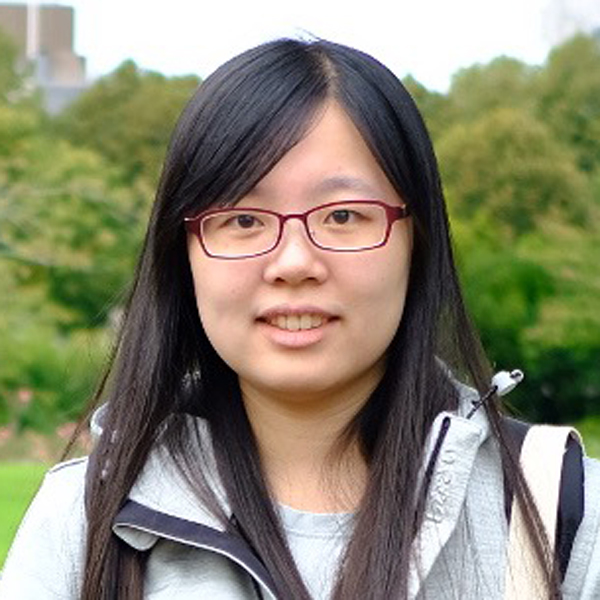
Yi-Wen Chen is a Researcher in the Media Analytics Department at NEC Laboratories America in San Jose, CA. She received her PhD in Computer Science from the University of California, Merced, where she studied multimodal machine learning and representation fusion for cross-sensor applications. She received her MS in Communication Engineering and her BS in Electrical Engineering from National Taiwan University.
At NEC, Dr. Chen’s research centers on vision–language models (VLMs), multimodal learning, and video understanding, with an emphasis on robustness, generalization, and interpretability for real-world deployments. Her recent work spans open-vocabulary / zero-shot recognition, entity grounding with LLM assistance, and text-conditioned image editing with localized control—pushing models to align fine-grained language cues with visual regions and to hold up under domain shift. She also studies temporal grounding in video, cross-modal attention/fusion for cross-sensor applications, and evaluation protocols that probe compositional reasoning and failure modes (e.g., caption drift, representation collapse, and shortcut learning). Collectively, these threads aim to make VLMs safer, more reliable, and more explainable, enabling human-centered AI for security, accessibility, and assistive scenarios.