NEC Laboratories America

Zaid Tasneem | Media Analytics

MEDIA ANALYTICS

PROJECTS

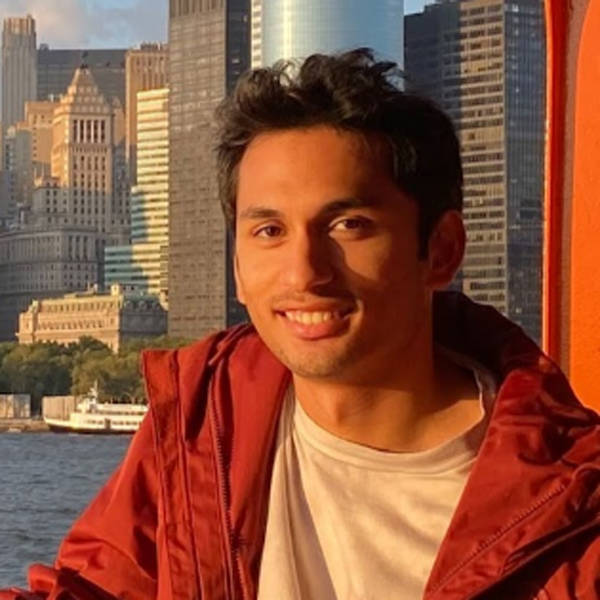
Zaid Tasneem

Zaid Tasneem

Researcher

Media Analytics

Linkedin Logo

About

Zaid Tasneem is a Researcher in the Media Analytics Department at NEC Laboratories America in San Jose, CA. He received his PhD in Electrical and Computer Engineering from Rice University, his MS in Electrical and Computer Engineering from the University of Florida, and his B.Tech. in Mechanical Engineering from the Indian Institute of Technology, Kanpur.

Dr. Tasneem’s academic training spans computational imaging, neural rendering, privacy-enhancing technologies, and decentralized learning frameworks. This multidisciplinary foundation enables him to tackle core challenges in machine perception, multimodal reasoning, and privacy-aware AI. At NEC, his research focuses on developing agentic simulation frameworks and generative modeling techniques for autonomous driving. His work advances the creation of language-controllable, realistic, and scalable simulations that capture rare and safety-critical events, empowering autonomous systems to learn and adapt in complex real-world environments.

Through these efforts, Dr. Tasneem contributes to NEC’s next-generation media intelligence and autonomy platforms, with applications in simulation, privacy-aware monitoring, and robust multimodal reasoning. His research aims to bridge the gap between large-scale data generation and the reliable deployment of AI, helping to address some of the most pressing challenges in safety, privacy, and trustworthy machine intelligence.

Publications

Teaching AI to Edit Driving Scenes It Has Never Seen with HorizonWeaver

Our HorizonWeaver software edits driving scenes with instruction-guided AI, adding traffic, changing weather, and generalizing to unseen roads, all while preserving the safety-critical details that keep autonomous vehicle testing honest.

HorizonForge: Driving Scene Editing with Any Trajectories and Any Vehicles

Controllable driving scene generation is critical for realistic and scalable autonomous driving simulation, yet existing approaches struggle to jointly achieve photorealism and precise control. We introduce HorizonForge, a unified framework that reconstructs scenes as editable Gaussian Splats and Meshes,

HorizonWeaver: Generalizable Multi-Level Semantic Editing for Driving Scenes

Ensuring safety in autonomous driving requires scalable generation of realistic, controllable driving scenes beyond what real-world testing provides. Yet existing instruction guided image editors, trained on object-centric or artistic data, struggle with dense, safety-critical driving layouts. We propose

LangDriveCTRL: Natural Language Controllable Driving Scene Editing with Multi-modal Agents

LangDriveCTRL is a natural-language-controllable framework for editing real-world driving videos to synthesize diverse traffic scenarios. It represents each video as an explicit 3D scene graph, decomposing the scene into a static background and dynamic object nodes. To enable fine-grained editing and

NEC Labs America Attends CVPR 2026 in Denver, CO June 3-7, 2026

NEC Labs America headed to Denver for CVPR 2026, one of the most prestigious gatherings in computer vision, machine learning, and pattern recognition. The IEEE/CVF Conference on Computer Vision and Pattern Recognition brought innovators from around the world to share breakthroughs.

Driving the Future of Scene Editing with HorizonForge

HorizonForge introduces a new approach to driving scene generation, enabling precise control over both vehicle behavior and identity. By allowing arbitrary trajectories and flexible vehicle insertion, it creates realistic, scalable simulations for autonomous driving, digital twins, and advanced AI development.

HorizonWeaver: Generalizable Multi-Level Semantic Editing for Driving Scenes

Ensuring safety in autonomous driving requires scalable generation of realistic, controllable driving scenes beyond what real-world testing provides. Yet existing instruction guided image editors, trained on object-centric or artistic data, struggle with dense, safety-critical driving layouts. We propose

HorizonForge: Driving Scene Editing with Any Trajectories and Any Vehicles

Controllable driving scene generation is critical for realistic and scalable autonomous driving simulation, yet existing approaches struggle to jointly achieve photorealism and precise control. We introduce HorizonForge, a unified framework that reconstructs scenes as editable Gaussian Splats and Meshes,

Learning Phase Mask for Privacy-Preserving Passive Depth Estimation

With over a billion sold each year, cameras are not only becoming ubiquitous, but are driving progress in a wide range of domains such as mixed reality, robotics, and more. However, severe concerns regarding the privacy implications of camera-based solutions currently limit the range of environments