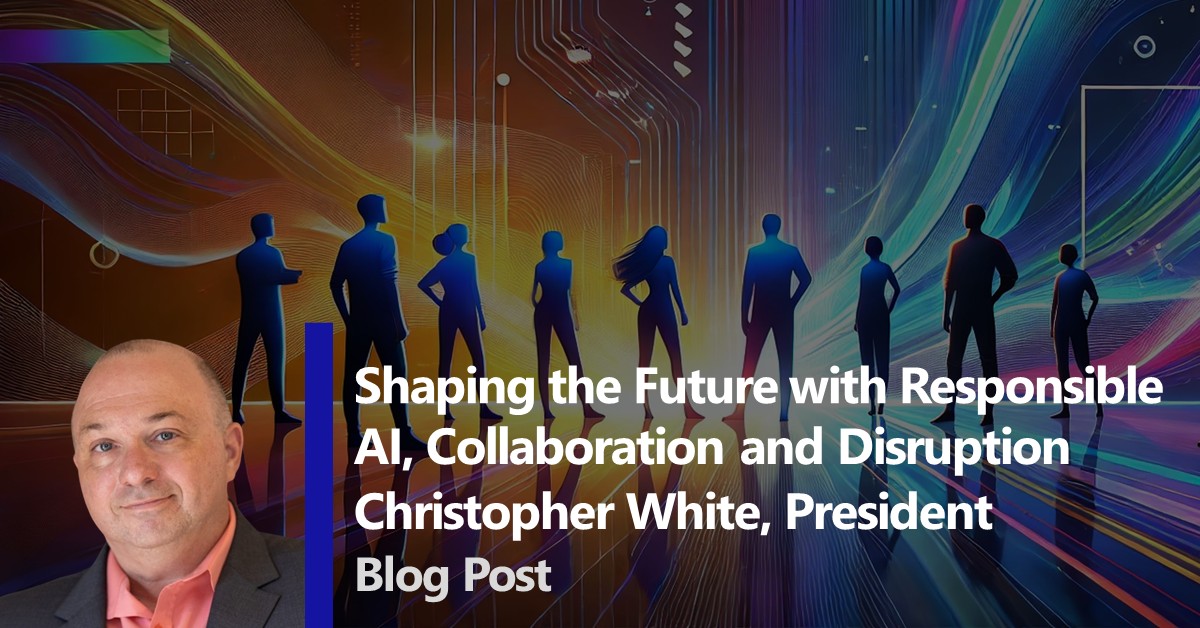
Shaping the Future with Responsible AI, Collaboration, and Disruption
As President of NEC Laboratories America, I have the privilege of leading teams exploring some of the most advanced and impactful technologies of our time—from cutting-edge AI systems to next-generation networking and digital tools for sustainability.
One of the best parts of this work is sharing our insights with a broader community of researchers, technologists, and business leaders who are just as committed to solving real-world problems with science and innovation.
Recently, I’ve had the opportunity to speak at several conferences and in media interviews about the future we’re helping to shape. These moments have offered a platform to talk about our research and a chance to reflect on the bigger picture: How should we be building AI? What does meaningful disruption look like? And how do we ensure innovation leads to sustainable, inclusive, and human-centered outcomes?
Here are a few ideas I will and have been sharing that are critical as we navigate what’s next.
CS3 VALIDATE Accelerator Demo Day on Thursday, April 24, in NYC
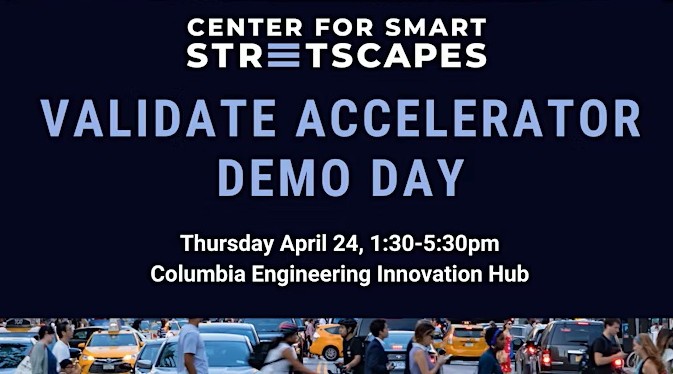 I look forward to sharing my thoughts on how research and entrepreneurship work together to drive innovation and commercialization—especially in the rapidly evolving world of streetscape technology. From innovative traffic systems and environmental sensing to pedestrian safety and AI-powered infrastructure, streetscapes are becoming intelligent platforms for innovation. Drawing from my experience leading teams at the forefront of tech advancement, I’ll speak about how we take breakthrough ideas from lab to market—and why close collaboration between researchers, entrepreneurs, and communities is essential to shaping the cities of tomorrow.
Innovating for a Sustainable Future
 At the IDRA World Congress in Abu Dhabi last December, I delivered a keynote about how digital innovation can help secure our most vital resource: water. From IoT sensors to AI-powered analytics, technology plays a role in optimizing water systems, detecting inefficiencies, and making infrastructure more resilient. At NEC Labs, we’re working with partners to explore how digital tools can drive sustainability in water and across industries.
Collaboration in Complex Systems
 At Dynamic Data Driven Applications Systems (DDDAS), at Rutgers University in September 2024, I spoke about how decision-making is becoming more complex—both individually and collectively. One example I shared was the global supply chain. These large-scale systems demand coordinated, cooperative action, and AI can be a critical enabler—or a complicator—depending on how we design it. Our most significant opportunities lie in systems that support collaborative decisions across different actors, not just isolated optimizations.
AI Should Empower, Not Replace
 In a compelling conversation with Michael Vizard at Techstrong.ai in September 2023, I addressed the current hype around generative AI. I clarified a point that I believe is critical: these systems are tools—not autonomous thinkers. AI can only be a potent augmentative force when we build it with that intention. At NEC Labs, we’re exploring the idea of “invisible AI”—technology that integrates so seamlessly into our lives that it anticipates what we need and automates tasks behind the scenes, enabling us to focus more on what matters.
Disruption Needs Discipline
 In an interview with Authority Magazine in August 2023, I shared five key strategies for disrupting an industry. One of the points I emphasized is that having a breakthrough technology isn’t enough—it’s about scaling it. I’ve seen brilliant ideas fail because they couldn’t cross the chasm from research lab to real-world application. Disruption requires vision but also discipline, execution, and partnerships that bring innovations to life.
Weight of the Internet
 Ever wonder how much the internet actually weighs? I had the pleasure of contributing to a recent article, The Weight of the Internet Will Shock You in Wired Magazine, tackling this surprisingly tricky (and entertaining) question. While some estimates were as light as a couple of strawberries, I used two methods to calculate the weight of the Internet—one substantially lighter and the other a tad bit heavier. It’s a fun thought experiment that dives into the physics behind data, electrons, and energy. While no one’s hauling the internet around in a backpack, it’s fascinating to consider the physical implications of our digital world. I am grateful to Wired for including me in such a creative piece, and fingers crossed that this is the work that finally gains me worldwide fame and glory.
Looking Ahead
As I look toward the future, I’m struck by both the pace of change and the depth of responsibility that comes with it. AI is evolving quickly, and it’s easy to be swept up in the novelty. But progress is not measured by how flashy a technology is—it’s measured by the problems it solves and improves lives.
We now have the chance to decide what kind of future we want to build. That means prioritizing AI that empowers rather than replaces, creating systems that support cooperation rather than competition, and designing innovations that work not just at the cutting edge—but at scale, in the real world, where they can do the best.
I believe NEC Labs has a unique role to play at this moment. We’re not just dreaming about the future—we’re building it. And we’re doing it with integrity, intention, and a deep respect for the people and systems our technologies will touch.
Areas of Research

We take a multidisciplinary approach across a broad range of research areas, combining expertise from fields including artificial intelligence, data science, networking, cybersecurity, and sustainability. This diversity enables us to tackle complex challenges from multiple perspectives and generate more holistic, impactful solutions. On joint projects, we actively collaborate across NEC’s global research ecosystem and with academic institutions, industry partners, and government organizations.
Read Our News Posts
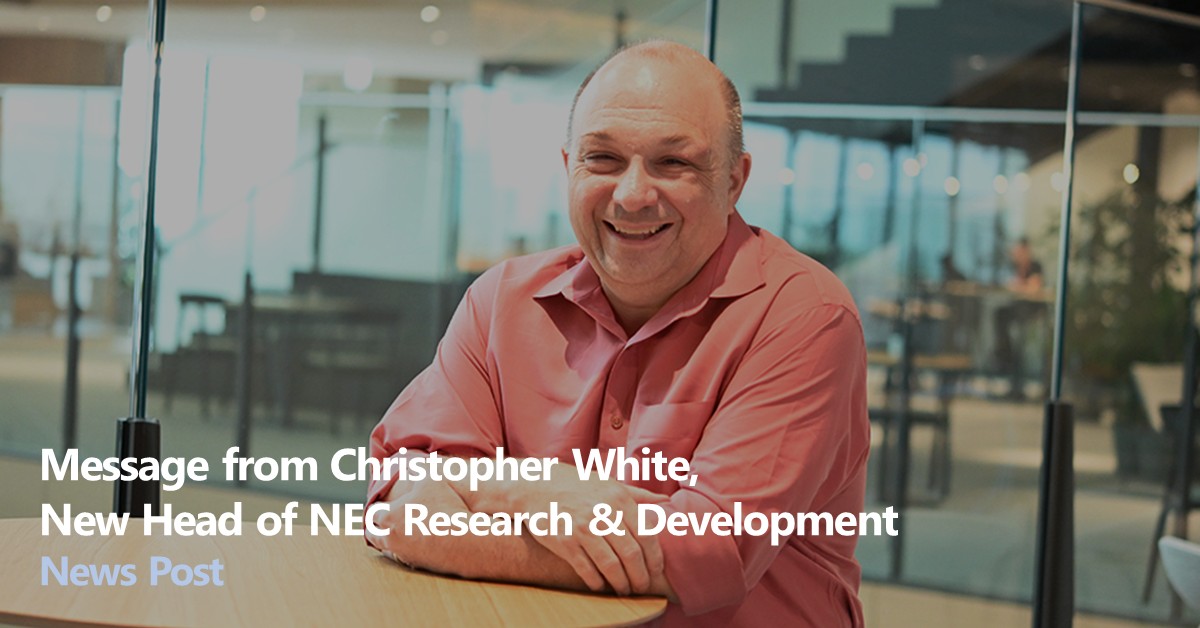 https://www.nec-labs.com/wp-content/uploads/2026/10/Message-from-Christopher-White.jpg
628
1200
NEC Labs America
https://www.nec-labs.com/wp-content/uploads/2025/08/NEC-Laboratories-America-Logo-Aug-2025-2.jpg
NEC Labs America2026-10-05 16:55:202026-10-05 17:19:59Message from Chris White, New Head of NEC Research & Development
https://www.nec-labs.com/wp-content/uploads/2026/10/Message-from-Christopher-White.jpg
628
1200
NEC Labs America
https://www.nec-labs.com/wp-content/uploads/2025/08/NEC-Laboratories-America-Logo-Aug-2025-2.jpg
NEC Labs America2026-10-05 16:55:202026-10-05 17:19:59Message from Chris White, New Head of NEC Research & Development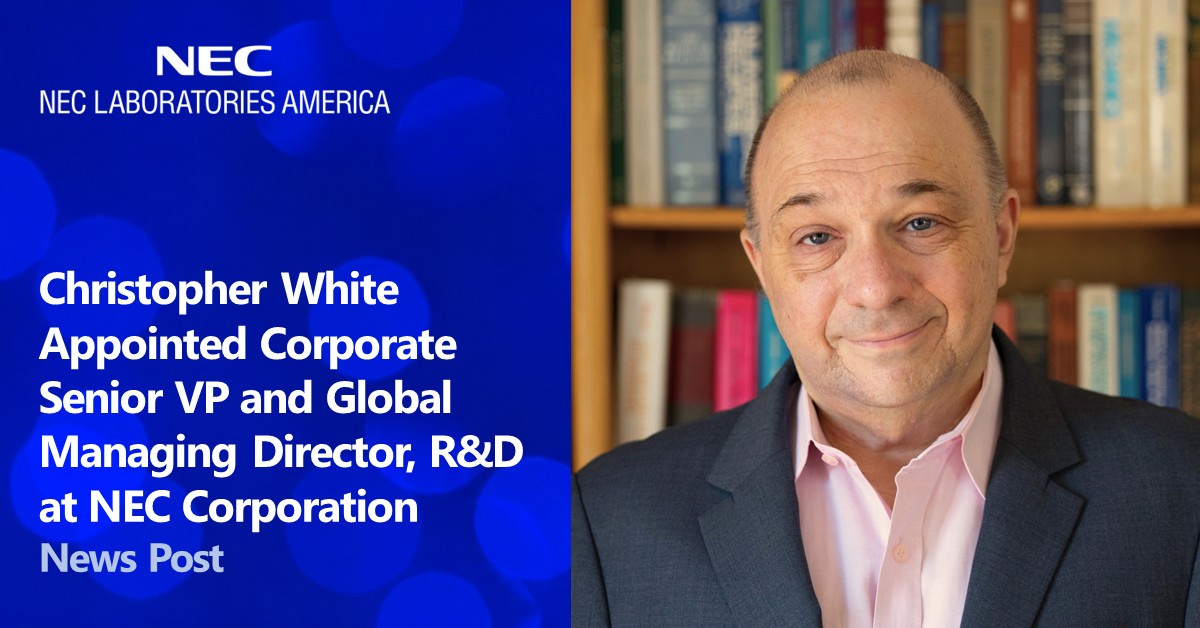 https://www.nec-labs.com/wp-content/uploads/2026/09/Chris-White-Promotion-SMM.jpg
628
1200
NEC Labs America
https://www.nec-labs.com/wp-content/uploads/2025/08/NEC-Laboratories-America-Logo-Aug-2025-2.jpg
NEC Labs America2026-09-23 19:54:142026-09-23 20:10:49Christopher White Appointed Corporate Senior Vice President and Global Managing Director, R&D at NEC Corporation
https://www.nec-labs.com/wp-content/uploads/2026/09/Chris-White-Promotion-SMM.jpg
628
1200
NEC Labs America
https://www.nec-labs.com/wp-content/uploads/2025/08/NEC-Laboratories-America-Logo-Aug-2025-2.jpg
NEC Labs America2026-09-23 19:54:142026-09-23 20:10:49Christopher White Appointed Corporate Senior Vice President and Global Managing Director, R&D at NEC Corporation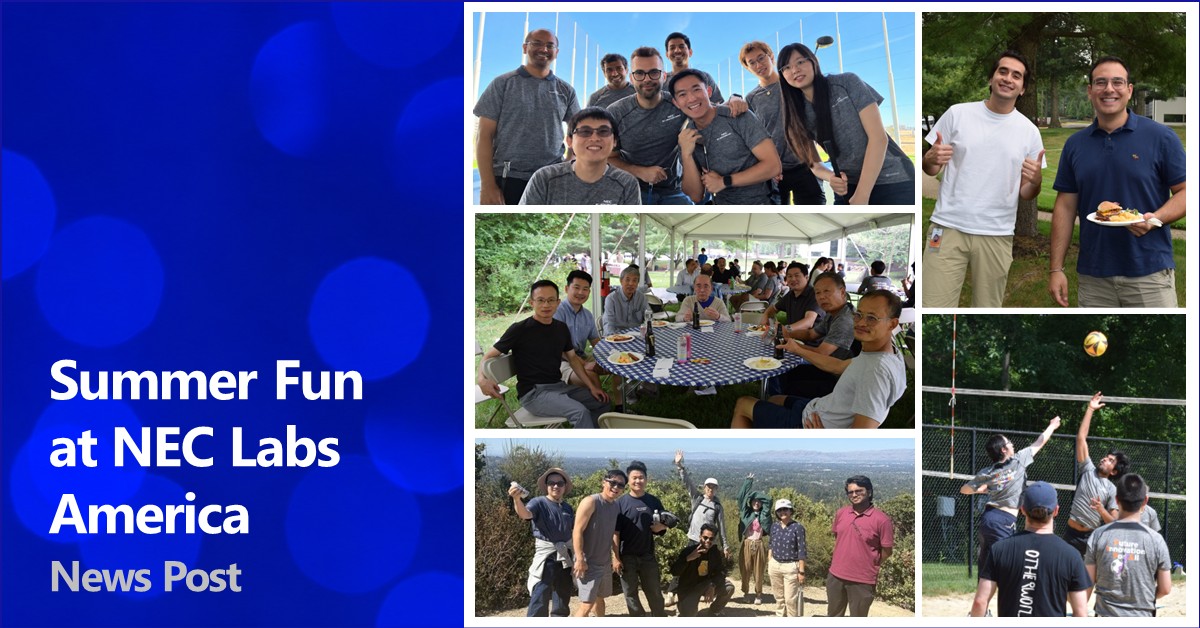 https://www.nec-labs.com/wp-content/uploads/2026/09/NEC-Labs-America-Summer-Fun.jpg
628
1200
NEC Labs America
https://www.nec-labs.com/wp-content/uploads/2025/08/NEC-Laboratories-America-Logo-Aug-2025-2.jpg
NEC Labs America2026-09-22 16:50:282026-10-01 12:18:48Summer Fun at NEC Labs America
https://www.nec-labs.com/wp-content/uploads/2026/09/NEC-Labs-America-Summer-Fun.jpg
628
1200
NEC Labs America
https://www.nec-labs.com/wp-content/uploads/2025/08/NEC-Laboratories-America-Logo-Aug-2025-2.jpg
NEC Labs America2026-09-22 16:50:282026-10-01 12:18:48Summer Fun at NEC Labs America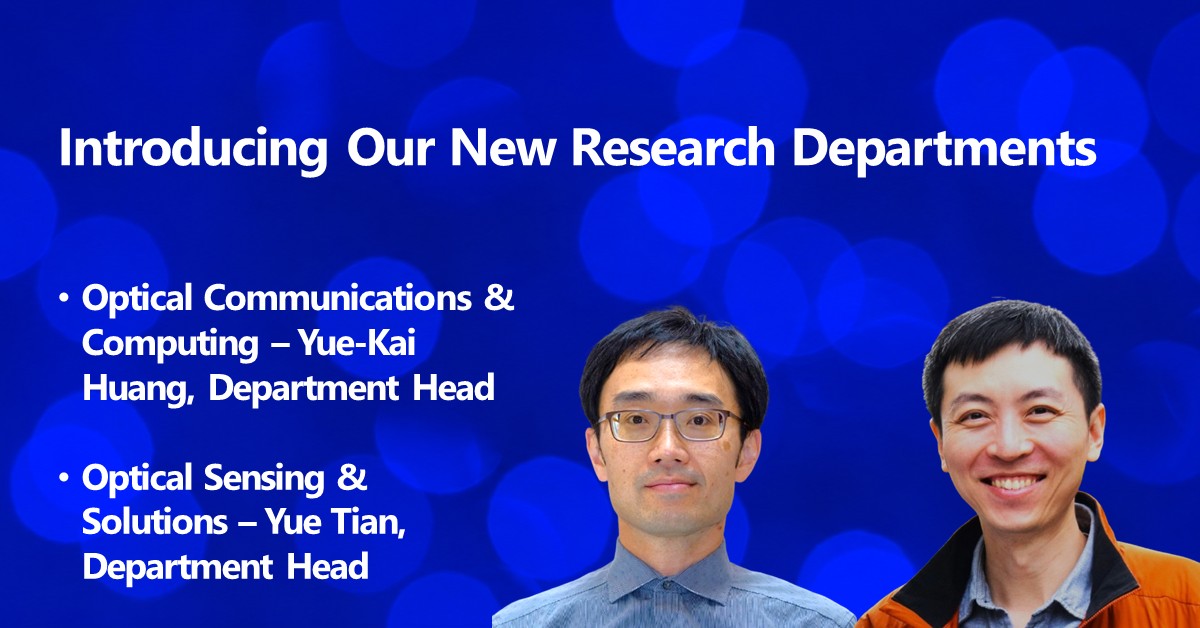 https://www.nec-labs.com/wp-content/uploads/2026/09/OCC-OSS-Blog-Post.jpg
628
1200
NEC Labs America
https://www.nec-labs.com/wp-content/uploads/2025/08/NEC-Laboratories-America-Logo-Aug-2025-2.jpg
NEC Labs America2026-09-01 07:00:042026-09-18 09:42:38NEC Laboratories America Forms Two New Departments: Optical Communications & Computing and Optical Sensing & Solutions
https://www.nec-labs.com/wp-content/uploads/2026/09/OCC-OSS-Blog-Post.jpg
628
1200
NEC Labs America
https://www.nec-labs.com/wp-content/uploads/2025/08/NEC-Laboratories-America-Logo-Aug-2025-2.jpg
NEC Labs America2026-09-01 07:00:042026-09-18 09:42:38NEC Laboratories America Forms Two New Departments: Optical Communications & Computing and Optical Sensing & Solutions https://www.nec-labs.com/wp-content/uploads/2026/08/NEC-Laboratories-America-Researchers-Win-a-2026-Edison-Patent-Award-for-Optical-Fiber-Innovation.jpg
628
1200
NEC Labs America
https://www.nec-labs.com/wp-content/uploads/2025/08/NEC-Laboratories-America-Logo-Aug-2025-2.jpg
NEC Labs America2026-08-20 09:14:182026-08-21 15:16:35NEC Laboratories America Researchers Win a 2026 Edison Patent Award for Optical Fiber Innovation
https://www.nec-labs.com/wp-content/uploads/2026/08/NEC-Laboratories-America-Researchers-Win-a-2026-Edison-Patent-Award-for-Optical-Fiber-Innovation.jpg
628
1200
NEC Labs America
https://www.nec-labs.com/wp-content/uploads/2025/08/NEC-Laboratories-America-Logo-Aug-2025-2.jpg
NEC Labs America2026-08-20 09:14:182026-08-21 15:16:35NEC Laboratories America Researchers Win a 2026 Edison Patent Award for Optical Fiber Innovation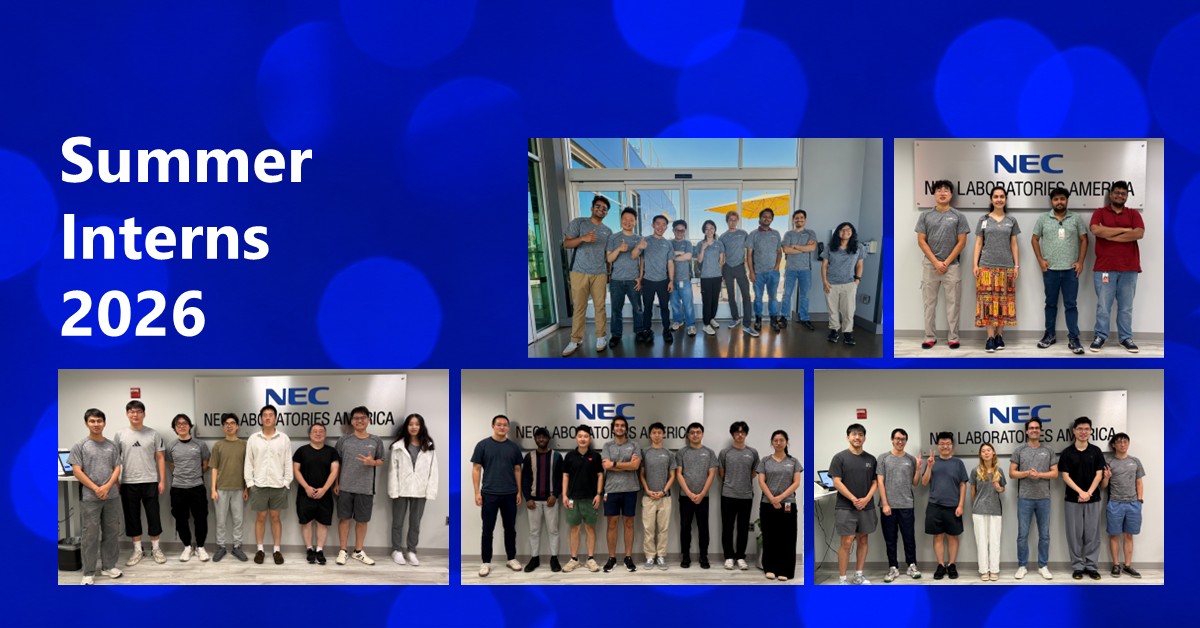 https://www.nec-labs.com/wp-content/uploads/2026/08/Summer-Interns-2026-1.jpg
628
1200
NEC Labs America
https://www.nec-labs.com/wp-content/uploads/2025/08/NEC-Laboratories-America-Logo-Aug-2025-2.jpg
NEC Labs America2026-08-18 12:59:042026-08-18 13:39:18Summer Interns 2026
https://www.nec-labs.com/wp-content/uploads/2026/08/Summer-Interns-2026-1.jpg
628
1200
NEC Labs America
https://www.nec-labs.com/wp-content/uploads/2025/08/NEC-Laboratories-America-Logo-Aug-2025-2.jpg
NEC Labs America2026-08-18 12:59:042026-08-18 13:39:18Summer Interns 2026