
Every April 1st, companies, engineers, and researchers lean into a different kind of innovation: humor that pushes the envelope. April Fools’ Day on social media has become a space where bold, absurd, and sometimes eerily believable ideas can stretch just far enough to make people question what’s real. The best hoaxes don’t just entertain, they challenge assumptions, blur the line between possible and impossible, and occasionally even inspire real products.
No company has mastered this better than Google, widely considered the king of corporate April Fools’ Day pranks. Year after year, Google has set the standard with elaborate, high-production hoaxes that tap into emerging technologies and cultural moments, from fake product launches to playful twists on its own platforms.
These hoaxes work because they combine sharp humor with a deep understanding of technology and consumer trends. Employees, engineers, developers, and tech enthusiasts recognize just enough truth in them to make the joke land. Here are some of the funniest April Fools’ Day hoaxes in history.
1. Amazon’s Petlexa (2017)
Amazon’s Petlexa was one of the standout April Fools’ Day hoaxes of 2017, a playful spoof of its wildly popular Alexa ecosystem. Framed as a breakthrough in voice recognition, Petlexa claimed to “translate” animal sounds so that dogs, cats, and even hamsters could interact directly with Amazon Echo devices. The campaign centered around a polished promotional video that mimicked real Amazon product launches.
In it, pets were shown barking, meowing, or squeaking in response to commands that Alexa supposedly understood. Dogs could order toys and treats, cats could request gourmet meals, and even a hamster could track its exercise on a wheel like a Fitbit-style device. Beyond simple commands, the fictional system extended into the broader smart home ecosystem. Pets could:
- Control smart devices like automatic ball launchers
- Stream music (“Caturday” playlists were featured)
- Order food and supplies directly from Amazon
- Track activity and “health metrics”
The humor worked because it sat just close enough to reality. Alexa was already capable of ordering products, controlling smart homes, and integrating with third-party devices, so imagining pets doing the same felt absurd but not impossible. Petlexa also subtly highlighted Amazon’s real ambition: making Alexa a universal interface for the home. By extending that idea to pets, the company cleverly showcased both the power and the cultural saturation of voice assistants at the time.
2. Gmail Motion (2011)
Google introduced Gmail Motion, a Wii-inspired April Fools’ Day hoax that reimagined email as a full-body experience. The concept claimed users could control Gmail using physical gestures captured through their webcam, eliminating the need for a keyboard or mouse. The joke came to life in a polished demo video that showed users performing exaggerated movements to manage their inbox.
Leaning forward would open an email, throwing an arm would delete it, and other dramatic gestures would control navigation and composition. Email suddenly became a physically demanding activity. The timing made the hoax especially effective. Motion-controlled technology was gaining attention, and Google leaned into the hype by pushing it to an absurd extreme. Gmail Motion worked because it felt just plausible enough to be believable, while also highlighting how impractical some emerging interface ideas could be when applied to everyday tasks.
3. Duolingo Push (2019)
Duolingo Push was a surreal April Fools’ Day hoax that took its well-known reminders to an extreme. The concept envisioned a real-world service in which the brand’s iconic owl mascot would show up at your door to ensure you completed your daily lesson. The campaign video featured the oversized owl following users around and persistently encouraging them to keep their streak alive.
What started as a simple notification became a humorous, slightly intimidating in-person experience. The hoax worked because it was highly relatable. Duolingo was already known for frequent reminders, so turning that digital nudge into a physical one felt like a natural exaggeration. The humor landed by highlighting the fine line between motivation and persistence in modern apps.
4. Google Maps Pokémon Challenge (2014)
In 2014, Google partnered with Nintendo to launch one of the most memorable April Fools’ Day hoaxes: the Google Maps Pokémon Challenge. Positioned as a global hiring test for a “Pokémon Master” role, the campaign invited users to search for and capture Pokémon hidden around the world using the Google Maps mobile app.
Unlike most hoaxes, this one was fully interactive and built directly into the app, making it feel surprisingly real. Players could explore real-world locations and encounter classic Pokémon placed across cities, landmarks, and remote regions. The experience even included a Pokédex-style tracker, encouraging users to find and collect them all. By combining familiar game mechanics with real geographic data, Google created something that felt both nostalgic and innovative. The humor worked because it was just believable enough. Google Maps was already a powerful platform, so layering a game on top of it did not feel entirely unrealistic. More importantly, the hoax highlighted the potential of location-based gaming. Its popularity proved that this concept had real appeal, ultimately helping inspire the development of Pokémon GO just a few years later.
5. Samsung Internet of Trousers (2016)
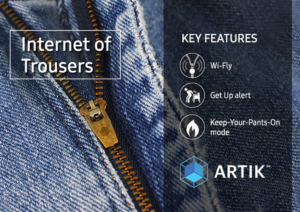
Samsung’s Internet of Trousers was an ingenious April Fools’ Day hoax that took the Internet of Things trend to a hilariously personal level. Framed as the next evolution of smart clothing, the concept imagined a pair of connected pants designed to monitor behavior and prevent everyday embarrassments. According to the announcement, the trousers were packed with sensors that could track body measurements and daily habits.
If the wearer’s waistline expanded, the pants could automatically lock the refrigerator. If a zipper was left open, the system would send an alert. Other features included wallet detection to prevent leaving home without essentials and inactivity warnings if the user sat too long.
The humor worked because it exaggerated a very real trend. At the time, smart devices were rapidly expanding into homes, appliances, and wearables. By extending connectivity to something as personal as clothing, Samsung highlighted both the ambition and the absurdity of the IoT movement. The Internet of Trousers stood out as a clever satire of over-connected technology, showing how innovation can quickly cross into unnecessary territory.
6. Google Nose (2013)
Google unveiled Google Nose, an April Fools’ Day hoax that imagined bringing one of the most elusive human senses to the internet: smell. Marketed as a breakthrough in sensory search, Google claimed it had built an enormous “Aromabase” containing millions of scents and developed technology capable of transmitting them directly through users’ devices.
The announcement was delivered with Google’s signature polish, complete with a product page, technical explanations, and a beta program called “Google Nose Beta.” Users were encouraged to lean in and sniff their screens to experience everything from fresh-cut grass to a wet dog. The concept was absurd, but the presentation made it feel almost plausible.
What made Google Nose so effective was its commitment to detail. By mimicking the language and structure of real product launches, Google blurred the line between fiction and reality. The hoax also played on the growing expectation that technology could digitize and deliver nearly any experience. In the end, Google Nose stood out as a clever satire of innovation culture, poking fun at the idea that even smell could be “searched” online.
7. Netflix Live Streaming Socks (2015)
Netflix Live Streaming Socks, a cinematic April Fools’ Day hoax aimed at solving a surprisingly common problem: falling asleep mid-binge. The concept featured a pair of knitted “smart socks” embedded with sensors that could detect when a viewer had dozed off and automatically pause whatever they were watching.
The socks were said to use an accelerometer to monitor movement and identify when the wearer remained still for too long.Once sleep was detected, the system would send a signal to Netflix and pause the show, preventing users from missing key moments or losing their place in a series. What made this hoax stand out was how close it was to reality.
Rather than stopping at a joke, Netflix published detailed instructions showing users how to build their own pair using basic electronics. This turned the hoax into a DIY project and gave it unexpected credibility. The humor worked because it addressed a real behavior in the streaming era. Binge-watching was already widespread, and the idea of technology adapting to viewer habits felt both practical and inevitable.
8. Virgin Atlantic Glass-Bottom Airplanes (2014)

Virgin Atlantic Glass-Bottom Airplanes was an aviation-inspired April Fools’ Day hoax that promised to transform air travel into a fully immersive experience. The concept featured aircraft with transparent cabin floors, allowing passengers to look straight down at oceans, cities, and landscapes from 35,000 feet.
Presented with Virgin’s signature flair, the announcement positioned the feature as a bold innovation in passenger experience. The idea of uninterrupted views added a sense of adventure, making flying feel more like sightseeing than transportation.
What made the hoax effective was how well it aligned with the brand. Virgin Atlantic is known for pushing boundaries and rethinking travel, so the concept felt imaginative rather than completely unrealistic. At the same time, the idea of a glass floor at cruising altitude introduced just enough absurdity to make it memorable. The humor landed by combining luxury, thrill, and a touch of danger, capturing the airline’s playful and adventurous spirit.
9. Google Mic Drop in Gmail (2016)
Google introduced the Google Mic Drop in Gmail, an April Fools’ Day hoax that added a new button to send emails with a Minion GIF dropping a microphone. The idea was to let users humorously “end” conversations with a mic-drop moment. The feature also automatically muted the email thread, preventing recipients from replying.
While intended as a joke, it was built directly into Gmail, making it easy to use in real conversations. The hoax quickly backfired. Some users accidentally sent mic-drop messages in professional or important emails, causing confusion and frustration. Google removed the feature shortly after and issued an apology. It remains a notable example of how even a playful idea can create real consequences when introduced.
10. LEGO’s VacuSort Vacuum Cleaner Brick Sorter (2018)

LEGO’s VacuSort Vacuum Cleaner Brick Sorter was an April Fools’ Day hoax that tackled a universal frustration for fans and parents alike: stepping on stray LEGO bricks. The fictional device was presented as a smart vacuum that could not only pick up loose pieces from the floor but also automatically sort them by color and size. According to the announcement, the system used advanced sorting technology to organize bricks into separate compartments, making cleanup and storage effortless.
Instead of manually sifting through piles of mixed pieces, users could simply vacuum the room and have everything neatly categorized and ready for the next build. What made the hoax so effective was how practical it felt.
Anyone who has owned LEGO knows how time-consuming cleanup can be, so the idea of automating the process was immediately appealing. The concept blended everyday household technology with LEGO’s creative ecosystem in a way that seemed surprisingly achievable. The humor landed because it solved a real problem, leaving many wishing the product was not just a joke but something they could actually buy.
11. Google Tulip Translator (2018)
Google introduced the Google Tulip Translator, an April Fools’ Day hoax that imagined using artificial intelligence to communicate with plants. The concept claimed that tulips could send signals through subtle vibrations and patterns, which Google’s machine learning models could decode into human language.
The announcement was accompanied by scientific-style explanations and a polished demo that showed a smartphone translating “tulip speech” in real time. Users could supposedly understand what flowers were “feeling,” from needing water to reacting to their environment.
What made the hoax effective was its reliance on real advancements in AI and translation technology. Google had already made significant progress in language processing, so extending that capability to plants felt imaginative, yet just out of reach. The humor landed by pushing AI hype to an extreme, playfully suggesting that even nature itself could soon be part of the digital conversation.
12. Google’s Pac-Man on Google Maps (2015)
Google’s Pac-Man on Google Maps transformed Google Maps into a playable version of Pac-Man, turning real-world streets into a nostalgic arcade experience. As an April Fools’ Day hoax, users could click a button within Maps and instantly convert their surroundings into a maze, complete with pellets, ghosts, and the familiar Pac-Man gameplay.
The experience was built directly within the existing platform, allowing players to navigate city blocks as if they were part of the classic game. Streets became pathways, intersections acted as turns, and recognizable landmarks added a unique twist to each session. Whether exploring dense urban grids or quieter neighborhoods, every map offered a different challenge.
What made the hoax especially effective was how seamlessly it integrated with a widely used tool. Google Maps was already something people interacted with daily, so transforming it into a game felt both surprising and intuitive. It also tapped into nostalgia, bringing a beloved arcade classic into a modern, real-world context. The result was a simple but highly engaging experience that blurred the line between utility and entertainment, showing how familiar technology could be reimagined in playful ways.
13. Google Self-Driving Bicycle (2016)
Google Netherlands introduced the Google Self-Driving Bicycle, an April Fools’ Day hoax that playfully extended the idea of autonomous vehicles to one of the most traditional forms of transportation. Presented in a polished video, the bike was shown navigating city streets on its own, using advanced sensors and artificial intelligence to balance, steer, and transport riders safely.
The concept leaned heavily on the growing momentum around self-driving cars, which were rapidly advancing at the time. By applying the same language and logic to a bicycle, Google created a scenario that felt both innovative and slightly absurd. The video showcased features like obstacle detection and autonomous navigation, all framed as a natural evolution of mobility.
What made the hoax effective was its subtle exaggeration of real trends. Autonomous technology was already making headlines, so the idea of extending it to bikes did not feel entirely impossible. At the same time, the simplicity of a bicycle made the concept inherently humorous. The self-driving bicycle worked as both a joke and a commentary on how quickly automation was reshaping everyday transportation.
14. Tinder’s Height Verification (2019)
Tinder’s Height Verification was an April Fools’ Day hoax that poked fun at one of the most persistent debates in online dating. Framed as a new feature, the company claimed it would use advanced technology to verify users’ listed heights, addressing complaints that people were exaggerating their measurements on profiles. The announcement was presented with just enough seriousness to feel believable.
Tinder positioned the feature as part of its ongoing effort to build trust and authenticity on the platform, suggesting that height could be verified in a way similar to profile photos. The concept struck a chord because it directly targeted a widely recognized behavior among users.
What made the hoax especially effective was its grounding in real user experiences. Online dating platforms were already introducing verification tools, so extending that idea to physical attributes did not seem entirely far-fetched. At the same time, the specificity of height made the feature feel humorous and slightly absurd. The joke quickly gained traction on social media, sparking conversation about honesty, expectations, and the quirks of digital dating culture.
15. Google Wind (2013)
Google Wind was a clever hoax from Google Netherlands that imagined using technology to control the weather. The concept claimed that the country’s 1,170 windmills could be connected through machine learning, allowing them to work together in perfect synchronization. According to the announcement, this coordinated system would generate enough force to push clouds out of the sky, creating more sunny days across the Netherlands.
The idea was presented with technical language and a polished video, making it feel like a bold, data-driven solution to a national problem. What made the hoax especially effective was its blend of real elements and an absurd outcome.
Windmills are an iconic part of Dutch infrastructure, and machine learning was rapidly gaining attention, so the premise felt just believable enough. The humor landed by turning a familiar stereotype, the Netherlands’ cloudy weather, into a high-tech challenge, highlighting how far technology might be stretched in the pursuit of everyday improvements.
16. Reddit’s The Button (2015)
Reddit’s The Button was a clever April Fools’ Day hoax that quickly evolved into a massive social experiment. The feature appeared as a simple button with a countdown timer visible to millions of users. Every time someone pressed it, the timer reset, creating a shared, real-time dilemma across the platform.
What made the experience compelling was its simplicity. Users had to decide whether to press the button and reset the clock or resist the urge and let it run down. Over time, communities formed around different strategies, with some users proudly refusing to press it while others raced to keep it alive. The hoax stood out because it tapped directly into human psychology and online behavior. Rather than being a one-time joke, it became an ongoing event that lasted for weeks, drawing in millions of participants. The Button demonstrated how a minimal concept, combined with social dynamics, could create a deeply engaging and viral experience.
17. Google Translate for Animals (2010)
Google Translate for Animals was an April Fools’ Day hoax that imagined breaking down one of nature’s oldest barriers: communication between humans and animals. Presented as a mobile app, the concept claimed to translate animal sounds into human language in real time, turning barks, clucks, and other noises into understandable speech.
The idea was brought to life through a playful demo video showing dogs, chickens, and other animals “speaking” through a smartphone interface. Users could hold up their device, capture a sound, and receive a translated phrase instantly. The setup mirrored Google’s real translation tools, making the experience feel oddly believable despite its absurdity.
What made the hoax effective was its timing. Machine learning and speech recognition were improving, but still far from decoding animal communication. By extending these advancements to an impossible extreme, Google highlighted both the promise and the limitations of the technology. The humor landed because it tapped into a universal curiosity, while gently reminding audiences how much progress still remained.
18. Burger King’s Left-Handed Whopper (1998)
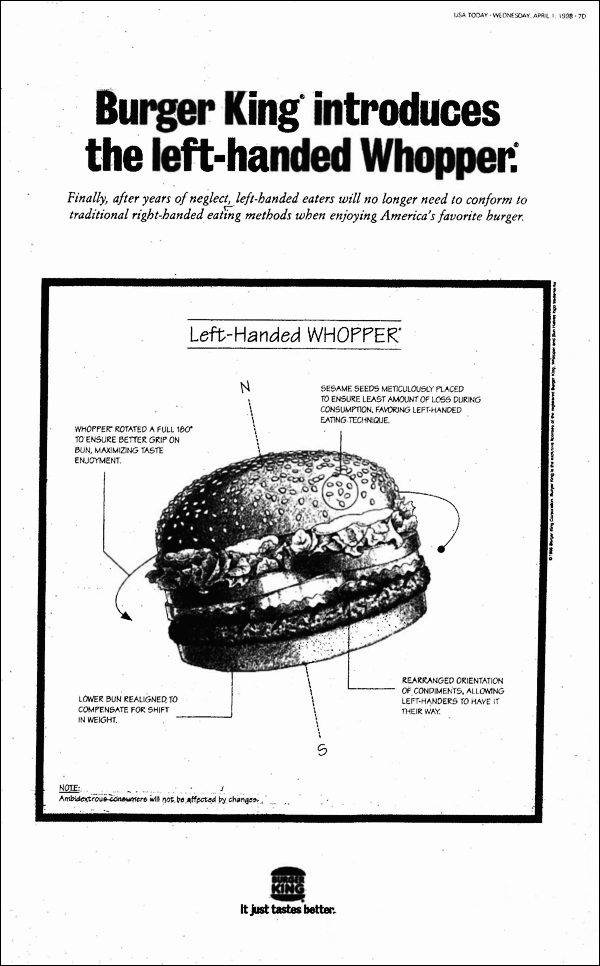
Burger King’s Left-Handed Whopper was an absurd April Fools’ Day hoax that playfully targeted a very specific audience. The company claimed it had redesigned its signature burger so that all the condiments were rotated 180 degrees, ensuring they would drip properly when held in the left hand. The announcement was presented seriously, giving the impression that this was a thoughtful, customer-focused innovation. The detail made the concept feel oddly believable, despite its absurdity.
The hoax was a huge success. Thousands of customers reportedly visited Burger King locations asking for the Left-Handed Whopper, while others requested the original “right-handed” version. The humor worked because it took a familiar product and introduced a completely unnecessary “improvement,” highlighting how easily people can buy into even the most ridiculous ideas when presented convincingly.
Read Our News Posts
 https://www.nec-labs.com/wp-content/uploads/2026/10/Meet-Yue-Kai-Huang-Leading-Our-New-Optical-Communications-Computing-Department.jpg
628
1200
NEC Labs America
https://www.nec-labs.com/wp-content/uploads/2025/08/NEC-Laboratories-America-Logo-Aug-2025-2.jpg
NEC Labs America2026-10-13 10:45:372026-10-13 11:09:56Meet Yue-Kai Huang: Leading Our New Optical Communications & Computing Department
https://www.nec-labs.com/wp-content/uploads/2026/10/Meet-Yue-Kai-Huang-Leading-Our-New-Optical-Communications-Computing-Department.jpg
628
1200
NEC Labs America
https://www.nec-labs.com/wp-content/uploads/2025/08/NEC-Laboratories-America-Logo-Aug-2025-2.jpg
NEC Labs America2026-10-13 10:45:372026-10-13 11:09:56Meet Yue-Kai Huang: Leading Our New Optical Communications & Computing Department https://www.nec-labs.com/wp-content/uploads/2026/10/Message-from-Christopher-White.jpg
628
1200
NEC Labs America
https://www.nec-labs.com/wp-content/uploads/2025/08/NEC-Laboratories-America-Logo-Aug-2025-2.jpg
NEC Labs America2026-10-05 16:55:202026-10-05 17:19:59Message from Chris White, New Head of NEC Research & Development
https://www.nec-labs.com/wp-content/uploads/2026/10/Message-from-Christopher-White.jpg
628
1200
NEC Labs America
https://www.nec-labs.com/wp-content/uploads/2025/08/NEC-Laboratories-America-Logo-Aug-2025-2.jpg
NEC Labs America2026-10-05 16:55:202026-10-05 17:19:59Message from Chris White, New Head of NEC Research & Development https://www.nec-labs.com/wp-content/uploads/2026/09/Chris-White-Promotion-SMM.jpg
628
1200
NEC Labs America
https://www.nec-labs.com/wp-content/uploads/2025/08/NEC-Laboratories-America-Logo-Aug-2025-2.jpg
NEC Labs America2026-09-23 19:54:142026-09-23 20:10:49Christopher White Appointed Corporate Senior Vice President and Global Managing Director, R&D at NEC Corporation
https://www.nec-labs.com/wp-content/uploads/2026/09/Chris-White-Promotion-SMM.jpg
628
1200
NEC Labs America
https://www.nec-labs.com/wp-content/uploads/2025/08/NEC-Laboratories-America-Logo-Aug-2025-2.jpg
NEC Labs America2026-09-23 19:54:142026-09-23 20:10:49Christopher White Appointed Corporate Senior Vice President and Global Managing Director, R&D at NEC Corporation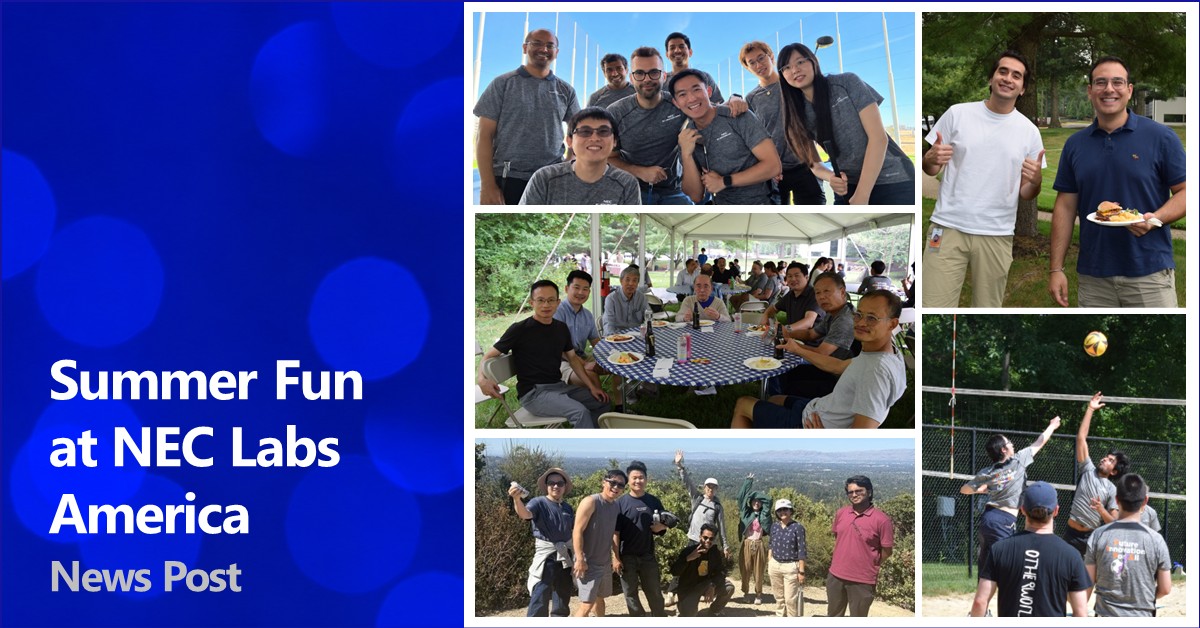 https://www.nec-labs.com/wp-content/uploads/2026/09/NEC-Labs-America-Summer-Fun.jpg
628
1200
NEC Labs America
https://www.nec-labs.com/wp-content/uploads/2025/08/NEC-Laboratories-America-Logo-Aug-2025-2.jpg
NEC Labs America2026-09-22 16:50:282026-10-01 12:18:48Summer Fun at NEC Labs America
https://www.nec-labs.com/wp-content/uploads/2026/09/NEC-Labs-America-Summer-Fun.jpg
628
1200
NEC Labs America
https://www.nec-labs.com/wp-content/uploads/2025/08/NEC-Laboratories-America-Logo-Aug-2025-2.jpg
NEC Labs America2026-09-22 16:50:282026-10-01 12:18:48Summer Fun at NEC Labs America https://www.nec-labs.com/wp-content/uploads/2026/09/OCC-OSS-Blog-Post.jpg
628
1200
NEC Labs America
https://www.nec-labs.com/wp-content/uploads/2025/08/NEC-Laboratories-America-Logo-Aug-2025-2.jpg
NEC Labs America2026-09-01 07:00:042026-09-18 09:42:38NEC Laboratories America Forms Two New Departments: Optical Communications & Computing and Optical Sensing & Solutions
https://www.nec-labs.com/wp-content/uploads/2026/09/OCC-OSS-Blog-Post.jpg
628
1200
NEC Labs America
https://www.nec-labs.com/wp-content/uploads/2025/08/NEC-Laboratories-America-Logo-Aug-2025-2.jpg
NEC Labs America2026-09-01 07:00:042026-09-18 09:42:38NEC Laboratories America Forms Two New Departments: Optical Communications & Computing and Optical Sensing & Solutions https://www.nec-labs.com/wp-content/uploads/2026/08/NEC-Laboratories-America-Researchers-Win-a-2026-Edison-Patent-Award-for-Optical-Fiber-Innovation.jpg
628
1200
NEC Labs America
https://www.nec-labs.com/wp-content/uploads/2025/08/NEC-Laboratories-America-Logo-Aug-2025-2.jpg
NEC Labs America2026-08-20 09:14:182026-08-21 15:16:35NEC Laboratories America Researchers Win a 2026 Edison Patent Award for Optical Fiber Innovation
https://www.nec-labs.com/wp-content/uploads/2026/08/NEC-Laboratories-America-Researchers-Win-a-2026-Edison-Patent-Award-for-Optical-Fiber-Innovation.jpg
628
1200
NEC Labs America
https://www.nec-labs.com/wp-content/uploads/2025/08/NEC-Laboratories-America-Logo-Aug-2025-2.jpg
NEC Labs America2026-08-20 09:14:182026-08-21 15:16:35NEC Laboratories America Researchers Win a 2026 Edison Patent Award for Optical Fiber Innovation