
Introducing Our New Project: Time Series Language Model for Explainable AI
In today’s fast-paced world, the ability to accurately predict future trends and events is invaluable. From financial markets to healthcare, education to energy management, forecasting is a critical component of decision-making. However, traditional forecasting models often fall short in providing explanations for their predictions, leaving users in the dark about the reasoning behind the numbers.
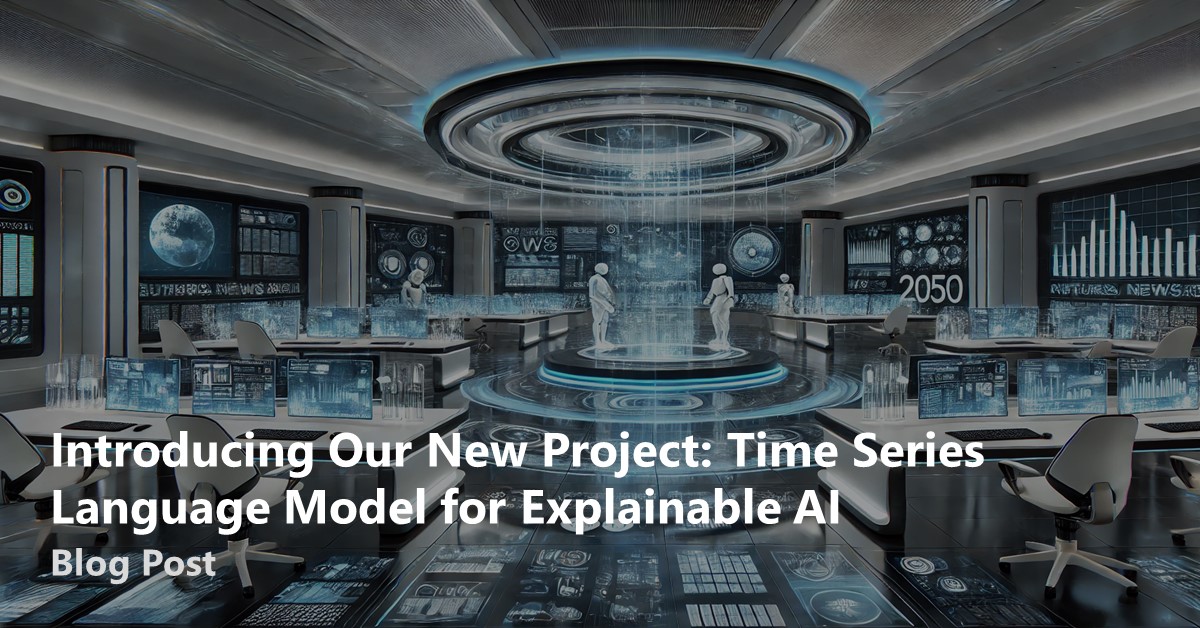
To address this gap, our team is excited to announce the development of a revolutionary project: the Time Series Language Model for Explainable AI.
What is the Time Series Language Model for Explainable AI?
This innovative project aims to create a cutting-edge multi-modal forecasting system that combines the strengths of time series data and text data, such as news articles. By integrating an advanced time series backbone model with a Large Language Model (LLM), our new system will not only deliver accurate forecasts but also offer insightful explanations based on relevant text articles. This dual approach will provide users with a deeper understanding of the factors influencing predictions, thereby enhancing their decision-making processes.
 Haifeng Chen, the head of our Data Science and System Security department, emphasizes the transformative potential of this project. “The integration of time series data with textual information is a game-changer. It allows us to capture not only the quantitative aspects of trends but also the qualitative factors that drive these trends. This holistic approach leads to more robust and insightful forecasts.”
Key Features and Benefits
- Multi-Modal Forecasting: Our system leverages both numerical time series data and qualitative text data, allowing for more comprehensive and nuanced predictions.
- Advanced Time Series Backbone Model: The backbone of our system is a state-of-the-art time series model that ensures high accuracy and reliability in forecasting.
- Large Language Model Integration: By incorporating an LLM, our system can analyze and interpret text data, providing context and explanations that make the forecasts more understandable and actionable.
- Explainable AI: One of the standout features of our project is its focus on explainability. Users will receive detailed explanations for each forecast, drawn from relevant text articles. This transparency fosters trust and confidence in the system’s predictions.
- Enhanced Decision-Making: With accurate forecasts and clear explanations, users can make more informed decisions, whether they’re managing investments, planning resources, or navigating complex challenges in various industries.
Chen further explains the importance of explainability in AI. “In today’s data-driven world, it’s not enough to provide accurate predictions. Users need to understand the ‘why’ behind these predictions. Our Time Series Language Model for Explainable AI addresses this need by offering detailed explanations based on relevant news articles and other text data. This level of transparency is crucial for building trust and enabling better decision-making.”
Looking Ahead
This project represents a significant leap forward in the field of forecasting and explainable AI. By combining advanced forecasting techniques with explainable AI, we are paving the way for a future where data-driven insights are not only accurate but also comprehensible and actionable. Visit our project page Time Series Language Model for Explainable AI to learn more and to read our related publications.
Read Our News Posts
 https://www.nec-labs.com/wp-content/uploads/2026/10/Routing-Data-Through-Satellites-That-Never-Stand-Still.jpg
628
1200
NEC Labs America
https://www.nec-labs.com/wp-content/uploads/2025/08/NEC-Laboratories-America-Logo-Aug-2025-2.jpg
NEC Labs America2026-10-22 10:37:392026-10-22 13:58:13Routing Data Through Satellites That Never Stand Still
https://www.nec-labs.com/wp-content/uploads/2026/10/Routing-Data-Through-Satellites-That-Never-Stand-Still.jpg
628
1200
NEC Labs America
https://www.nec-labs.com/wp-content/uploads/2025/08/NEC-Laboratories-America-Logo-Aug-2025-2.jpg
NEC Labs America2026-10-22 10:37:392026-10-22 13:58:13Routing Data Through Satellites That Never Stand Still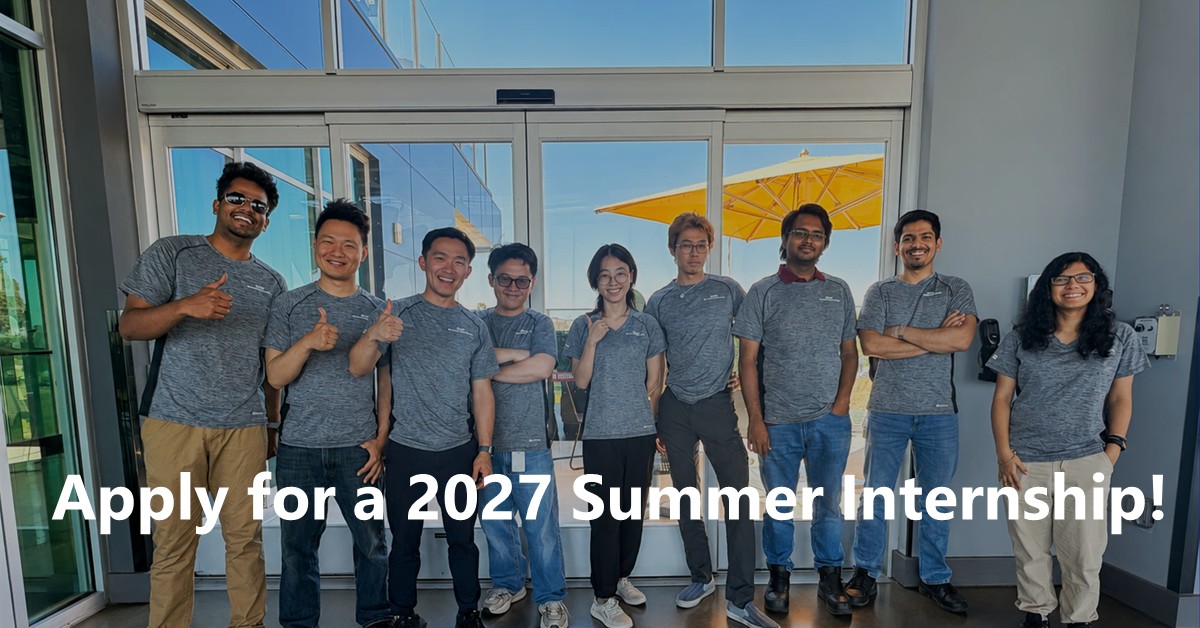 https://www.nec-labs.com/wp-content/uploads/2026/10/Apply-for-a-2027-Summer-Internship-1.jpg
628
1200
NEC Labs America
https://www.nec-labs.com/wp-content/uploads/2025/08/NEC-Laboratories-America-Logo-Aug-2025-2.jpg
NEC Labs America2026-10-21 14:48:142026-10-21 15:25:38Apply for a Summer 2027 Internship at NEC Labs America
https://www.nec-labs.com/wp-content/uploads/2026/10/Apply-for-a-2027-Summer-Internship-1.jpg
628
1200
NEC Labs America
https://www.nec-labs.com/wp-content/uploads/2025/08/NEC-Laboratories-America-Logo-Aug-2025-2.jpg
NEC Labs America2026-10-21 14:48:142026-10-21 15:25:38Apply for a Summer 2027 Internship at NEC Labs America https://www.nec-labs.com/wp-content/uploads/2026/10/Updating-What-AI-Knows-Without-Breaking-What-It-Already-Knows.jpg
628
1200
NEC Labs America
https://www.nec-labs.com/wp-content/uploads/2025/08/NEC-Laboratories-America-Logo-Aug-2025-2.jpg
NEC Labs America2026-10-20 14:37:112026-10-20 14:58:26Updating What AI Knows Without Breaking What It Already Knows
https://www.nec-labs.com/wp-content/uploads/2026/10/Updating-What-AI-Knows-Without-Breaking-What-It-Already-Knows.jpg
628
1200
NEC Labs America
https://www.nec-labs.com/wp-content/uploads/2025/08/NEC-Laboratories-America-Logo-Aug-2025-2.jpg
NEC Labs America2026-10-20 14:37:112026-10-20 14:58:26Updating What AI Knows Without Breaking What It Already Knows https://www.nec-labs.com/wp-content/uploads/2026/10/Meet-Yue-Kai-Huang-Leading-Our-New-Optical-Communications-Computing-Department.jpg
628
1200
NEC Labs America
https://www.nec-labs.com/wp-content/uploads/2025/08/NEC-Laboratories-America-Logo-Aug-2025-2.jpg
NEC Labs America2026-10-13 10:45:372026-10-22 14:19:18Meet Yue-Kai Huang: Leading Our New Optical Communications & Computing Department
https://www.nec-labs.com/wp-content/uploads/2026/10/Meet-Yue-Kai-Huang-Leading-Our-New-Optical-Communications-Computing-Department.jpg
628
1200
NEC Labs America
https://www.nec-labs.com/wp-content/uploads/2025/08/NEC-Laboratories-America-Logo-Aug-2025-2.jpg
NEC Labs America2026-10-13 10:45:372026-10-22 14:19:18Meet Yue-Kai Huang: Leading Our New Optical Communications & Computing Department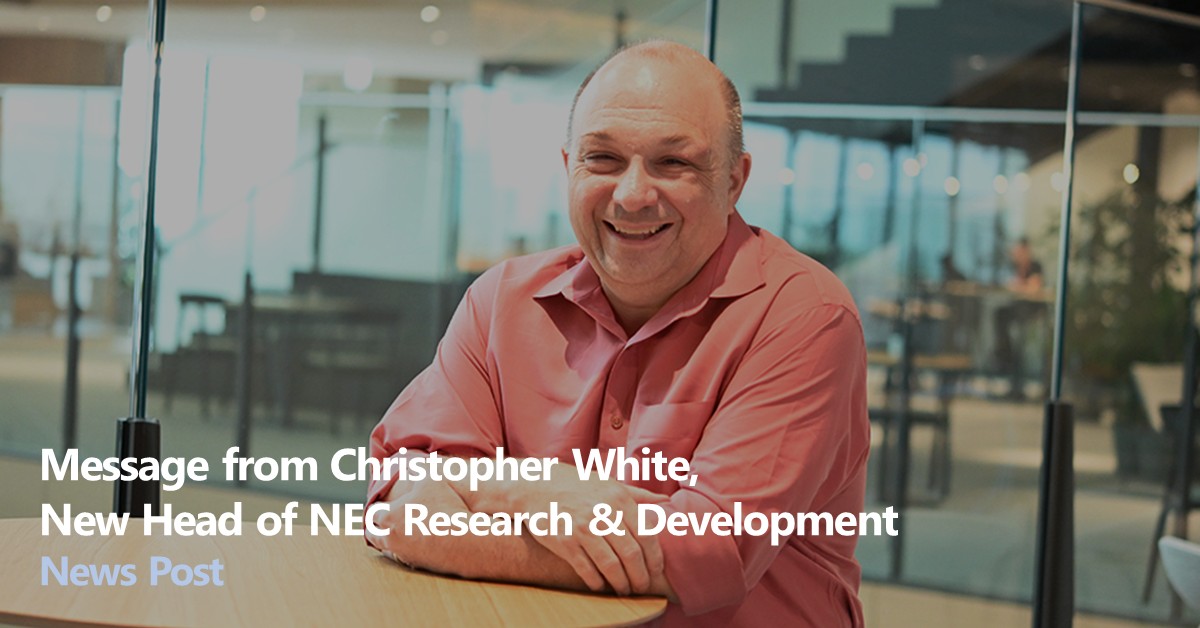 https://www.nec-labs.com/wp-content/uploads/2026/10/Message-from-Christopher-White.jpg
628
1200
NEC Labs America
https://www.nec-labs.com/wp-content/uploads/2025/08/NEC-Laboratories-America-Logo-Aug-2025-2.jpg
NEC Labs America2026-10-05 16:55:202026-10-05 17:19:59Message from Chris White, New Head of NEC Research & Development
https://www.nec-labs.com/wp-content/uploads/2026/10/Message-from-Christopher-White.jpg
628
1200
NEC Labs America
https://www.nec-labs.com/wp-content/uploads/2025/08/NEC-Laboratories-America-Logo-Aug-2025-2.jpg
NEC Labs America2026-10-05 16:55:202026-10-05 17:19:59Message from Chris White, New Head of NEC Research & Development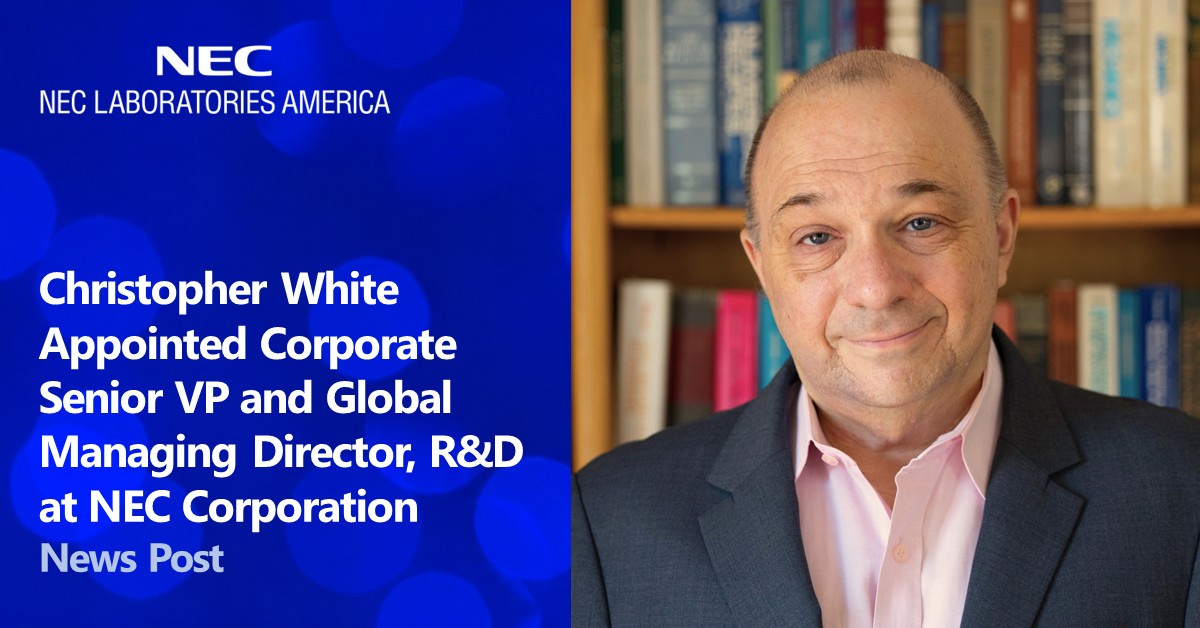 https://www.nec-labs.com/wp-content/uploads/2026/09/Chris-White-Promotion-SMM.jpg
628
1200
NEC Labs America
https://www.nec-labs.com/wp-content/uploads/2025/08/NEC-Laboratories-America-Logo-Aug-2025-2.jpg
NEC Labs America2026-09-23 19:54:142026-09-23 20:10:49Christopher White Appointed Corporate Senior Vice President and Global Managing Director, R&D at NEC Corporation
https://www.nec-labs.com/wp-content/uploads/2026/09/Chris-White-Promotion-SMM.jpg
628
1200
NEC Labs America
https://www.nec-labs.com/wp-content/uploads/2025/08/NEC-Laboratories-America-Logo-Aug-2025-2.jpg
NEC Labs America2026-09-23 19:54:142026-09-23 20:10:49Christopher White Appointed Corporate Senior Vice President and Global Managing Director, R&D at NEC Corporation