We are thrilled to announce the launch of our latest research initiative, the Trustworthy Generative AI Project. This ambitious project is set to revolutionize how we interact with multimodal content by developing cutting-edge generative models capable of compositional generation and reasoning across text, images, reports, and even 3D videos.
Project Team Members: Martin Renqiang Min, Zachary Izzo, Tianxiao Li, Christopher Malon, Iain Melvin and Deep Patel.
Project Overview
The Trustworthy Generative AI Project is centered on developing advanced multimodal generative models. These models are designed to handle complex tasks that require the integration and generation of content across various modalities. The potential applications are vast, encompassing fields such as advertisement, entertainment, law enforcement, and healthcare.
Our models aim to provide users with tools that can generate content and understand and reason about it, ensuring the outputs are accurate and contextually appropriate. For instance, in healthcare, these models could assist in creating detailed medical reports that combine patient data, imaging results, and expert commentary into a cohesive and understandable narrative. In law enforcement, they could help generate and analyze surveillance footage to support investigations.
Vision from the Leadership
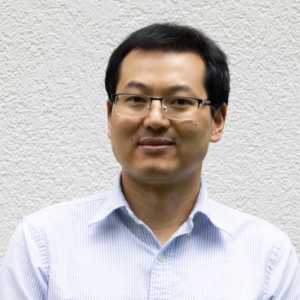 Martin Renqiang Min, the head of our department, expressed his excitement about the potential impact of this project, “The Trustworthy Generative AI Project is more than just a technical endeavor; it’s about building AI that people can trust across critical domains. By focusing on compositional generation and reasoning, we are setting the stage for AI systems that are creative but also reliable and transparent in their decision-making processes.”
Impact and Applications
The Trustworthy Generative AI Project is expected to have a profound impact across several industries:
- Advertisement and Entertainment: Imagine AI-generated advertisements that are visually stunning and contextually relevant, tailored to the needs and preferences of individual viewers.
- Law Enforcement: Our models could play a crucial role in criminal investigations by generating and analyzing multimedia evidence, helping law enforcement agencies piece together complex cases with greater speed and accuracy.
- Healthcare: From generating medical reports to creating 3D visualizations of patient conditions, our AI models could revolutionize how healthcare professionals approach diagnosis and treatment planning.
He added, “Our goal is to bridge the gap between raw data and actionable insights. Whether generating a 3D video for an advertising campaign or compiling a comprehensive report in healthcare, our models are designed to meet the highest standards of accuracy and integrity.”
Moving Forward
As we embark on this journey, we are committed to maintaining the highest standards of ethical AI development. Trustworthiness, transparency, and accuracy will remain at the forefront of our efforts as we explore the full potential of generative AI. We look forward to sharing more updates as the project progresses and are excited about the future innovations. Stay tuned for more insights from the Trustworthy Generative AI Project team.
Our Machine Learning Research
As industry leaders, we develop innovative technologies integrated into NEC’s products and services. Machine learning is the critical technology for data analytics and artificial intelligence. Recent progress in this field opens opportunities for various new applications. Our machine learning research will produce innovation across industries, including more accurate medical diagnoses, safer autonomous systems, and efficient energy use while enabling personalized education and AI-generated creativity.
Read Our News Posts
 https://www.nec-labs.com/wp-content/uploads/2026/09/Chris-White-Promotion-SMM.jpg
628
1200
NEC Labs America
https://www.nec-labs.com/wp-content/uploads/2025/08/NEC-Laboratories-America-Logo-Aug-2025-2.jpg
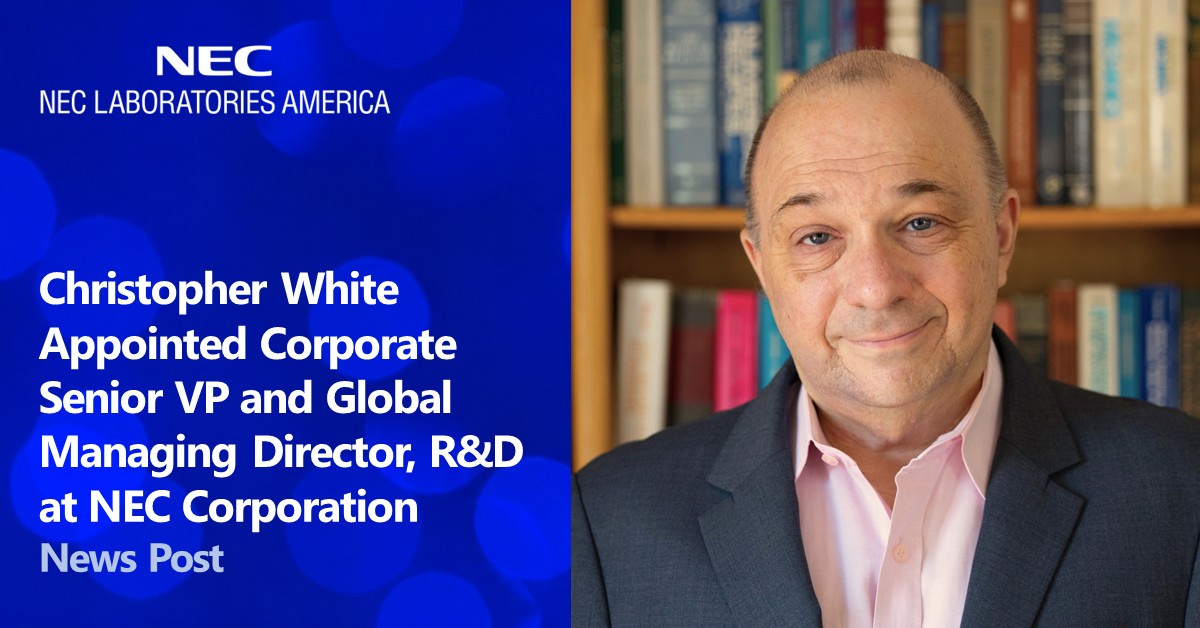
NEC Labs America2026-09-23 19:54:142026-09-23 20:10:49Christopher White Appointed Corporate Senior Vice President and Global Managing Director, R&D at NEC Corporation
https://www.nec-labs.com/wp-content/uploads/2026/09/Chris-White-Promotion-SMM.jpg
628
1200
NEC Labs America
https://www.nec-labs.com/wp-content/uploads/2025/08/NEC-Laboratories-America-Logo-Aug-2025-2.jpg
NEC Labs America2026-09-23 19:54:142026-09-23 20:10:49Christopher White Appointed Corporate Senior Vice President and Global Managing Director, R&D at NEC Corporation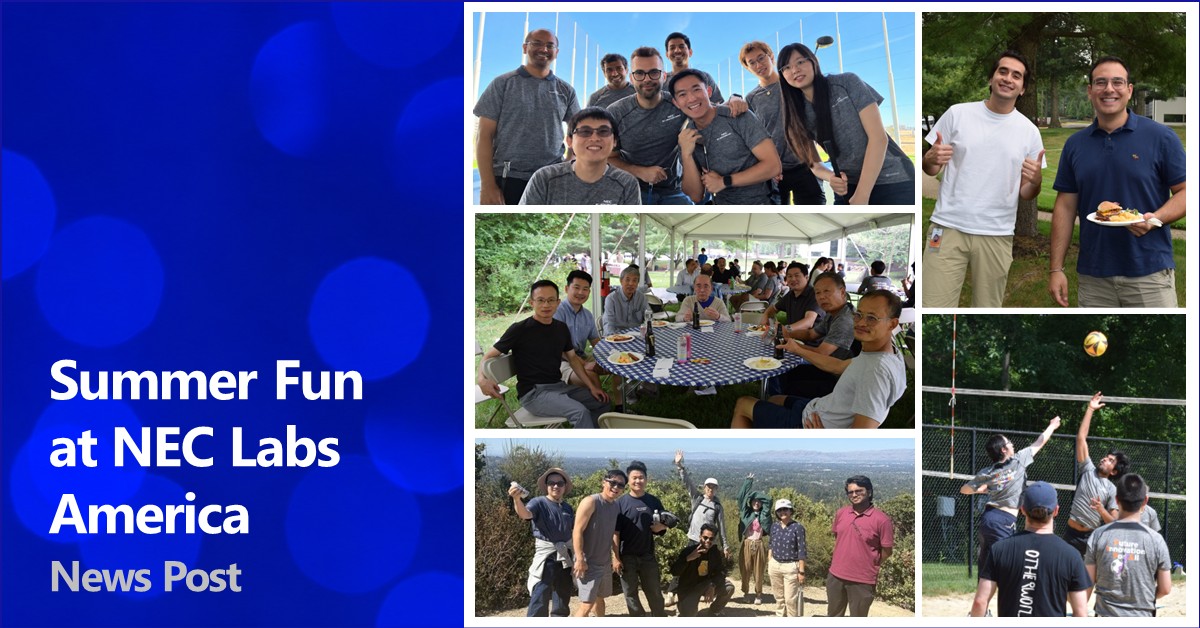 https://www.nec-labs.com/wp-content/uploads/2026/09/NEC-Labs-America-Summer-Fun.jpg
628
1200
NEC Labs America
https://www.nec-labs.com/wp-content/uploads/2025/08/NEC-Laboratories-America-Logo-Aug-2025-2.jpg
NEC Labs America2026-09-22 16:50:282026-10-01 12:18:48Summer Fun at NEC Labs America
https://www.nec-labs.com/wp-content/uploads/2026/09/NEC-Labs-America-Summer-Fun.jpg
628
1200
NEC Labs America
https://www.nec-labs.com/wp-content/uploads/2025/08/NEC-Laboratories-America-Logo-Aug-2025-2.jpg
NEC Labs America2026-09-22 16:50:282026-10-01 12:18:48Summer Fun at NEC Labs America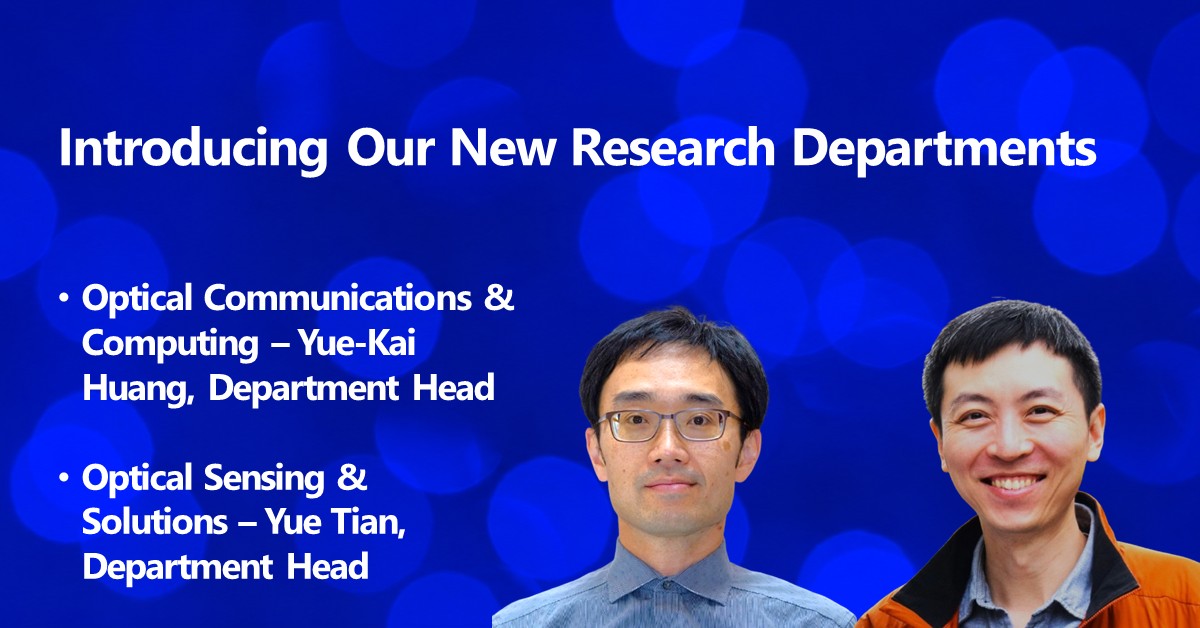 https://www.nec-labs.com/wp-content/uploads/2026/09/OCC-OSS-Blog-Post.jpg
628
1200
NEC Labs America
https://www.nec-labs.com/wp-content/uploads/2025/08/NEC-Laboratories-America-Logo-Aug-2025-2.jpg
NEC Labs America2026-09-01 07:00:042026-09-18 09:42:38NEC Laboratories America Forms Two New Departments: Optical Communications & Computing and Optical Sensing & Solutions
https://www.nec-labs.com/wp-content/uploads/2026/09/OCC-OSS-Blog-Post.jpg
628
1200
NEC Labs America
https://www.nec-labs.com/wp-content/uploads/2025/08/NEC-Laboratories-America-Logo-Aug-2025-2.jpg
NEC Labs America2026-09-01 07:00:042026-09-18 09:42:38NEC Laboratories America Forms Two New Departments: Optical Communications & Computing and Optical Sensing & Solutions https://www.nec-labs.com/wp-content/uploads/2026/08/NEC-Laboratories-America-Researchers-Win-a-2026-Edison-Patent-Award-for-Optical-Fiber-Innovation.jpg
628
1200
NEC Labs America
https://www.nec-labs.com/wp-content/uploads/2025/08/NEC-Laboratories-America-Logo-Aug-2025-2.jpg
NEC Labs America2026-08-20 09:14:182026-08-21 15:16:35NEC Laboratories America Researchers Win a 2026 Edison Patent Award for Optical Fiber Innovation
https://www.nec-labs.com/wp-content/uploads/2026/08/NEC-Laboratories-America-Researchers-Win-a-2026-Edison-Patent-Award-for-Optical-Fiber-Innovation.jpg
628
1200
NEC Labs America
https://www.nec-labs.com/wp-content/uploads/2025/08/NEC-Laboratories-America-Logo-Aug-2025-2.jpg
NEC Labs America2026-08-20 09:14:182026-08-21 15:16:35NEC Laboratories America Researchers Win a 2026 Edison Patent Award for Optical Fiber Innovation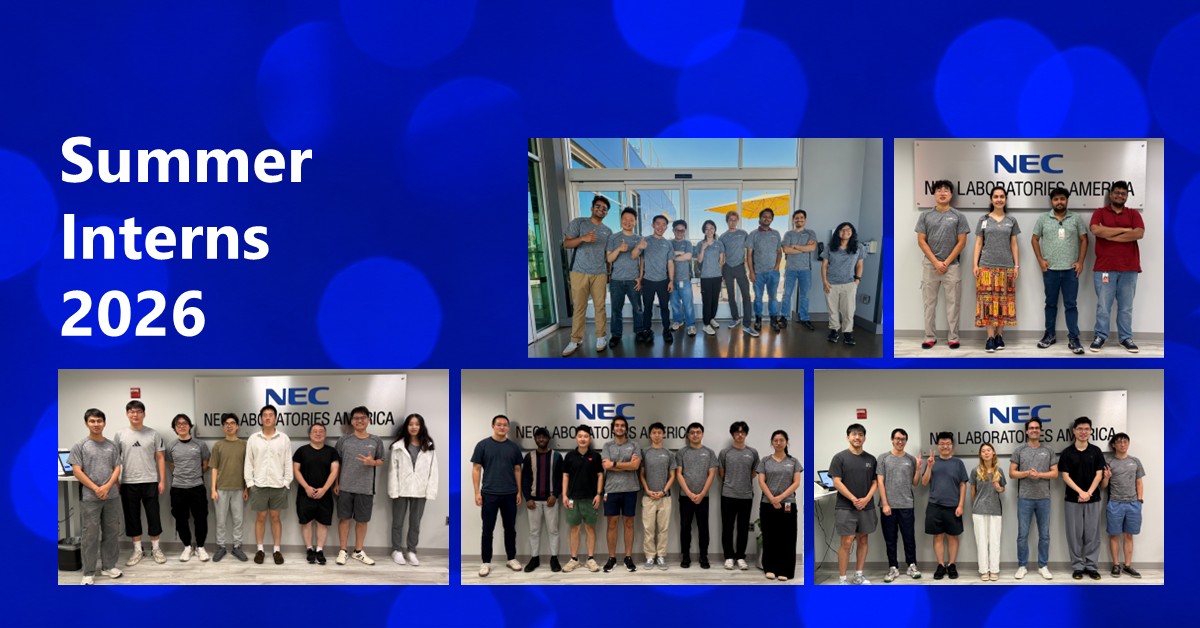 https://www.nec-labs.com/wp-content/uploads/2026/08/Summer-Interns-2026-1.jpg
628
1200
NEC Labs America
https://www.nec-labs.com/wp-content/uploads/2025/08/NEC-Laboratories-America-Logo-Aug-2025-2.jpg
NEC Labs America2026-08-18 12:59:042026-08-18 13:39:18Summer Interns 2026
https://www.nec-labs.com/wp-content/uploads/2026/08/Summer-Interns-2026-1.jpg
628
1200
NEC Labs America
https://www.nec-labs.com/wp-content/uploads/2025/08/NEC-Laboratories-America-Logo-Aug-2025-2.jpg
NEC Labs America2026-08-18 12:59:042026-08-18 13:39:18Summer Interns 2026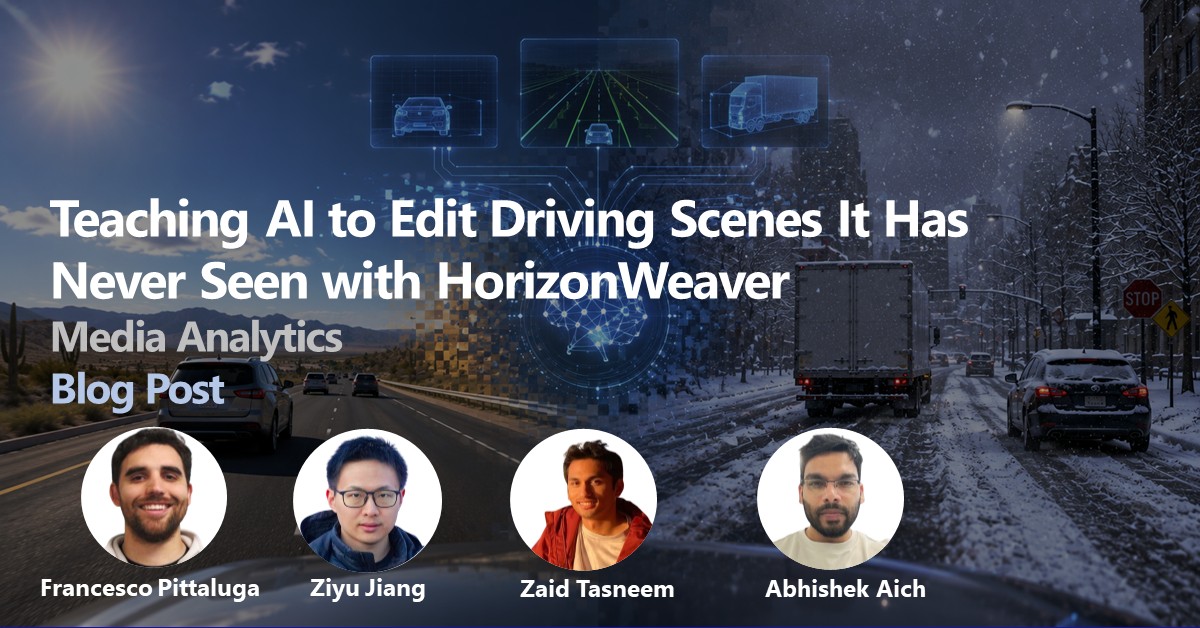 https://www.nec-labs.com/wp-content/uploads/2026/07/Teaching-AI-to-Edit-Driving-Scenes-It-Has-Never-Seen-with-HorizonWeaver-1.jpg
628
1200
NEC Labs America
https://www.nec-labs.com/wp-content/uploads/2025/08/NEC-Laboratories-America-Logo-Aug-2025-2.jpg
NEC Labs America2026-08-11 22:04:592026-08-11 22:05:56Teaching AI to Edit Driving Scenes It Has Never Seen with HorizonWeaver
https://www.nec-labs.com/wp-content/uploads/2026/07/Teaching-AI-to-Edit-Driving-Scenes-It-Has-Never-Seen-with-HorizonWeaver-1.jpg
628
1200
NEC Labs America
https://www.nec-labs.com/wp-content/uploads/2025/08/NEC-Laboratories-America-Logo-Aug-2025-2.jpg
NEC Labs America2026-08-11 22:04:592026-08-11 22:05:56Teaching AI to Edit Driving Scenes It Has Never Seen with HorizonWeaver