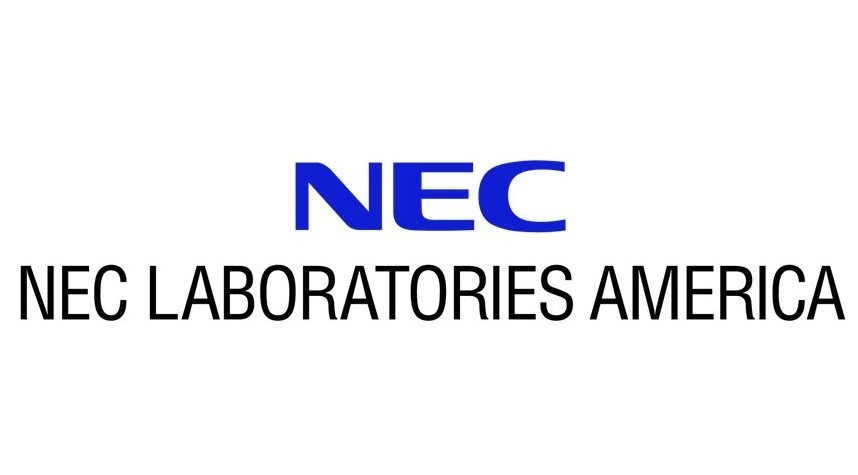
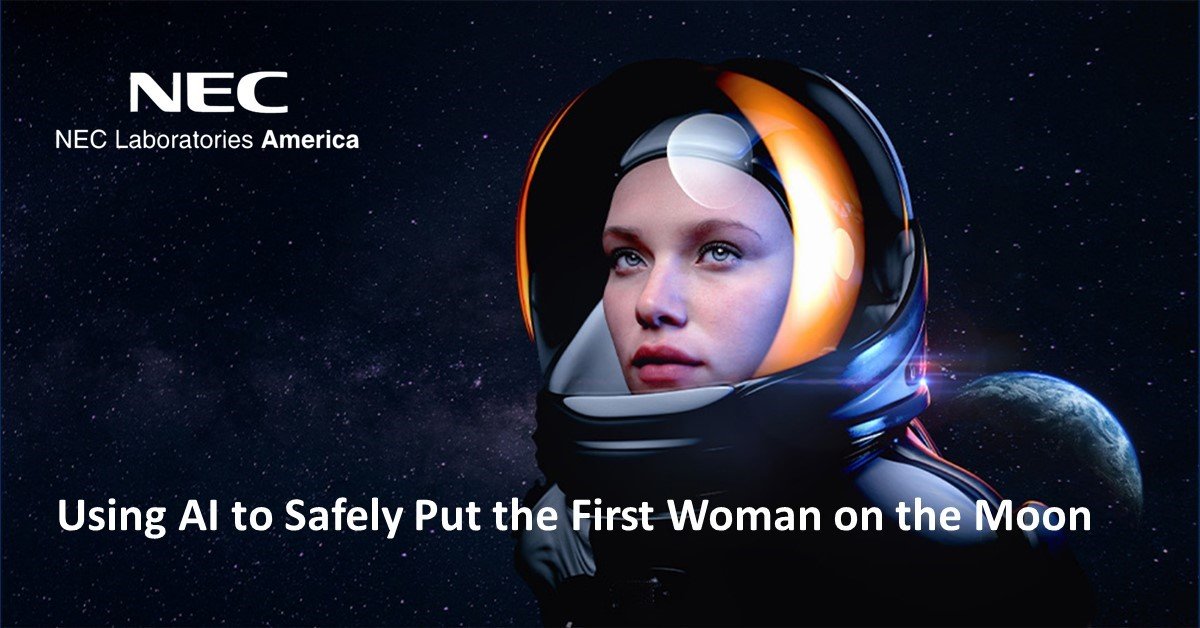
We are helping to safely bring the first woman astronaut to the moon as part of NASA’s Artemis Project with our System Invariant Analysis Technology (SIAT). This milestone represents a giant leap not just for space exploration, but for the role of artificial intelligence in ensuring mission safety and success.
Working with Lockheed Martin Space’s T-Tauri AI platform, our SIAT analytics engine ingests data from 150,000 sensors and builds a model incorporating over 22 billion data relationships. The AI model is then analyzed to identify irregularities that could lead to malfunctions in any of the spacecraft’s systems. By detecting potential issues before they escalate, SIAT plays a critical role in keeping astronauts safe and missions on track. This kind of proactive, AI-driven monitoring represents the future of human spaceflight.
The collaboration between NEC Laboratories America and Lockheed Martin reflects a shared commitment to pushing the boundaries of what AI can achieve in high-stakes environments. As space missions grow more complex, the ability to process and interpret massive volumes of sensor data in real time becomes not just an advantage, but a necessity.
Related: Lockheed Martin and NEC Put AI to Work on Programs like NASA’s Artemis Mission (Press Release)
“`
“I’m really proud of what the NEC team has accomplished here. AI tools like SIAT that help manage data and complexity will be key enablers for future space missions. I look forward to what we can accomplish with great partners like Lockheed Martin.”
— Haifeng Chen, Head of the Data Science and System Security Department, NEC Laboratories America
Read Our News Posts
 https://www.nec-labs.com/wp-content/uploads/2026/10/Message-from-Christopher-White.jpg
628
1200
NEC Labs America
https://www.nec-labs.com/wp-content/uploads/2025/08/NEC-Laboratories-America-Logo-Aug-2025-2.jpg
NEC Labs America2026-10-05 16:55:202026-10-05 17:19:59Message from Chris White, New Head of NEC Research & Development
https://www.nec-labs.com/wp-content/uploads/2026/10/Message-from-Christopher-White.jpg
628
1200
NEC Labs America
https://www.nec-labs.com/wp-content/uploads/2025/08/NEC-Laboratories-America-Logo-Aug-2025-2.jpg
NEC Labs America2026-10-05 16:55:202026-10-05 17:19:59Message from Chris White, New Head of NEC Research & Development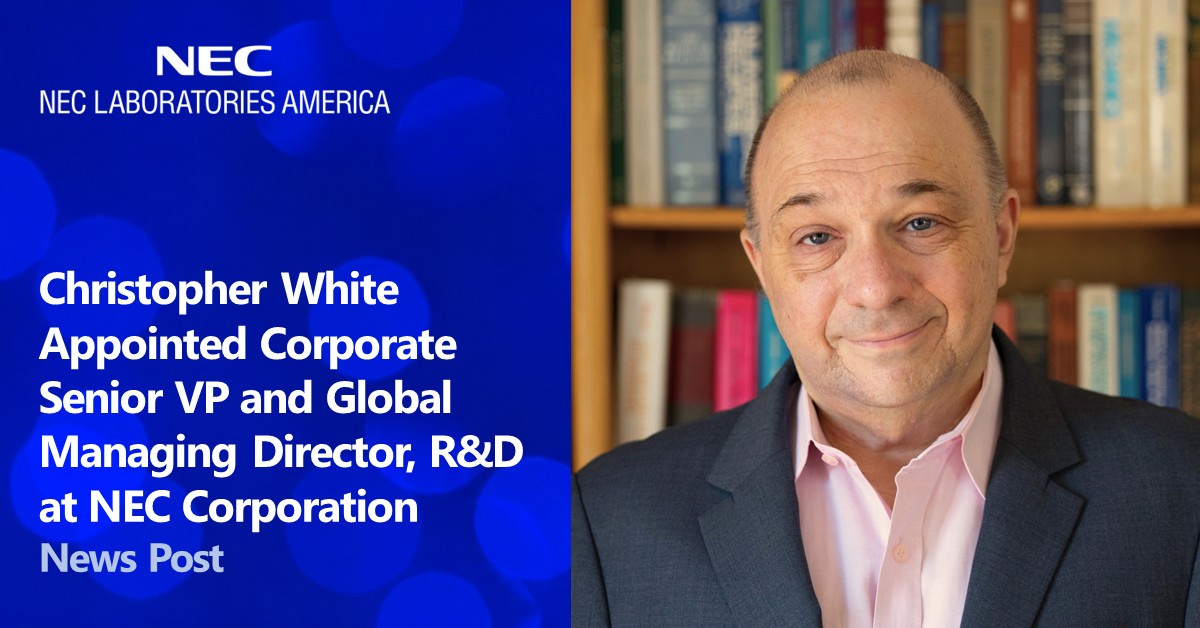 https://www.nec-labs.com/wp-content/uploads/2026/09/Chris-White-Promotion-SMM.jpg
628
1200
NEC Labs America
https://www.nec-labs.com/wp-content/uploads/2025/08/NEC-Laboratories-America-Logo-Aug-2025-2.jpg
NEC Labs America2026-09-23 19:54:142026-09-23 20:10:49Christopher White Appointed Corporate Senior Vice President and Global Managing Director, R&D at NEC Corporation
https://www.nec-labs.com/wp-content/uploads/2026/09/Chris-White-Promotion-SMM.jpg
628
1200
NEC Labs America
https://www.nec-labs.com/wp-content/uploads/2025/08/NEC-Laboratories-America-Logo-Aug-2025-2.jpg
NEC Labs America2026-09-23 19:54:142026-09-23 20:10:49Christopher White Appointed Corporate Senior Vice President and Global Managing Director, R&D at NEC Corporation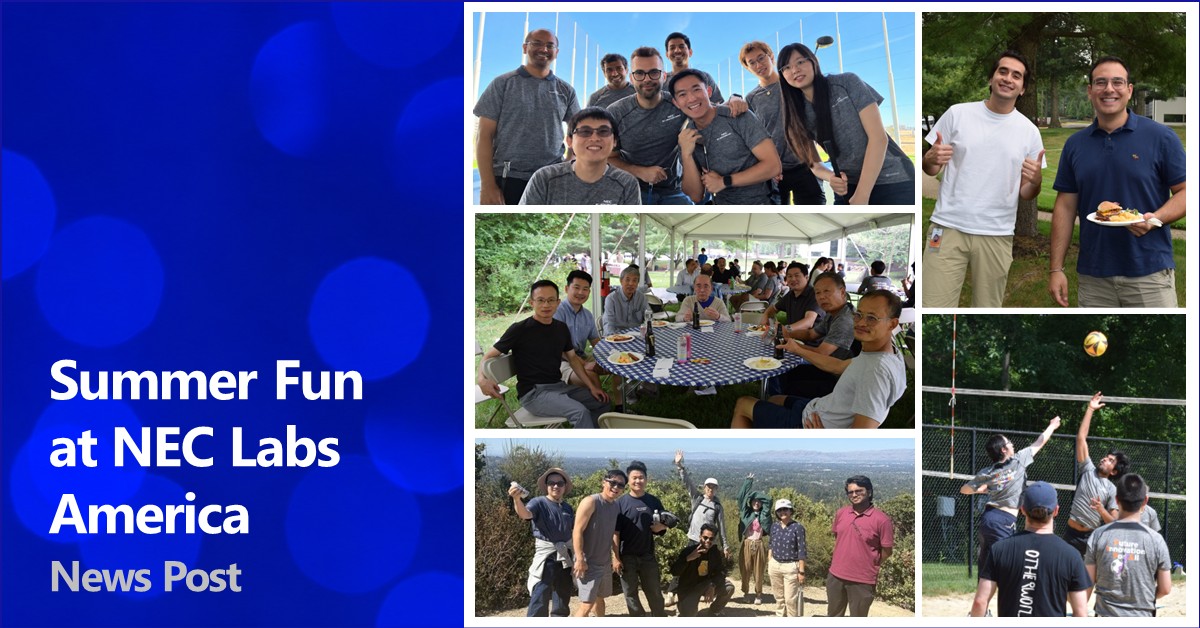 https://www.nec-labs.com/wp-content/uploads/2026/09/NEC-Labs-America-Summer-Fun.jpg
628
1200
NEC Labs America
https://www.nec-labs.com/wp-content/uploads/2025/08/NEC-Laboratories-America-Logo-Aug-2025-2.jpg
NEC Labs America2026-09-22 16:50:282026-10-01 12:18:48Summer Fun at NEC Labs America
https://www.nec-labs.com/wp-content/uploads/2026/09/NEC-Labs-America-Summer-Fun.jpg
628
1200
NEC Labs America
https://www.nec-labs.com/wp-content/uploads/2025/08/NEC-Laboratories-America-Logo-Aug-2025-2.jpg
NEC Labs America2026-09-22 16:50:282026-10-01 12:18:48Summer Fun at NEC Labs America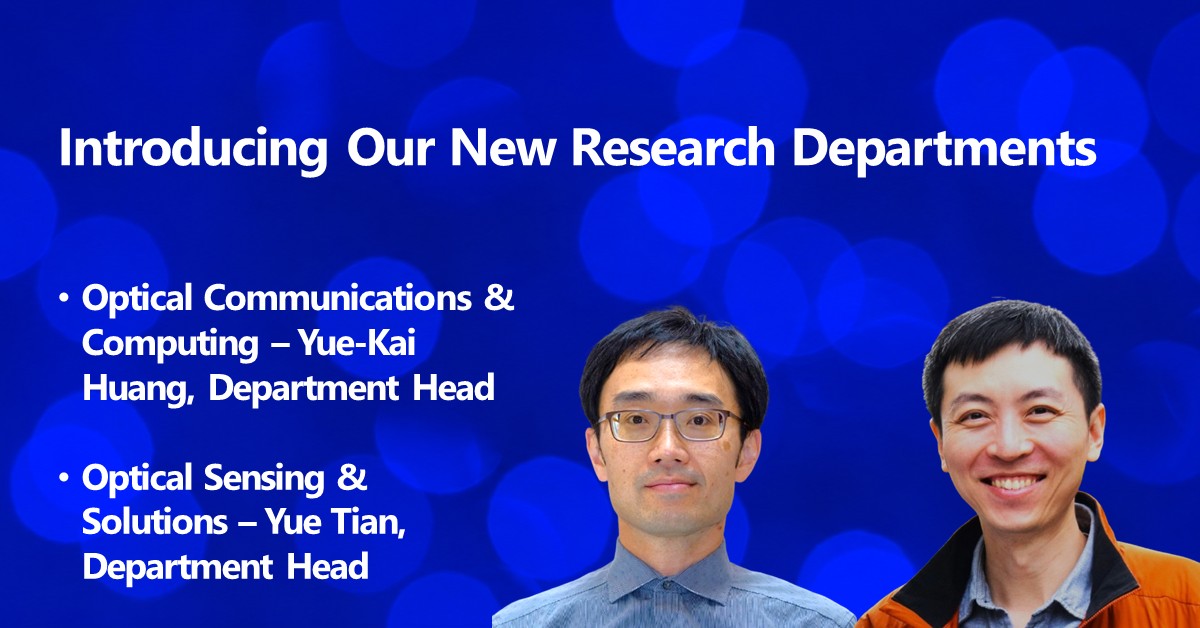 https://www.nec-labs.com/wp-content/uploads/2026/09/OCC-OSS-Blog-Post.jpg
628
1200
NEC Labs America
https://www.nec-labs.com/wp-content/uploads/2025/08/NEC-Laboratories-America-Logo-Aug-2025-2.jpg
NEC Labs America2026-09-01 07:00:042026-09-18 09:42:38NEC Laboratories America Forms Two New Departments: Optical Communications & Computing and Optical Sensing & Solutions
https://www.nec-labs.com/wp-content/uploads/2026/09/OCC-OSS-Blog-Post.jpg
628
1200
NEC Labs America
https://www.nec-labs.com/wp-content/uploads/2025/08/NEC-Laboratories-America-Logo-Aug-2025-2.jpg
NEC Labs America2026-09-01 07:00:042026-09-18 09:42:38NEC Laboratories America Forms Two New Departments: Optical Communications & Computing and Optical Sensing & Solutions https://www.nec-labs.com/wp-content/uploads/2026/08/NEC-Laboratories-America-Researchers-Win-a-2026-Edison-Patent-Award-for-Optical-Fiber-Innovation.jpg
628
1200
NEC Labs America
https://www.nec-labs.com/wp-content/uploads/2025/08/NEC-Laboratories-America-Logo-Aug-2025-2.jpg
NEC Labs America2026-08-20 09:14:182026-08-21 15:16:35NEC Laboratories America Researchers Win a 2026 Edison Patent Award for Optical Fiber Innovation
https://www.nec-labs.com/wp-content/uploads/2026/08/NEC-Laboratories-America-Researchers-Win-a-2026-Edison-Patent-Award-for-Optical-Fiber-Innovation.jpg
628
1200
NEC Labs America
https://www.nec-labs.com/wp-content/uploads/2025/08/NEC-Laboratories-America-Logo-Aug-2025-2.jpg
NEC Labs America2026-08-20 09:14:182026-08-21 15:16:35NEC Laboratories America Researchers Win a 2026 Edison Patent Award for Optical Fiber Innovation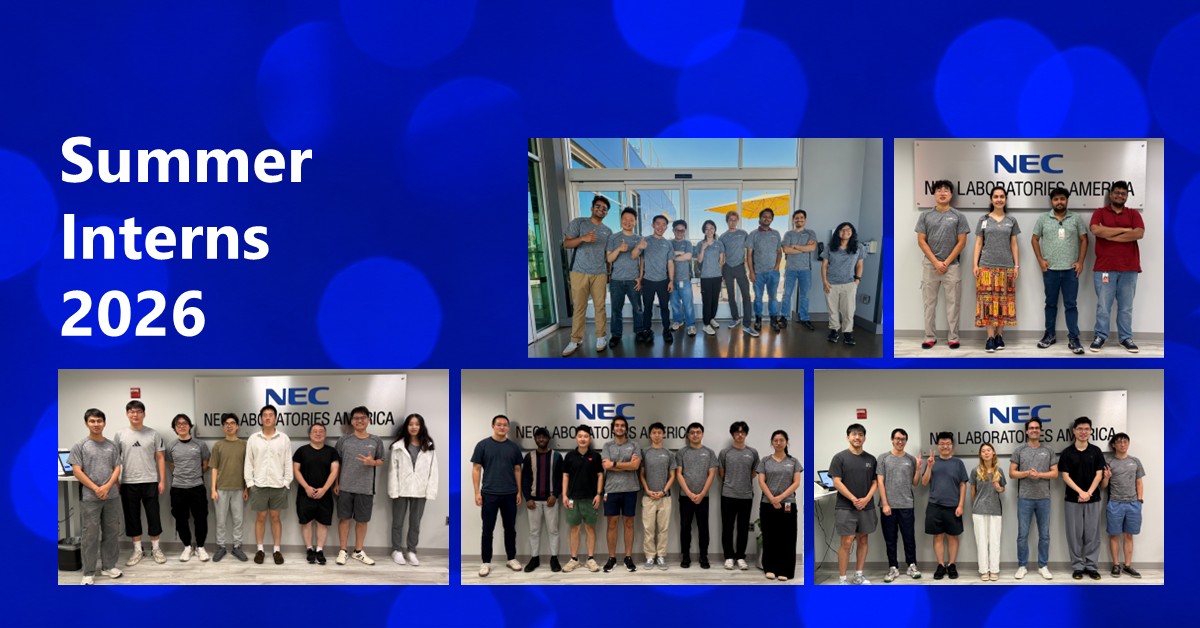 https://www.nec-labs.com/wp-content/uploads/2026/08/Summer-Interns-2026-1.jpg
628
1200
NEC Labs America
https://www.nec-labs.com/wp-content/uploads/2025/08/NEC-Laboratories-America-Logo-Aug-2025-2.jpg
NEC Labs America2026-08-18 12:59:042026-08-18 13:39:18Summer Interns 2026
https://www.nec-labs.com/wp-content/uploads/2026/08/Summer-Interns-2026-1.jpg
628
1200
NEC Labs America
https://www.nec-labs.com/wp-content/uploads/2025/08/NEC-Laboratories-America-Logo-Aug-2025-2.jpg
NEC Labs America2026-08-18 12:59:042026-08-18 13:39:18Summer Interns 2026