
NEC Laboratories America Forms Two New Departments: Optical Communications & Computing and Optical Sensing & Solutions
Effective today, NEC Laboratories America is splitting our Optical Networking & Sensing department into two focused research groups: Optical Communications & Computing (OCC) and Optical Sensing & Solutions (OSS).
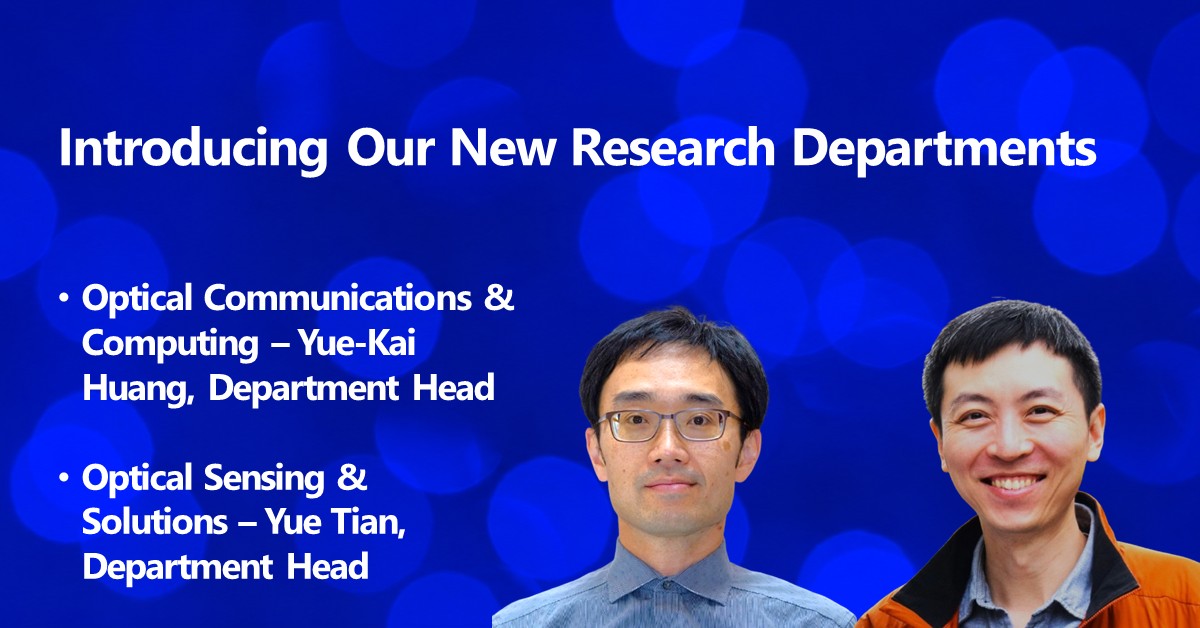
Both departments carry forward the lab’s decades of work in optics and photonics, now sharpened into two distinct missions: moving optical data through fiber and space and turning the same optical channel into sensing data to monitor the world around it.
The split reflects just how far the original department’s research had grown, from long-haul transmission systems pushing the limits of fiber capacity to city-scale sensing networks that measure physical changes such as vibration, temperature, and strain to build awareness of the surrounding environment and detect anomalies. Each department now gets a dedicated team, a sharper research agenda, and room to move faster on the problems ahead. It’s a pivotal moment for NEC Laboratories America, and both teams start from a stronger position to meet what comes next.
Optical Communications & Computing
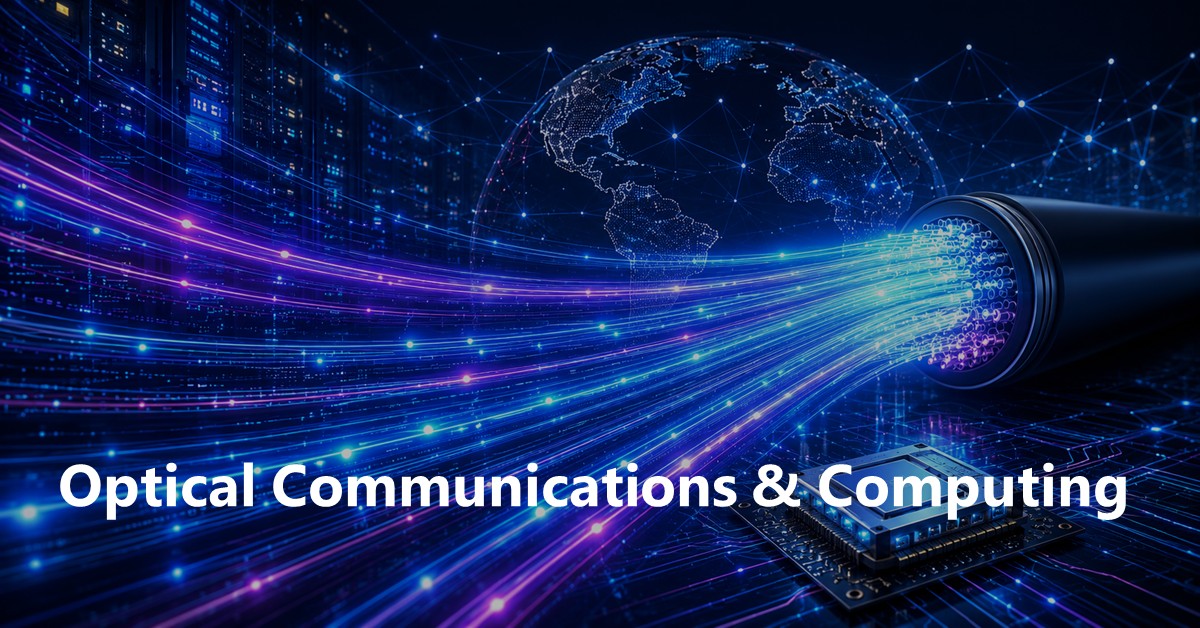 Yue-Kai Huang will lead our new Optical Communications & Computing (OCC) department, focusing on high-capacity optical transmission alongside emerging photonic computing architectures. The work spans theoretical modeling, laboratory experimentation, and field trials, addressing how optical networks keep pace with rising data demand from AI systems, cloud applications, and always-on global connectivity.
Researchers develop coherent optical transmission techniques, digital signal processing approaches, and software-defined optical networking architectures, including optical line system telemetry, network digital twins, and agentic AI-driven automation. These advances expand transmission capacity and offer advanced network functions across both traditional fiber links and satellite optical communications, giving network operators the flexibility to support AI-compute infrastructure, cloud services, and AR/VR applications.
The department also studies photonic and optical computing methods that address the energy and latency costs of AI workloads, extending optical technology from the network core into computing architectures themselves. This includes photonic computing architectures such as matrix multiplication for AI inference, optical interconnects for chip-to-chip communication ang analog optical computing (AOC) for reducing accelerator power draw. Recent OCC research, presented at conferences including OFC, ECOC, and OECC, has covered coherent transmission over hollow-core fiber, machine learning models for network performance prediction, and satellite routing for orbital networks.
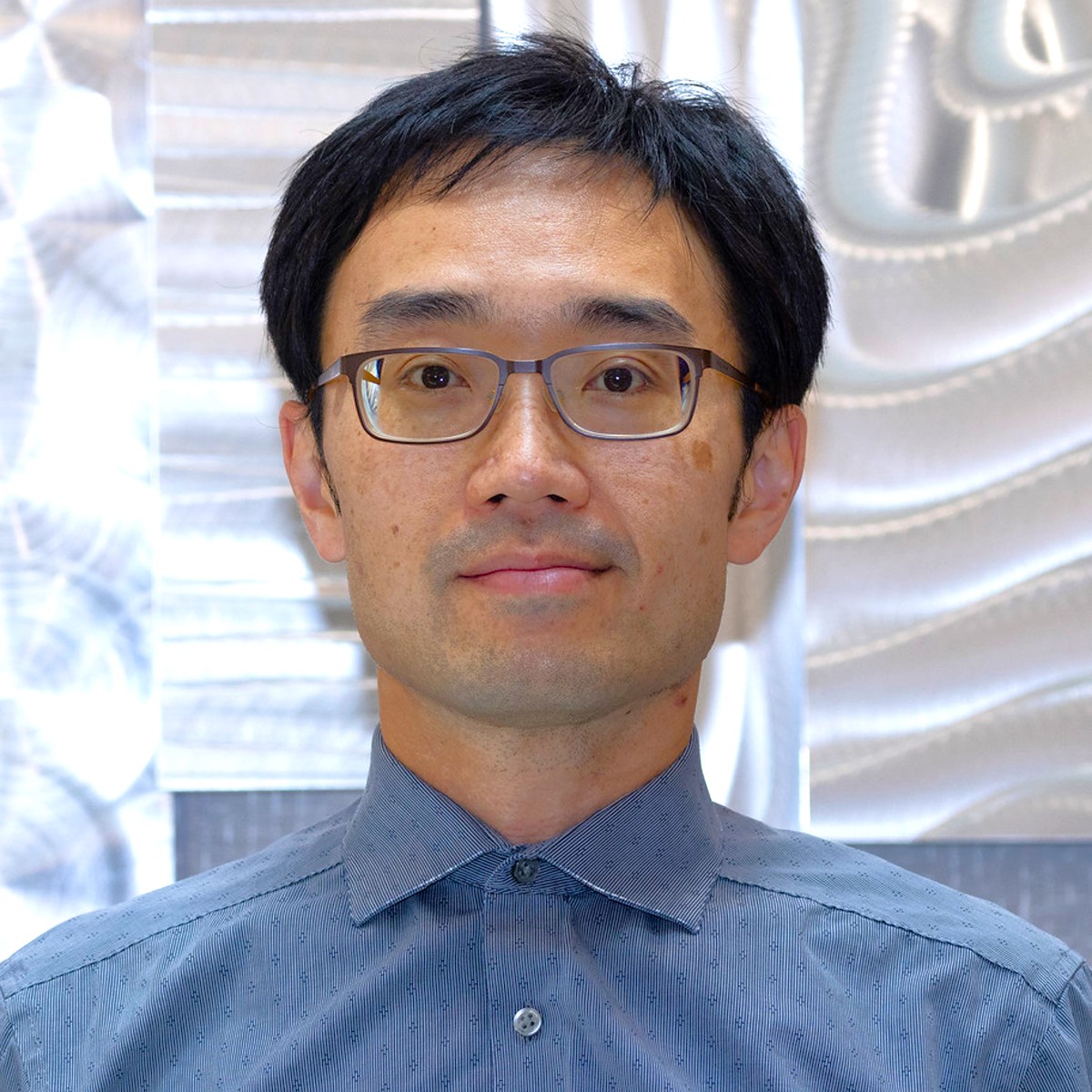 Dr. Huang earned his Ph.D. in electrical and electronics engineering from Princeton University after completing his M.S. and B.S. at National Taiwan University. His research has produced many of NEC’s coherent 100G to 400G products along with its distributed acoustic sensing solutions. His recent focus includes photonic computing architectures for AI acceleration. By combining fundamental photonics research with applied system development, Huang leads the OCC team toward our mission to create resilient, adaptive, efficient solutions for networks and computing systems.
Optical networks are the foundation of today’s 5G backbone and AI computing infrastructure. NEC Labs has long been at the forefront of optical communications, including developing the world’s first real-time 100G coherent system. The new OCC group carries the torch forward as we explore untapped opportunities in submarine systems, space networks, and photonic integration platforms. I am excited to lead the team as we turn these possibilities into reality. – Yue-Kai Huang, Department Head, Optical Communications & Computing
The new OCC research team includes Eric C. Blow, Researcher; Andrea D’Amico, Researcher; Azita Nouri, Researcher; Ezra Ip, Senior Researcher; Philip N. Ji, Senior Researcher; Eduardo Mateo, Senior Researcher; and Fatih Yaman, Senior Researcher.
Optical Sensing & Solutions
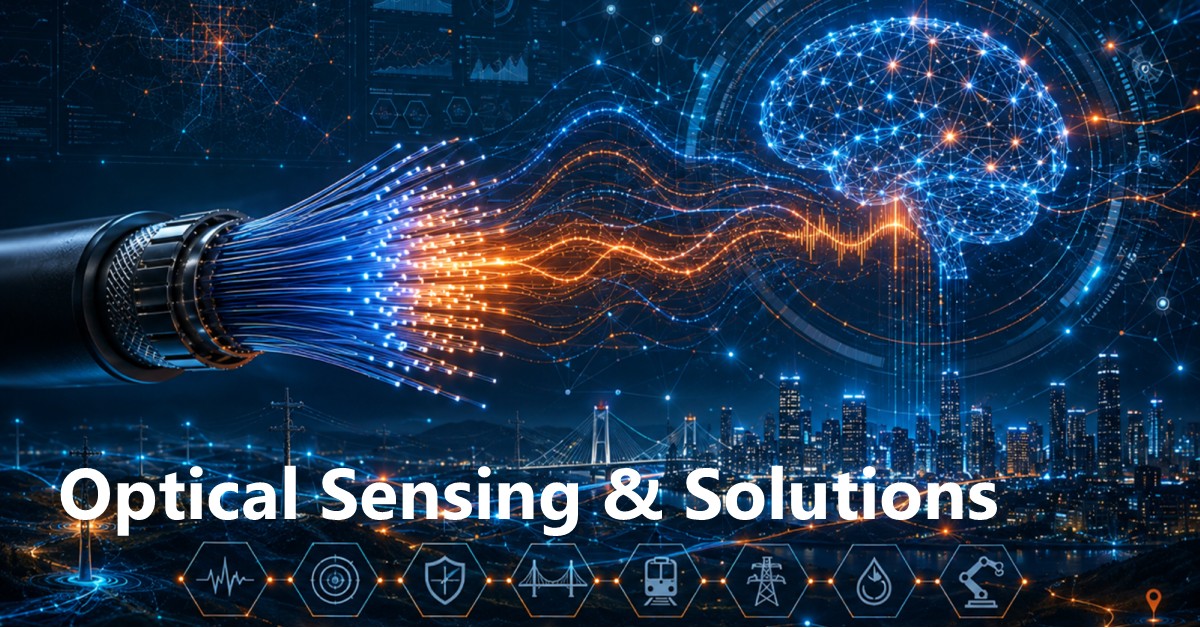 Yue Tian will lead our new Optical Sensing & Solutions department, which studies how deployed telecom fiber networks and emerging optical sensors can observe the physical world at scale. The department follows a broad sense–understand–act vision: developing optical and distributed fiber sensing technologies that capture physical phenomena, building AI methods that interpret complex signals and combine information across sensors, and creating intelligent solutions that turn those insights into decisions and responses.
Current research covers optical sensing, infrared imaging and spectroscopy, radio-frequency spectrum sensing, and AI-enabled sensing analytics, with applications in infrastructure monitoring, transportation, public safety, and smart cities. In one recent field deployment, NEC Laboratories America partnered with Verizon to turn live telecom fiber into a city-wide sensing network, detecting vibrations along fiber routes and reducing cable damage incidents.
 Dr. Tian holds a Ph.D. in electrical engineering from Princeton University and an M.S. and B.S. from Shanghai Jiao Tong University. His research has produced more than sixty publications and over thirty patents and commercialized technologies. Dr. Tian leads the OSS team, with research spanning fiber sensing, multimodal sensing, autonomous systems, and real-time intelligence.
A telecom fiber that is already in the ground can also serve as a sensor for the city around it. Our innovative work turns this existing infrastructure into an intelligent sensing platform that can understand its environment and enable real-time response. I am proud to lead this team and excited about what we will build next.
— Yue Tian, Department Head, Optical Sensing & Solutions
The OSS research team includes Yuheng Chen, Researcher; Yangmin Ding, Researcher; Tingfeng Li, Researcher; Yusuf Elbana, Research Assistant; Shuji Murakami, Research Assistant; Jian Fang, Senior Researcher; Junqiang Hu, Senior Researcher; Ming-Fang Huang, Senior Researcher; Yaowen Li, Senior Researcher; and Sarper Ozharar, Senior Researcher.
Ting Wang, Department Head Emeritus
 Ting Wang, the former department Head of the Optical Networking department, helped build the research program that both new departments now carry forward. Dr. Wang remains connected to both departments, and his influence is still visible across the organization. With more than two decades at NEC Laboratories America, Dr. Wang’s research spanned distributed fiber-optic sensing, optical gas sensing, fiber communications, and photonic neural networks, appearing across dozens of publications and patents and shaping many of the projects the OCC and OSS teams pursue today. His work contributed directly to the lab’s advances in distributed fiber-optic sensing, including early field trials that showed telecom fiber could double as a sensing network for cities, power grids, and undersea infrastructure.
Read More Blog Posts
 https://www.nec-labs.com/wp-content/uploads/2026/10/Updating-What-AI-Knows-Without-Breaking-What-It-Already-Knows.jpg
628
1200
NEC Labs America
https://www.nec-labs.com/wp-content/uploads/2025/08/NEC-Laboratories-America-Logo-Aug-2025-2.jpg
NEC Labs America2026-10-20 14:37:112026-10-20 14:58:26Updating What AI Knows Without Breaking What It Already Knows
https://www.nec-labs.com/wp-content/uploads/2026/10/Updating-What-AI-Knows-Without-Breaking-What-It-Already-Knows.jpg
628
1200
NEC Labs America
https://www.nec-labs.com/wp-content/uploads/2025/08/NEC-Laboratories-America-Logo-Aug-2025-2.jpg
NEC Labs America2026-10-20 14:37:112026-10-20 14:58:26Updating What AI Knows Without Breaking What It Already Knows https://www.nec-labs.com/wp-content/uploads/2026/10/Meet-Yue-Kai-Huang-Leading-Our-New-Optical-Communications-Computing-Department.jpg
628
1200
NEC Labs America
https://www.nec-labs.com/wp-content/uploads/2025/08/NEC-Laboratories-America-Logo-Aug-2025-2.jpg
NEC Labs America2026-10-13 10:45:372026-10-13 11:09:56Meet Yue-Kai Huang: Leading Our New Optical Communications & Computing Department
https://www.nec-labs.com/wp-content/uploads/2026/10/Meet-Yue-Kai-Huang-Leading-Our-New-Optical-Communications-Computing-Department.jpg
628
1200
NEC Labs America
https://www.nec-labs.com/wp-content/uploads/2025/08/NEC-Laboratories-America-Logo-Aug-2025-2.jpg
NEC Labs America2026-10-13 10:45:372026-10-13 11:09:56Meet Yue-Kai Huang: Leading Our New Optical Communications & Computing Department https://www.nec-labs.com/wp-content/uploads/2026/10/Message-from-Christopher-White.jpg
628
1200
NEC Labs America
https://www.nec-labs.com/wp-content/uploads/2025/08/NEC-Laboratories-America-Logo-Aug-2025-2.jpg
NEC Labs America2026-10-05 16:55:202026-10-05 17:19:59Message from Chris White, New Head of NEC Research & Development
https://www.nec-labs.com/wp-content/uploads/2026/10/Message-from-Christopher-White.jpg
628
1200
NEC Labs America
https://www.nec-labs.com/wp-content/uploads/2025/08/NEC-Laboratories-America-Logo-Aug-2025-2.jpg
NEC Labs America2026-10-05 16:55:202026-10-05 17:19:59Message from Chris White, New Head of NEC Research & Development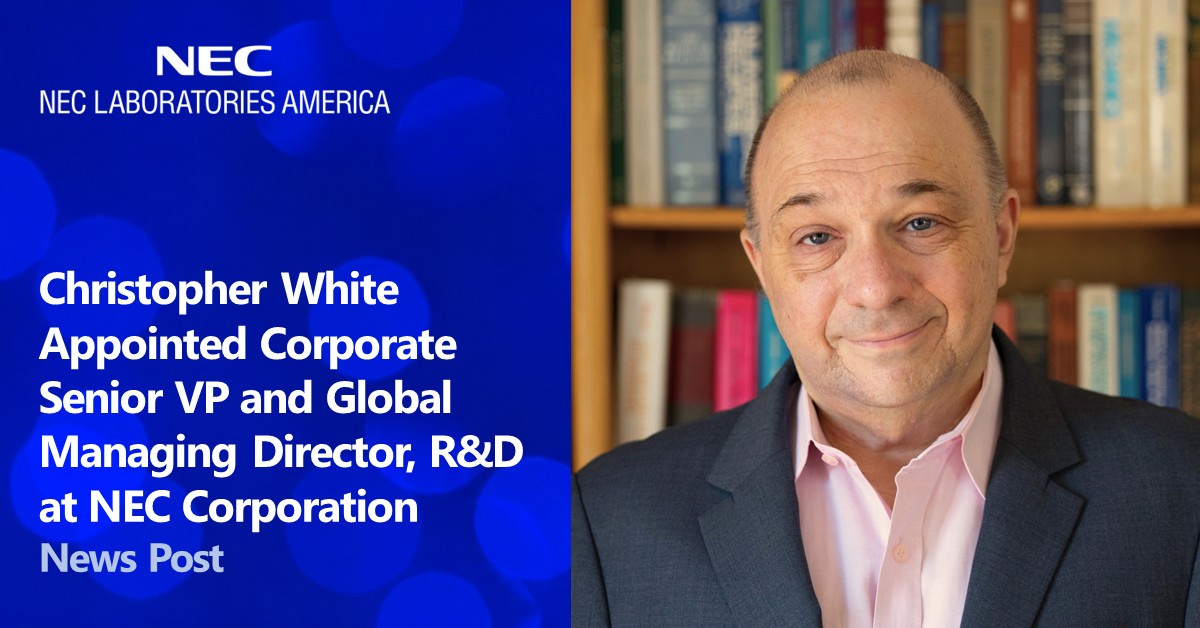 https://www.nec-labs.com/wp-content/uploads/2026/09/Chris-White-Promotion-SMM.jpg
628
1200
NEC Labs America
https://www.nec-labs.com/wp-content/uploads/2025/08/NEC-Laboratories-America-Logo-Aug-2025-2.jpg
NEC Labs America2026-09-23 19:54:142026-09-23 20:10:49Christopher White Appointed Corporate Senior Vice President and Global Managing Director, R&D at NEC Corporation
https://www.nec-labs.com/wp-content/uploads/2026/09/Chris-White-Promotion-SMM.jpg
628
1200
NEC Labs America
https://www.nec-labs.com/wp-content/uploads/2025/08/NEC-Laboratories-America-Logo-Aug-2025-2.jpg
NEC Labs America2026-09-23 19:54:142026-09-23 20:10:49Christopher White Appointed Corporate Senior Vice President and Global Managing Director, R&D at NEC Corporation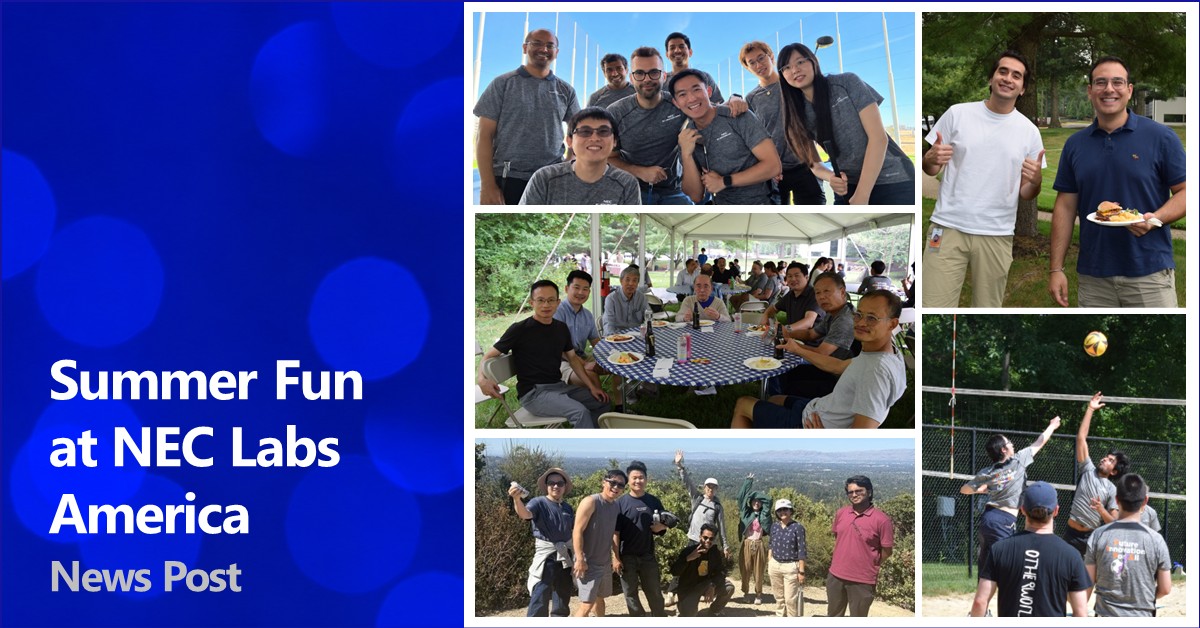 https://www.nec-labs.com/wp-content/uploads/2026/09/NEC-Labs-America-Summer-Fun.jpg
628
1200
NEC Labs America
https://www.nec-labs.com/wp-content/uploads/2025/08/NEC-Laboratories-America-Logo-Aug-2025-2.jpg
NEC Labs America2026-09-22 16:50:282026-10-01 12:18:48Summer Fun at NEC Labs America
https://www.nec-labs.com/wp-content/uploads/2026/09/OCC-OSS-Blog-Post.jpg
628
1200
NEC Labs America
https://www.nec-labs.com/wp-content/uploads/2025/08/NEC-Laboratories-America-Logo-Aug-2025-2.jpg
NEC Labs America2026-09-01 07:00:042026-09-18 09:42:38NEC Laboratories America Forms Two New Departments: Optical Communications & Computing and Optical Sensing & Solutions
https://www.nec-labs.com/wp-content/uploads/2026/09/NEC-Labs-America-Summer-Fun.jpg
628
1200
NEC Labs America
https://www.nec-labs.com/wp-content/uploads/2025/08/NEC-Laboratories-America-Logo-Aug-2025-2.jpg
NEC Labs America2026-09-22 16:50:282026-10-01 12:18:48Summer Fun at NEC Labs America
https://www.nec-labs.com/wp-content/uploads/2026/09/OCC-OSS-Blog-Post.jpg
628
1200
NEC Labs America
https://www.nec-labs.com/wp-content/uploads/2025/08/NEC-Laboratories-America-Logo-Aug-2025-2.jpg
NEC Labs America2026-09-01 07:00:042026-09-18 09:42:38NEC Laboratories America Forms Two New Departments: Optical Communications & Computing and Optical Sensing & Solutions