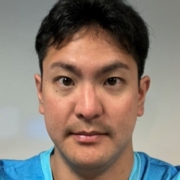
 Wataru Kohno is a Collaborator from NEC Japan and works with our Optical Sensing & Solutions team. Dr. Kohno earned his Ph.D. in Physics from Hokkaido University in Japan, where he built a strong foundation in the physics and engineering principles underlying optical communications.
He has also authored a number of research papers in condensed matter physics, where he investigated fundamental problems in electronic structures, correlated electron systems, and quantum materials, contributing to a deeper theoretical understanding of how microscopic physical principles give rise to novel material properties; a selection of these works can be found on his Google Scholar profile. With his background in fundamental theoretical condensed matter physics, his work focuses on distributed acoustic sensing (DAS) and fiber-optic communication technologies, where he develops methods to transform optical fibers into highly sensitive, passive sensors that detect vibration, movement, and pressure across vast geographic areas.
These innovations enable real-time situational awareness without requiring active electronics at the sensing points, making large-scale monitoring systems both scalable and unobtrusive. His research supports critical applications, including perimeter security, seismic monitoring, and infrastructure protection. His academic training continues to inform his applied research at NEC, where he bridges theoretical advances in photonics with real-world sensing challenges.
At NEC Laboratories America, he has contributed to multiple cutting-edge projects that expand the capabilities of distributed acoustic sensing. His recent work includes developing advanced vibrometry techniques, recognition systems that adapt fiber sensing for downstream applications, and AI-enhanced methods for real-time detection in critical infrastructure such as power grids. By combining deep expertise in optics with practical engineering approaches, his research is helping create intelligent sensing platforms that can deliver reliable, real-time monitoring solutions for global security and infrastructure needs.
Posts
We demonstrate underwater acoustic transmission of image-derived semantic messages using an over-80-km distributed fiber-optic acoustic sensing link with chirp-coded pulse interrogation,Raman amplification, and fiber-optic hydrophones. At 50 bps with Raman amplification, 100 scene-graph messages (21,193 bits) are delivered without observed errors (BER upper bound < 4.72 × 10?5).
NEC Laboratories America is bringing a strong research presence to ECOC 2026, the European Conference on Optical Communications in Málaga, Spain. Researchers from the Optical Communications & Computing and Optical Sensing & Solutions departments will present papers, posters, and workshop talks covering underwater acoustic sensing, power-efficient submarine cable design, earthquake and tsunami monitoring through telecom fiber, and forward-transmission fiber sensing.
Mix-CLAP from NEC Laboratories America delivers near-Transformer accuracy for sound event classification at a fraction of the compute cost, using dual lightweight encoders and adaptive, noise-aware inference for real-world edge deployment.
We demonstrate distributed fiber-optic acoustic sensing that employs a mechanical synchronizer to achieve sample-level synchronization of signals across independent sensors.This enables phase-noise suppression and bandwidth extension in standard multi-fiber optical cables without hardware modification.
NEC Laboratories America is proud to participate in OECC 2026, the 31st Opto-Electronics and Communications Conference, taking place in Busan, South Korea. We look forward to connecting with the international photonics and communications community and sharing the work we’re doing to shape the next generation of optical networks.
Knowledge distillation establishes a learning paradigm that leverages both data supervision and teacher guidance. However, determining the optimal balance between learning from data and learning from the teacher is challenging, as some samples may be noisy while others are subject to teacher uncertainty. This motivates the need for adaptively balancing data and teacher supervision. We propose Beta-weighted Knowledge Distillation (Beta-KD), an uncertainty-aware distillation framework that adaptively modulates how much the student relies on teacher guidance. Specifically, we formulate teacher-student learning from a unified Bayesian perspective and interpret teacher supervision as a Gibbs prior over student activations. This yields a closed-form, uncertainty-aware weighting mechanism and supports arbitrary distillation objectives and their combinations. Extensive experiments are conducted on multimodal VQA benchmarks by distilling a student Vision-Language Model from a large teacher VLM. The results demonstrate that Beta-KD consistently outperforms existing knowledge distillation methods. Code is available at https://github.com/Jingchensun/beta-kd.
NEC Labs America headed to Denver for CVPR 2026, one of the most prestigious gatherings in computer vision, machine learning, and pattern recognition. The IEEE/CVF Conference on Computer Vision and Pattern Recognition brought innovators from around the world to share breakthroughs.
Machine learning is shifting from learning from data alone to learning from both data and teacher models. Beta-KD uses uncertainty-aware Bayesian weighting to train compact multimodal AI without blindly trusting every teacher signal.
Real-world deployment requires sound event and acoustic scene classification systems to remain reliable in noisy, diverse environments on resource-constrained devices. Although contrastive language-audio pretraining (CLAP) models with Transformer-based audio encoders achieve strong zero-shot performance, their computational cost hinders deployment. In this paper, we propose Mix-CLAP, a computationally efficient, noise-aware CLAP model with knowledge-distilled audio encoders. Our method includes: (1) a two-stage knowledge distillation from teacher embeddings to two lightweight student encoders?one on clean audio, the other on noisy audio, and (2) adaptive inference that combines their embeddings together with a fusion parameter and minimizes the parameterized entropy at test time. Experiments show that Mix-CLAP with MobileNetV3-based audio encoders greatly improves computational efficiency, while achieving a comparable average accuracy of 52.58% to the Transformer-based CLAP model at 52.83% on the recorded ESC50 datasets with different devices including microphones and fiber-optic distributed acoustic sensors under diverse conditions, making it suitable for real-world, resource-constrained applications.
Distributed multichannel acoustic sensing (DMAS) enables large-scale sound event classification (SEC), but performance drops when many channels are degraded and when sensor layouts at test time differ from training layouts. We propose a learning-free, physics-informed inpainting frontend based on reverse time migration (RTM). In this approach, observed multichannel spectrograms are first back-propagated on a 3D grid using an analytic Greens function to form a scene-consistent image, and then forward-projected to reconstruct inpainted signals before logmel feature extraction and transformer-based classification. We evaluate the method on ESC-50 with 50 sensors and three layouts (circular, linear, right-angle), where per-channel SNRs are sampled from ?30 to 0 dB. Compared with an AST baseline, scaling-sparsemax channel selection, and channel-swap augmentation, the proposed RTM frontend achieves the best or competitive accuracy across all layouts, improving accuracy by 13.1 points on the right-angle layout (from 9.7% to 22.8%). Correlation analyses show that spatial weights align more strongly with SNR than with channelsource distance, and that higher SNRweight correlation corresponds to higher SEC accuracy. These results demonstrate that a reconstruct-then-project, physics-based preprocessing effectively complements learning-only methods for DMAS under layout-open configurations and severe channel degradation.
