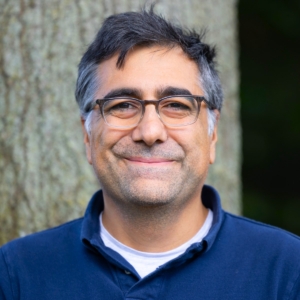
Sarper Ozharar is a Senior Researcher in the Optical Sensing & Solutions Department at NEC Laboratories America, where he works on advanced distributed fiber-optic sensing technologies that transform standard communication fibers into highly sensitive instruments capable of detecting vibrations, acoustic signals, and environmental changes. Dr. Ozharar earned his B.S. in Physics from Koç University and later completed his Ph.D. in Optics and Photonics at the University of Central Florida. His academic and research background spans photonics, nonlinear optics, and sensing systems, providing the foundation for his work developing scalable fiber-optic sensing platforms. In recognition of his achievements in science and technology, he received the Achievement Award from Koç University, highlighting the impact of his research and his continued contributions to advancing optical sensing technologies.
His research focuses on distributed acoustic sensing (DAS), which enables fiber-optic cables to serve as large-scale sensor networks for applications such as infrastructure monitoring, transportation systems, environmental observation, and critical infrastructure security. By combining optical physics, signal processing, and system design, his work helps expand the role of fiber networks beyond communications into real-time sensing platforms. He has contributed to projects that demonstrate how fiber-optic sensing can reveal previously hidden patterns in natural and built environments, including innovative experiments showing that underground fiber-optic cables can detect biological and environmental phenomena, such as cicada activity. These efforts illustrate the growing potential of distributed sensing technologies to monitor ecosystems, detect infrastructure disturbances, and provide new sources of environmental data.
Posts
NEC Laboratories America (NECLA) was proud to join the European Conference on Optical Communication (ECOC 2025) in Copenhagen, Denmark, from September 28 to October 2. Our researchers presented cutting-edge work in distributed acoustic sensing, AI-driven fiber optics, and optical networking. From generative models for event classification to digital twins and entomological observations using telecom fibers, these sessions highlighted NECLA’s role in shaping the future of intelligent and resilient communication systems. In addition, NECLA’s Fatih Yaman co-organized a workshop on emerging frontiers in optical communication.
We propose a novel optical flow processing technique for distributed temperature and strain sensing with the chirped-pulse coherent OTDR. Unlike conventional 1-dimensional cross-correlation methods, the technique treats the 2-dimensional waterfall data as sequential video frames, estimating local shifts through optical flow. The weighted least square approach with adaptive window size enables pixel-level optical flow calculation, providing accurate local shifts via accumulative tracks with enhanced spatial resolution. Preliminary experimental results over 20km fiber demonstrate its effectiveness for dynamic temperature and strain sensing, addressing limitations of traditional methods and improving sensing capabilities.
A 100-meter-long fiber optic cable was installed at the bottom of a water tank at the Davidson Laboratory, together with a hydrophone for reference. The water tank is approximately 2.5 meters deep and 95 meters long; the tank also employs a 6-paddle wavemaker which can generate programmable surface waves. A 155-cm-long model boat weighing 6.5 kilograms was automatically dragged on the surface of the tank via an electrical towing mechanism. The movement of the model boat along the fiber cable and over the hydrophone was recorded using a commercially available NEC Distributed Acoustic Sensing (DAS) system and simultaneously by a hydrophone. The experiments were repeated with and without the artificially generated surface waves. The data obtained from the hydrophone and the DAS system are presented and compared. The results show the compatibility between the DAS data and the hydrophone data. More importantly, ourresults show that it is possible to measure the surface waves and to detect a surface vessel approaching the sensor by only using the time domain analysis in terms of detected total energy over time.
We propose a novel Distributed Fiber Optic Sensing (DFOS) placement strategy tailored to the evolving needs of modern power grids, where fiber cables serve dual purposes: communication and real-time sensing. Our approach integrates a heuristic algorithm, PURE (Power Source-aware Route Exploration), with Integer Linear Programming (ILP) to optimize DFOS placement while addressing power supply constraints. The strategy ensures resilient monitoring across diverse grid scenarios by prioritizing observability during outages and leveraging advancements in fiber infrastructure deployment. Case studies demonstrate the effectiveness of our methodology in maintaining power grid resilience while minimizing deployment costs.
We present a generative AI framework based on a conditional diffusion model for distributed acoustic sensing (DAS) data imputation. The proposed DiffOptics model generates high-quality DAS data of various acoustic events using telecom fiber cables.
Vector beams are spatial modes that have spatially inhomogeneous states of polarization. Any light beam is a linear combination of vector beams, the coefficients of which comprise a vector beam spectrum. In this work, through numerical calculations, a novel method of free-space optical sensing is demonstrated using vector beam spectra, which are shown to be experimentally measurable via Stokes polarimetry. As proof of concept, vector beam spectra are numerically calculated for various beams and beam obstructions.
For the first time, we demonstrate remote sensing of pole-mounted fuse-cutout blowing in a power grid setup using telecom fiber cable. The proposed frequency-based AI model achieves over 98% detection accuracy using distributed fiber sensing data.
Our optical networking & sending team has arrived in Frankfurt for the 2024 European Conference on Optical Communication (ECOC) and is excited to present many papers and tutorials this week. Please follow this page and on our social media channels for updates.
The various sensing technologies such as cameras LiDAR radar and satellites with advanced machine learning models offers a comprehensive approach to environmental perception and understanding. This paper introduces an innovative Distributed Fiber Optic Sensing (DFOS) technology utilizing the existing telecommunication infrastructure networks for rain intensity monitoring. DFOS enables a novel way to monitor weather condition and environmental changes provides real-time continuous and precise measurements over large areas and delivers comprehensive insights beyond the visible spectrum. We use rain intensity as an example to demonstrate the sensing capabilities of DFOS system. To enhance the rain sensing performance we introduce a Deep Phase-Magnitude Network (DFMN) divide the raw sensing data into phase and magnitude component allowing targeted feature learning on each component independently. Furthermore we propose a Phase Frequency learnable filter (PFLF) for the phase component filtering and conduct standard convolution layers on the magnitude component leveraging the inherent physical properties of optical fiber sensing. We formulate the phase-magnitude channel into a parallel network and subsequently fuse the features for a comprehensive analysis in the end. Experimental results on the collected fiber sensing data show that the proposed method performs favorably against the state-of-the-art approaches.
Our team will be attending CVPR 2024 (The IEEE /CVF Conference on Computer Vision & Pattern Recognition) from June 17-21! See you there at the NEC Labs America Booth 1716! Stay tuned for more information about our participation.