
March 24, 2023
The age of computer vision is upon us, and it’s transforming the way we live, work and interact with the world. Nearly every industry has found a use case to grow revenue, reduce cost, or create exceptional experiences using computer vision.
From self-driving cars to retail automation, surgeons to farmers, computer vision is everywhere, providing critical insights that are driving progress in virtually every aspect of our daily lives. Today, images and videos are annotated to train artificial intelligence (AI) models to recognize specific objects, but there is still so much more to be done when it comes to understanding what those objects are doing in real-time.
Co-creating to Improve Video Analytics with AI
NEC Labs America believes that co-creation is the key to unlocking the full potential of computer vision. By working directly with stakeholders to develop solutions that address real-world problems, we can create technology that delivers true social value that drives positive change in our communities. We are taking a unique approach to improving action recognition through creative collaboration with NEC Corporation of America’s Creating Shared Value (CSV) task force. This task force works directly with trusted partners on leading-edge projects to co-create solutions to address societal needs.
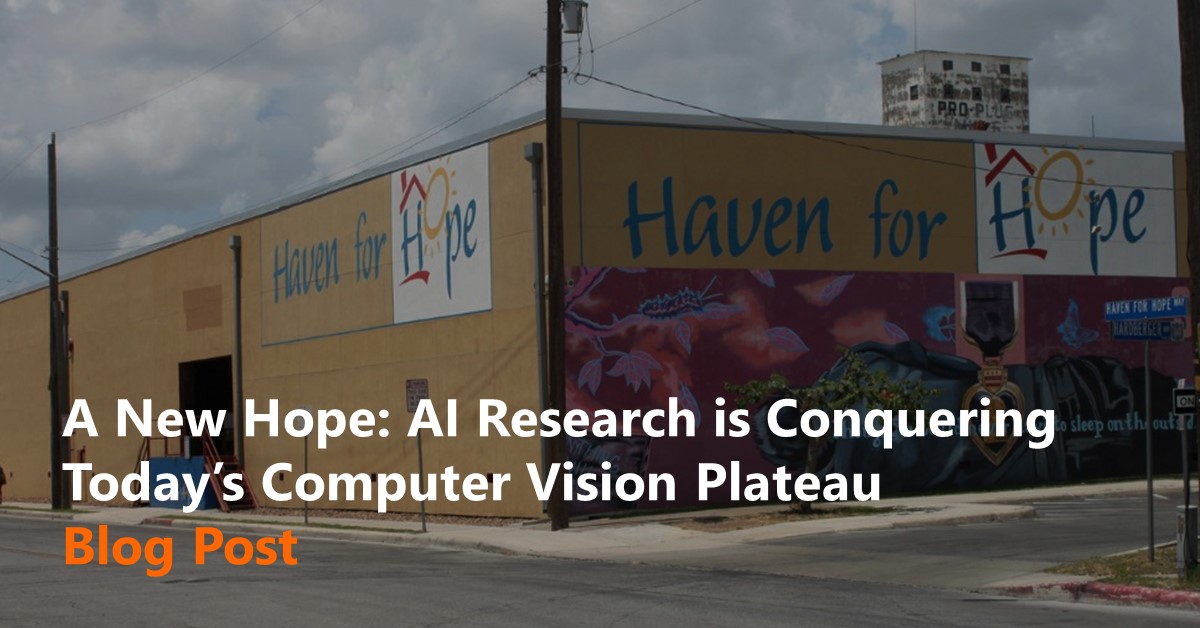
That’s why we’re thrilled to be collaborating with Haven for Hope, a 22-acre transformational campus in San Antonio, Texas, that provides shelter, care, and support for people experiencing homelessness. Haven for Hope and its partners serve an average of 1,600 men, women and families daily. Despite an extensive network of security cameras, staff are unable to monitor all activities happening on the campus at all times. This is where our Artificial Intelligence (AI)-based computer vision technology comes in.
For NEC, computer vision is about adapting AI to recognize anomalies and other unexpected visuals to help identify the need for action. We apply AI, machine learning (ML), and deep learning to video cameras (i.e., video analytics, computer vision, machine vision), enabling real-time and accurate detection, location, tracking, and counting of objects, including people, baggage, ground vehicles, and aircraft. It also recognizes actions and behaviors, such as intrusions, loitering, leaving or taking baggage, crowding, stealing, fighting, falling, walking and running.
By co-creating a solution that goes beyond commercially available technology, we will be able to provide Haven for Hope with real-time insights into potential emergencies, accidents or unsafe activity. Our computer vision solution uses existing live feeds to identify the actions of people and objects and sends instant alerts to staff members so they can take immediate action. This will not only improve service to Haven’s clients but will also enhances the safety and security of the entire campus.
As an industrial lab, we’re committed to creating shared value and driving innovation that makes a real difference in people’s lives. We believe that by collaborating with partners like Haven for Hope, we can develop scalable, sustainable solutions that deliver benefits back to our communities. It’s time to move beyond incremental change and harness the power of technology to make the world a better, more responsive, and more efficient place for all. Together we can Orchestrate a Brighter World where everyone has the opportunity to reach their full potential.
Contributors:
Hans Peter Graf, Senior Advisor, Machine Learning
Martin Renqiang Min, Department Head, Machine Learning
Giovanni Milione, Senior Researcher, Optical Networking & Sensing
Deep Patel, Associate Researcher, Machine Learning
Haven for Hope
1 Haven for Hope Way
San Antonio, TX 78207

Contributors

Hans Peter Graf, Senior Advisor, Machine Learning

Martin Renqiang Min, Department Head, Machine Learning

Giovanni Milione, Senior Researcher, Optical Networking & Sensing

Deep Patel, Associate Researcher, Machine Learning
Read Our News Posts
 https://www.nec-labs.com/wp-content/uploads/2023/12/Sarper-Ozharar-Achievement-in-Science-and-Technology-Award.jpg
628
1200
NEC Labs America
https://www.nec-labs.com/wp-content/uploads/2025/08/NEC-Laboratories-America-Logo-Aug-2025-2.jpg
NEC Labs America2023-11-30 09:18:112026-06-26 13:03:12Sarper Ozharar Receives Achievement in Science and Technology Award from Koç University
https://www.nec-labs.com/wp-content/uploads/2023/12/Sarper-Ozharar-Achievement-in-Science-and-Technology-Award.jpg
628
1200
NEC Labs America
https://www.nec-labs.com/wp-content/uploads/2025/08/NEC-Laboratories-America-Logo-Aug-2025-2.jpg
NEC Labs America2023-11-30 09:18:112026-06-26 13:03:12Sarper Ozharar Receives Achievement in Science and Technology Award from Koç University https://www.nec-labs.com/wp-content/uploads/2023/09/Meet-the-NEC-Labs-America-Intern-Helping-to-Make-Autonomous-Vehicles-Safer-and-More-Secure-Blog-Post-Graphic.png
628
1200
NEC Labs America
https://www.nec-labs.com/wp-content/uploads/2025/08/NEC-Laboratories-America-Logo-Aug-2025-2.jpg
NEC Labs America2023-09-08 15:38:202026-06-26 11:03:22Meet the NEC Labs America Intern Helping to Make Autonomous Vehicles Safer and More Secure
https://www.nec-labs.com/wp-content/uploads/2023/09/Meet-the-NEC-Labs-America-Intern-Helping-to-Make-Autonomous-Vehicles-Safer-and-More-Secure-Blog-Post-Graphic.png
628
1200
NEC Labs America
https://www.nec-labs.com/wp-content/uploads/2025/08/NEC-Laboratories-America-Logo-Aug-2025-2.jpg
NEC Labs America2023-09-08 15:38:202026-06-26 11:03:22Meet the NEC Labs America Intern Helping to Make Autonomous Vehicles Safer and More Secure https://www.nec-labs.com/wp-content/uploads/2023/09/AI-Fiber-Optic-Combo-Poised-To-Improve-Telecommunications.jpg
628
1200
NEC Labs America
https://www.nec-labs.com/wp-content/uploads/2025/08/NEC-Laboratories-America-Logo-Aug-2025-2.jpg
NEC Labs America2023-09-07 14:57:352026-06-26 11:04:20AI/Fiber-Optic Combo Poised To Improve Telecommunications
https://www.nec-labs.com/wp-content/uploads/2023/09/AI-Fiber-Optic-Combo-Poised-To-Improve-Telecommunications.jpg
628
1200
NEC Labs America
https://www.nec-labs.com/wp-content/uploads/2025/08/NEC-Laboratories-America-Logo-Aug-2025-2.jpg
NEC Labs America2023-09-07 14:57:352026-06-26 11:04:20AI/Fiber-Optic Combo Poised To Improve Telecommunications https://www.nec-labs.com/wp-content/uploads/2023/09/Industrial-Labs-to-Drive-Disruptive-Innovation-for-the-Fourth-Industrial-Revolution-Blog-Post.jpg
628
1200
NEC Labs America
https://www.nec-labs.com/wp-content/uploads/2025/08/NEC-Laboratories-America-Logo-Aug-2025-2.jpg
NEC Labs America2023-09-06 14:13:252026-06-26 11:08:59Industrial Labs to Drive Disruptive Innovation for the Fourth Industrial Revolution
https://www.nec-labs.com/wp-content/uploads/2023/03/Haven-for-Hope.jpg
628
1200
NEC Labs America
https://www.nec-labs.com/wp-content/uploads/2025/08/NEC-Laboratories-America-Logo-Aug-2025-2.jpg
NEC Labs America2023-03-27 17:25:222026-06-29 17:34:57A New Hope: AI Research is Conquering Today’s Computer Vision Plateau
https://www.nec-labs.com/wp-content/uploads/2023/09/Industrial-Labs-to-Drive-Disruptive-Innovation-for-the-Fourth-Industrial-Revolution-Blog-Post.jpg
628
1200
NEC Labs America
https://www.nec-labs.com/wp-content/uploads/2025/08/NEC-Laboratories-America-Logo-Aug-2025-2.jpg
NEC Labs America2023-09-06 14:13:252026-06-26 11:08:59Industrial Labs to Drive Disruptive Innovation for the Fourth Industrial Revolution
https://www.nec-labs.com/wp-content/uploads/2023/03/Haven-for-Hope.jpg
628
1200
NEC Labs America
https://www.nec-labs.com/wp-content/uploads/2025/08/NEC-Laboratories-America-Logo-Aug-2025-2.jpg
NEC Labs America2023-03-27 17:25:222026-06-29 17:34:57A New Hope: AI Research is Conquering Today’s Computer Vision Plateau https://www.nec-labs.com/wp-content/uploads/2022/11/Our-Time-Series-Data-Research-Drives-Space-Systems-Innovation.jpg
628
1200
NEC Labs America
https://www.nec-labs.com/wp-content/uploads/2025/08/NEC-Laboratories-America-Logo-Aug-2025-2.jpg
NEC Labs America2022-11-17 02:51:342026-06-26 11:11:18NEC Labs America’s Time Series Data Research Drives Space Systems Innovation
https://www.nec-labs.com/wp-content/uploads/2022/11/Our-Time-Series-Data-Research-Drives-Space-Systems-Innovation.jpg
628
1200
NEC Labs America
https://www.nec-labs.com/wp-content/uploads/2025/08/NEC-Laboratories-America-Logo-Aug-2025-2.jpg
NEC Labs America2022-11-17 02:51:342026-06-26 11:11:18NEC Labs America’s Time Series Data Research Drives Space Systems Innovation