AI/Fiber-Optic Combo Poised To Improve Telecommunications
September 7, 2023 | NEC Labs America | News | Tags: fiber-optics, AI
Distributed fiber optics sense everything everywhere all at once. Paired with artificial intelligence and machine learning, it can act as an interface between the physical and digital worlds. Existing underground fiber-optic telecommunications cable networks that can be accessed through street manholes are helping a team at NEC Labs America improve wireless communications systems and the Internet of Things (IoT).
“Hundreds of millions of fiber-optic cables are already there for communications purposes,” says Shaobo Han, a researcher at NEC Labs America who focuses on the design and development of machine learning and signal-processing techniques for real-world sensing applications. “We’re turning it all into a ‘thinking’ device, using the same cable that’s already there.”
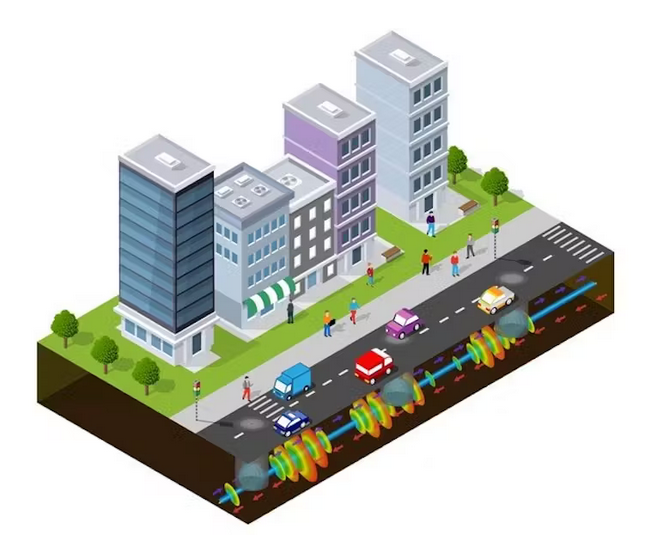
Using the existing cable networks, Han’s team can monitor and track the path of almost any object above ground without installing additional sensors or connecting to wireless networks. The fiber sensing system provides optical as well as acoustic information by using thin-film optoelectronics as an integrator that sends out optical power from lasers to the optical fiber. By analyzing its scattering, information about physical parameters such as acoustical aberration and temperatures can be found.
The story was based on a technical paper in Optica on Ambient Noise-Based Weakly Supervised Manhole Localization Methods Over Deployed Fiber Optic Networks.
Check out the full article in Laser Focus World which provides additional details on practical use cases for this technology, including tracking the movements of objects on city streets.
Read Our News Posts
 https://www.nec-labs.com/wp-content/uploads/2026/06/How-AI-Can-Transform-the-Way-Companies-Buy-What-They-Need.jpg
628
1200
NEC Labs America
https://www.nec-labs.com/wp-content/uploads/2025/08/NEC-Laboratories-America-Logo-Aug-2025-2.jpg
NEC Labs America2026-06-22 13:31:112026-07-28 13:08:39How AI Can Transform the Way Companies Buy What They Need
https://www.nec-labs.com/wp-content/uploads/2026/06/How-AI-Can-Transform-the-Way-Companies-Buy-What-They-Need.jpg
628
1200
NEC Labs America
https://www.nec-labs.com/wp-content/uploads/2025/08/NEC-Laboratories-America-Logo-Aug-2025-2.jpg
NEC Labs America2026-06-22 13:31:112026-07-28 13:08:39How AI Can Transform the Way Companies Buy What They Need https://www.nec-labs.com/wp-content/uploads/2026/06/Open-SAT-How-We-Taught-AI-to-Search-Satellite-Images-Like-a-Search-Engine-1.jpg
628
1200
NEC Labs America
https://www.nec-labs.com/wp-content/uploads/2025/08/NEC-Laboratories-America-Logo-Aug-2025-2.jpg
NEC Labs America2026-06-03 16:24:272026-07-24 22:14:42Open SAT: How We Taught AI to Search Satellite Images Like a Search Engine
https://www.nec-labs.com/wp-content/uploads/2026/06/Open-SAT-How-We-Taught-AI-to-Search-Satellite-Images-Like-a-Search-Engine-1.jpg
628
1200
NEC Labs America
https://www.nec-labs.com/wp-content/uploads/2025/08/NEC-Laboratories-America-Logo-Aug-2025-2.jpg
NEC Labs America2026-06-03 16:24:272026-07-24 22:14:42Open SAT: How We Taught AI to Search Satellite Images Like a Search Engine https://www.nec-labs.com/wp-content/uploads/2026/05/Training-Small-AI-Models-Without-Blindly-Trusting-Big-Teacher-Models.jpg
628
1200
NEC Labs America
https://www.nec-labs.com/wp-content/uploads/2025/08/NEC-Laboratories-America-Logo-Aug-2025-2.jpg
NEC Labs America2026-05-27 12:37:532026-07-24 22:13:25Training Small AI Models Without Blindly Trusting Big Teacher Models
https://www.nec-labs.com/wp-content/uploads/2026/05/Training-Small-AI-Models-Without-Blindly-Trusting-Big-Teacher-Models.jpg
628
1200
NEC Labs America
https://www.nec-labs.com/wp-content/uploads/2025/08/NEC-Laboratories-America-Logo-Aug-2025-2.jpg
NEC Labs America2026-05-27 12:37:532026-07-24 22:13:25Training Small AI Models Without Blindly Trusting Big Teacher Models https://www.nec-labs.com/wp-content/uploads/2026/05/How-Rule-Driven-Routing-Makes-Retrieval-Augmented-Generation-Smarter.jpg
628
1200
NEC Labs America
https://www.nec-labs.com/wp-content/uploads/2025/08/NEC-Laboratories-America-Logo-Aug-2025-2.jpg
NEC Labs America2026-05-13 19:54:092026-07-24 22:25:21How Rule-Driven Routing Makes Retrieval-Augmented Generation Smarter
https://www.nec-labs.com/wp-content/uploads/2026/05/How-Rule-Driven-Routing-Makes-Retrieval-Augmented-Generation-Smarter.jpg
628
1200
NEC Labs America
https://www.nec-labs.com/wp-content/uploads/2025/08/NEC-Laboratories-America-Logo-Aug-2025-2.jpg
NEC Labs America2026-05-13 19:54:092026-07-24 22:25:21How Rule-Driven Routing Makes Retrieval-Augmented Generation Smarter https://www.nec-labs.com/wp-content/uploads/2026/05/Making-Video-AI-Fast-Enough-for-the-Real-World.jpg
628
1200
NEC Labs America
https://www.nec-labs.com/wp-content/uploads/2025/08/NEC-Laboratories-America-Logo-Aug-2025-2.jpg
NEC Labs America2026-05-04 12:15:292026-07-24 22:27:49Making Video AI Fast Enough for the Real World
https://www.nec-labs.com/wp-content/uploads/2026/05/Making-Video-AI-Fast-Enough-for-the-Real-World.jpg
628
1200
NEC Labs America
https://www.nec-labs.com/wp-content/uploads/2025/08/NEC-Laboratories-America-Logo-Aug-2025-2.jpg
NEC Labs America2026-05-04 12:15:292026-07-24 22:27:49Making Video AI Fast Enough for the Real World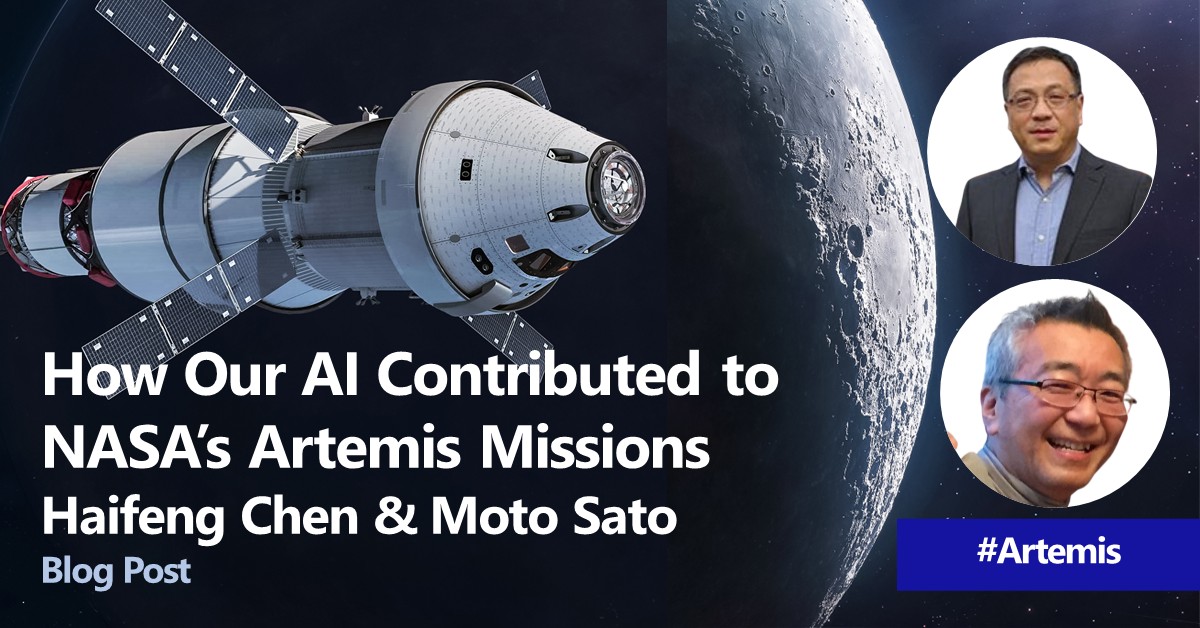 https://www.nec-labs.com/wp-content/uploads/2026/04/How-Our-AI-Contributed-to-NASAs-Artemis-Missions-Blog-Post.jpg
628
1200
NEC Labs America
https://www.nec-labs.com/wp-content/uploads/2025/08/NEC-Laboratories-America-Logo-Aug-2025-2.jpg
NEC Labs America2026-04-27 15:50:412026-07-24 22:30:40How Our AI Contributed to NASA’s Artemis Missions
https://www.nec-labs.com/wp-content/uploads/2026/04/How-Our-AI-Contributed-to-NASAs-Artemis-Missions-Blog-Post.jpg
628
1200
NEC Labs America
https://www.nec-labs.com/wp-content/uploads/2025/08/NEC-Laboratories-America-Logo-Aug-2025-2.jpg
NEC Labs America2026-04-27 15:50:412026-07-24 22:30:40How Our AI Contributed to NASA’s Artemis Missions