Meet the NEC Labs America Intern Helping to Make Autonomous Vehicles Safer and More Secure
September 8, 2023 | NEC Labs America | News | Tags: interns, internships, autonomous-vehicles
There’s much more to autonomous vehicle security than locking a car door.
This summer, Kaiyuan Zhang, a 3rd-year computer science Ph.D. student at Purdue University, joined NEC Labs America’s popular intern program to help advance research around autonomous vehicle security.
Each year, nearly 50 Ph.D. candidates join NEC Labs America’s innovative program, which centers on a collaborative environment where interns work directly with senior researchers and potential end-user customers. They focus on advancing cutting-edge technologies at the intersection of machine learning and science that will improve how the world can become more responsive to the needs of individuals. This 12-week program is run out of NEC Labs America’s research facilities in Princeton, NJ, and San Jose, California.

In addition to an immediate supervisor, each intern is assigned to a specific mentor. Kaiyuan’s mentor this summer is Francesco Pittaluga, a researcher in the Media Analytics Department at NEC Labs America focused on Computer Vision, Machine Learning, and Computational Photography Biography.
According to Pittaluga, “The intern program is not only an excellent opportunity for Ph.D. students to gain experience working in an industrial research lab, but it is also a huge asset for NEC Labs. Interns like Kaiyuan help introduce new insights and ways of thinking to our group. His background in security has been critical for developing an adversarial robustness framework for training and evaluating autonomous driving systems.”
Interns like Kaiyuan quickly become part of a project team applying innovative technology to industry-leading concepts.
“My research interests mainly focus on security and privacy in machine learning,” said Kaiyuan. “With this expertise, I’m able to provide unique perspectives in our collaborative work with other researchers on NEC Labs America’s Media and Analytics team working on improving the robustness of the autonomous driving system.”
This work extends well beyond the physical security of autonomous vehicles. As with most emerging technologies, securing the data generated, processed, and used by autonomous cars is complex. Kaiyuan is helping to develop safety-critical driving scenarios that improve the robustness and safety of autonomous driving systems.
Take, for example, the multitude of information captured by the cameras and sensors equipped on autonomous vehicles. They record a vast array of data from the surrounding environment, everything from other vehicles and traffic signals to hazard cones and pedestrians, even down to lane markings. Kaiyuan is actively involved in automatically generating safety-critical driving scenarios, which is crucial in enhancing the real-world safety of autonomous driving.

According to Kaiyuan, there have already been instances of security breaches by malicious entities that manipulate how a car is programmed to respond in specific situations. This includes programming a vehicle to exhibit unreasonable behavior upon detecting orange hazard cones. In another case, adversaries have strategically placed adversarial patterns on stop signs, compelling the vehicle to take an action contrary to stopping. These scenarios carry not just potential danger but could also escalate to lethal circumstances. Research conducted by Kaiyuan and his team is meticulously targeted toward enhancing the robustness of the autonomous driving system against such security threats.
Kaiyuan also hopes to return to the NEC Labs Intern program next summer to continue collaborating on cutting-edge technologies.
Please click here to learn about our NEC Labs America Intern Program.
Read Our News Posts
 https://www.nec-labs.com/wp-content/uploads/2024/10/Princeton-Interns-2024.jpg
628
1200
NEC Labs America
https://www.nec-labs.com/wp-content/uploads/2025/08/NEC-Laboratories-America-Logo-Aug-2025-2.jpg
NEC Labs America2024-10-01 13:32:522026-07-13 11:25:22Summer Interns 2024
https://www.nec-labs.com/wp-content/uploads/2024/10/Princeton-Interns-2024.jpg
628
1200
NEC Labs America
https://www.nec-labs.com/wp-content/uploads/2025/08/NEC-Laboratories-America-Logo-Aug-2025-2.jpg
NEC Labs America2024-10-01 13:32:522026-07-13 11:25:22Summer Interns 2024 https://www.nec-labs.com/wp-content/uploads/2024/08/Introducing-the-Trustworthy-Generative-AI-Project-Pioneering-the-Future-of-Compositional-Generation-and-Reasoning-Blog-Post.jpg
628
1200
NEC Labs America
https://www.nec-labs.com/wp-content/uploads/2025/08/NEC-Laboratories-America-Logo-Aug-2025-2.jpg
NEC Labs America2024-08-19 16:53:452026-06-26 13:06:10Introducing the Trustworthy Generative AI Project: Pioneering the Future of Compositional Generation and Reasoning
https://www.nec-labs.com/wp-content/uploads/2024/08/Introducing-the-Trustworthy-Generative-AI-Project-Pioneering-the-Future-of-Compositional-Generation-and-Reasoning-Blog-Post.jpg
628
1200
NEC Labs America
https://www.nec-labs.com/wp-content/uploads/2025/08/NEC-Laboratories-America-Logo-Aug-2025-2.jpg
NEC Labs America2024-08-19 16:53:452026-06-26 13:06:10Introducing the Trustworthy Generative AI Project: Pioneering the Future of Compositional Generation and Reasoning https://www.nec-labs.com/wp-content/uploads/2024/08/Introducing-Our-New-Project-Time-Series-Language-Model-for-Explainable-AI-Blog-Post.jpg
628
1200
NEC Labs America
https://www.nec-labs.com/wp-content/uploads/2025/08/NEC-Laboratories-America-Logo-Aug-2025-2.jpg
NEC Labs America2024-08-13 15:12:542026-06-26 10:52:12Introducing Our New Project: Time Series Language Model for Explainable AI
https://www.nec-labs.com/wp-content/uploads/2024/08/Introducing-Our-New-Project-Time-Series-Language-Model-for-Explainable-AI-Blog-Post.jpg
628
1200
NEC Labs America
https://www.nec-labs.com/wp-content/uploads/2025/08/NEC-Laboratories-America-Logo-Aug-2025-2.jpg
NEC Labs America2024-08-13 15:12:542026-06-26 10:52:12Introducing Our New Project: Time Series Language Model for Explainable AI https://www.nec-labs.com/wp-content/uploads/2024/08/Agentic-LLMs-for-AI-Orchestration-Project-Revolutionizing-Complex-Workflows-.jpg
628
1200
NEC Labs America
https://www.nec-labs.com/wp-content/uploads/2025/08/NEC-Laboratories-America-Logo-Aug-2025-2.jpg
NEC Labs America2024-08-08 17:48:302026-06-30 08:30:46Agentic LLMs for AI Orchestration Project: Revolutionizing Complex Workflows
https://www.nec-labs.com/wp-content/uploads/2024/08/Agentic-LLMs-for-AI-Orchestration-Project-Revolutionizing-Complex-Workflows-.jpg
628
1200
NEC Labs America
https://www.nec-labs.com/wp-content/uploads/2025/08/NEC-Laboratories-America-Logo-Aug-2025-2.jpg
NEC Labs America2024-08-08 17:48:302026-06-30 08:30:46Agentic LLMs for AI Orchestration Project: Revolutionizing Complex Workflows https://www.nec-labs.com/wp-content/uploads/2024/07/The-Evolution-of-Disciplines-From-Experimental-Roots-to-Theoretical-Frameworks-Blog-Post.jpg
628
1200
Christopher White
https://www.nec-labs.com/wp-content/uploads/2025/08/NEC-Laboratories-America-Logo-Aug-2025-2.jpg
Christopher White2024-07-29 11:10:202026-06-26 10:54:20The Evolution of Disciplines: From Experimental Roots to Theoretical Frameworks
https://www.nec-labs.com/wp-content/uploads/2024/07/The-Evolution-of-Disciplines-From-Experimental-Roots-to-Theoretical-Frameworks-Blog-Post.jpg
628
1200
Christopher White
https://www.nec-labs.com/wp-content/uploads/2025/08/NEC-Laboratories-America-Logo-Aug-2025-2.jpg
Christopher White2024-07-29 11:10:202026-06-26 10:54:20The Evolution of Disciplines: From Experimental Roots to Theoretical Frameworks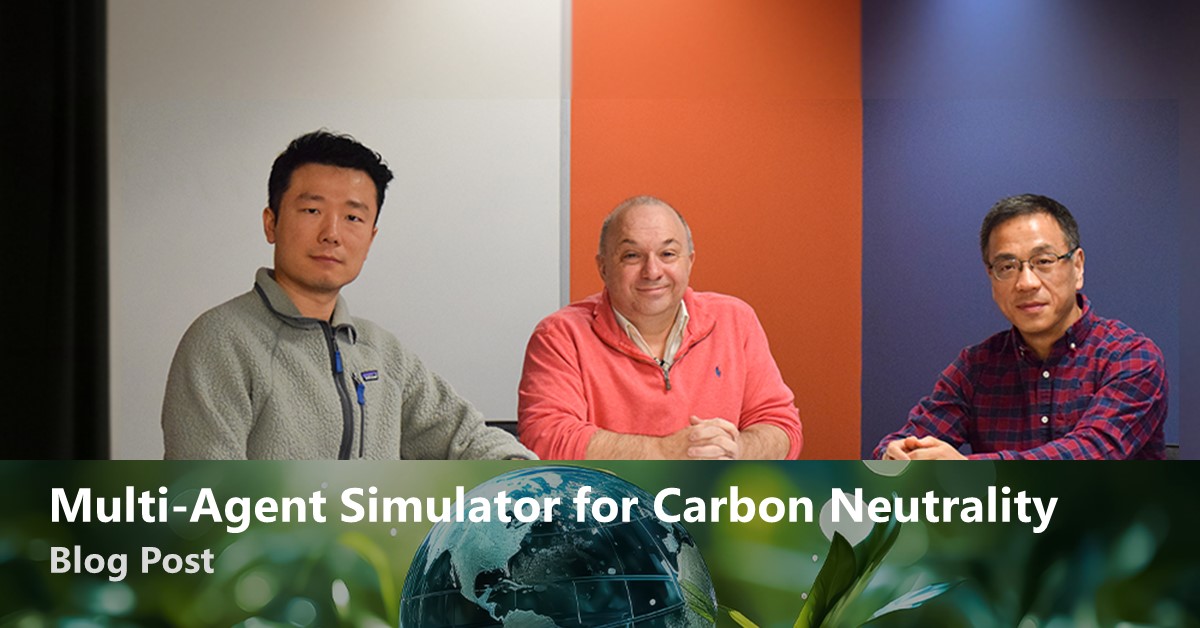 https://www.nec-labs.com/wp-content/uploads/2024/04/Multi-Agent-Simulator-for-Carbon-Neutrality.jpg
628
1200
NEC Labs America
https://www.nec-labs.com/wp-content/uploads/2025/08/NEC-Laboratories-America-Logo-Aug-2025-2.jpg
NEC Labs America2024-04-24 14:57:202026-06-26 13:08:12Multi-Agent Simulator for Carbon Neutrality: The Technology the World Has Been Waiting For
https://www.nec-labs.com/wp-content/uploads/2024/04/Multi-Agent-Simulator-for-Carbon-Neutrality.jpg
628
1200
NEC Labs America
https://www.nec-labs.com/wp-content/uploads/2025/08/NEC-Laboratories-America-Logo-Aug-2025-2.jpg
NEC Labs America2024-04-24 14:57:202026-06-26 13:08:12Multi-Agent Simulator for Carbon Neutrality: The Technology the World Has Been Waiting For