Message from Chris White, New Head of NEC Research & Development
This article, Message from the head of R&D, was originally published on the NEC Research & Development website and can be read in its entirety there.
Christopher White has been named Corporate Senior Vice President at NEC Corporation and Managing Director of its global Research & Development Division, leading worldwide research strategy while continuing as President of NEC Laboratories America.
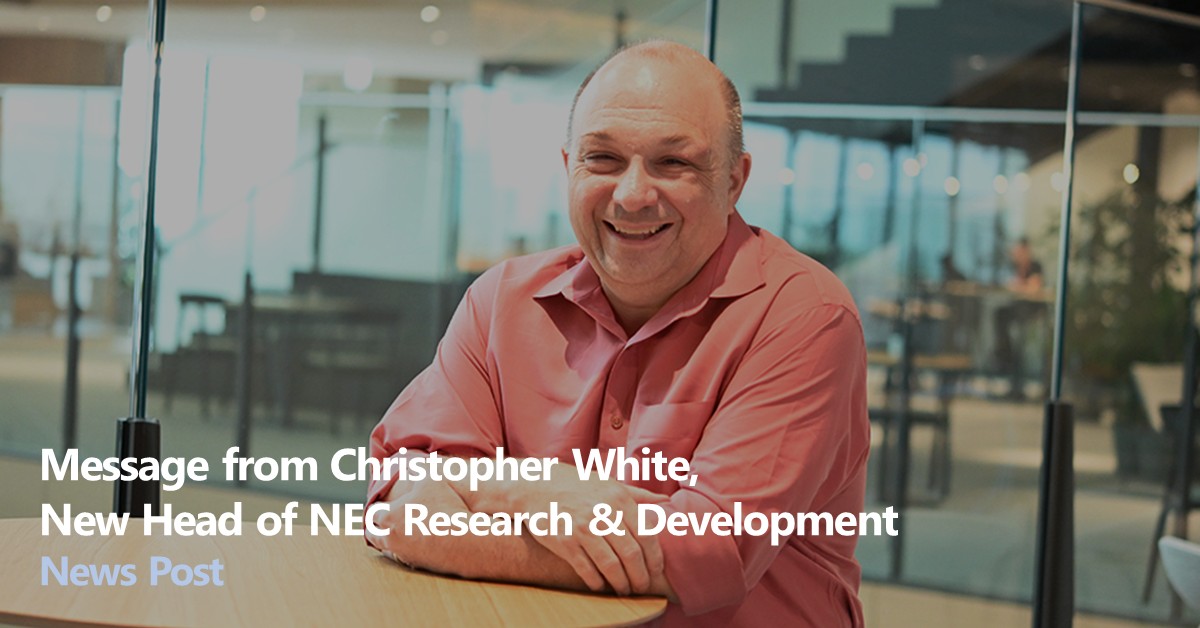
Christopher White
Corporate SVP, Research & Development Division Executive
I came to NEC from Bell Labs — the institution that gave the world the transistor. So when people ask me whether the industrial research lab still has a future, I take the question personally.
For decades, the answer from most companies was: probably not. Under pressure to justify every quarter’s expenditure, they cut their labs or abandoned them altogether, choosing instead to acquire technology from outside. The innovation ecosystem, in my view, became a little bit damaged.
But something has shifted, and I think we’re at an inflection point.
Reclaiming the Industrial Lab in the Age of AI
Redefining the Industrial Research Lab
AI is generating extraordinary levels of investment and expectation — and yet the productivity gains that should follow have been slower to materialize. We have selected for hype and investment and away from grounded, solid technological advances. So what’s missing? A return to the core industrial-lab mentality: matching the state of the art in technology to genuine customer needs. When you bring those two things together, you get a kind of magic.
That magic, however, does not happen every quarter — which is precisely why so many companies walked away from their labs in the first place. Walking back in is now the right move.
NEC kept that mentality alive throughout a period when many competitors let it atrophy. That continuity is now a strategic advantage.
Looking further ahead, I see an even more fundamental reason why industrial labs will grow in importance. As AI systems become more capable and companies automate more of their operations, what remains genuinely scarce is not the AI itself — it is the deep human expertise needed to understand problems, define solutions, and deploy technology in the real world. If you push the AI trend to its logical extreme, the businesses that succeed will be those that have cultivated both the autonomous capabilities AI enables and the distinctly human expertise it cannot touch. The firms that feed and grow that deep talent are the ones that will succeed.
The industrial lab is not a relic. It is the institution best suited to cultivate exactly what the AI era demands most.
Our R&D, Starting from Real Problems
If one principle defines NEC Labs’ research culture, it is this: begin with the customer’s challenge, not the technology. There’s a temptation, especially among researchers, to think it’s all about the technology. But even the most brilliant technical advance is unsellable if no customer needs it. The critical skill is learning to distinguish between a problem that is technically hard and a problem that is commercially valuable — and recognizing that they are not always the same thing.
My test is deliberately simple: start with a problem you could explain to a ten-year-old. The right starting points are human-level questions — how do we move people more efficiently, how do we use less energy to run the world, how do we respond to disasters faster? These are the problems that matter.
To focus further, I look for challenges driven by forces operating at global scale: population growth, environmental pressure, the accelerating frequency of climate-related events. Where a powerful underlying driver pushes a problem forward, the work will never run out of relevance. The research question isn’t whether we can stop the curve — it’s whether we can reduce its coefficients.
Diversity as a Source of Innovation
The method that makes this research culture work is diversity — not as a value statement, but as an engineering principle. NEC operates global labs across Asia including Japan, the US, and Europe, each bringing perspectives shaped by different contexts and problems. Within each lab, our teams span chemistry, physics, mathematics, computer science, and electrical engineering. The sun never sets on NEC’s labs — a logistical challenge, but also a profound advantage in breadth of knowledge and perspective.
The rationale runs deeper than headcount. I often say: you never want to send an electrical engineer to solve an electrical engineering problem. The point is not to exclude specialists, but to insist that diverse minds — a mathematician, a biologist, a chemist — will often find solutions the domain expert would have dismissed as wrong or simply different. And occasionally, that difference is a large, disruptive change.
To read more, please visit: Message from the head of R&D
Read About Our Latest News
https://www.nec-labs.com/wp-content/uploads/2026/10/Message-from-Christopher-White.jpg
628
1200
NEC Labs America
https://www.nec-labs.com/wp-content/uploads/2025/08/NEC-Laboratories-America-Logo-Aug-2025-2.jpg
NEC Labs America2026-10-05 16:55:202026-10-05 17:19:59Message from Chris White, New Head of NEC Research & Development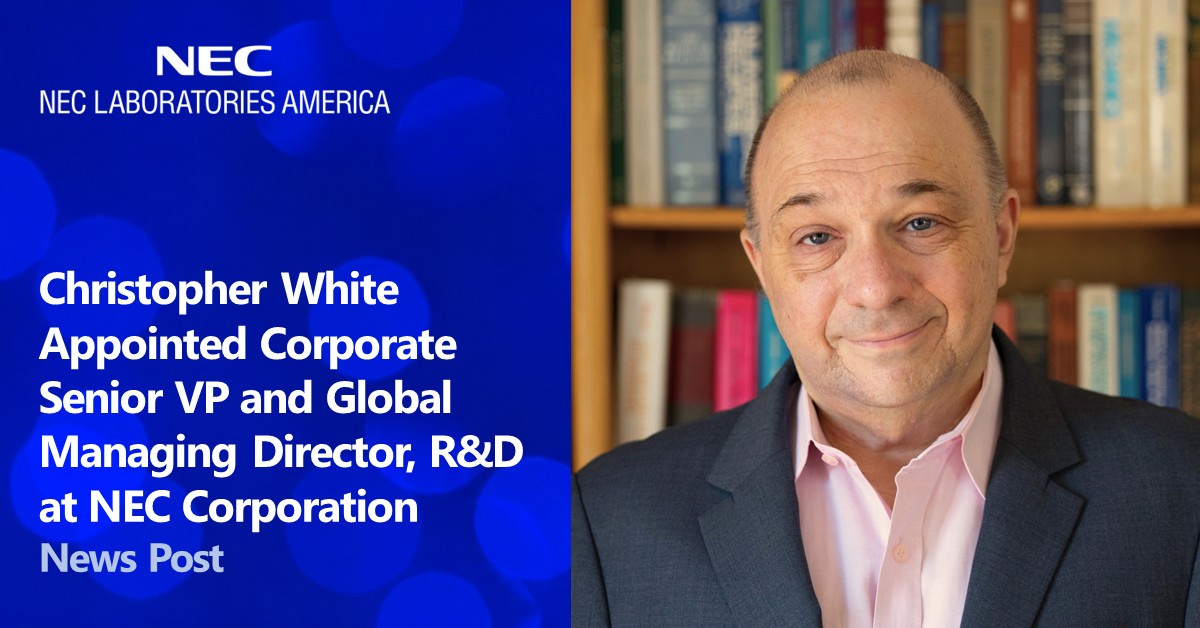 https://www.nec-labs.com/wp-content/uploads/2026/09/Chris-White-Promotion-SMM.jpg
628
1200
NEC Labs America
https://www.nec-labs.com/wp-content/uploads/2025/08/NEC-Laboratories-America-Logo-Aug-2025-2.jpg
NEC Labs America2026-09-23 19:54:142026-09-23 20:10:49Christopher White Appointed Corporate Senior Vice President and Global Managing Director, R&D at NEC Corporation
https://www.nec-labs.com/wp-content/uploads/2026/09/Chris-White-Promotion-SMM.jpg
628
1200
NEC Labs America
https://www.nec-labs.com/wp-content/uploads/2025/08/NEC-Laboratories-America-Logo-Aug-2025-2.jpg
NEC Labs America2026-09-23 19:54:142026-09-23 20:10:49Christopher White Appointed Corporate Senior Vice President and Global Managing Director, R&D at NEC Corporation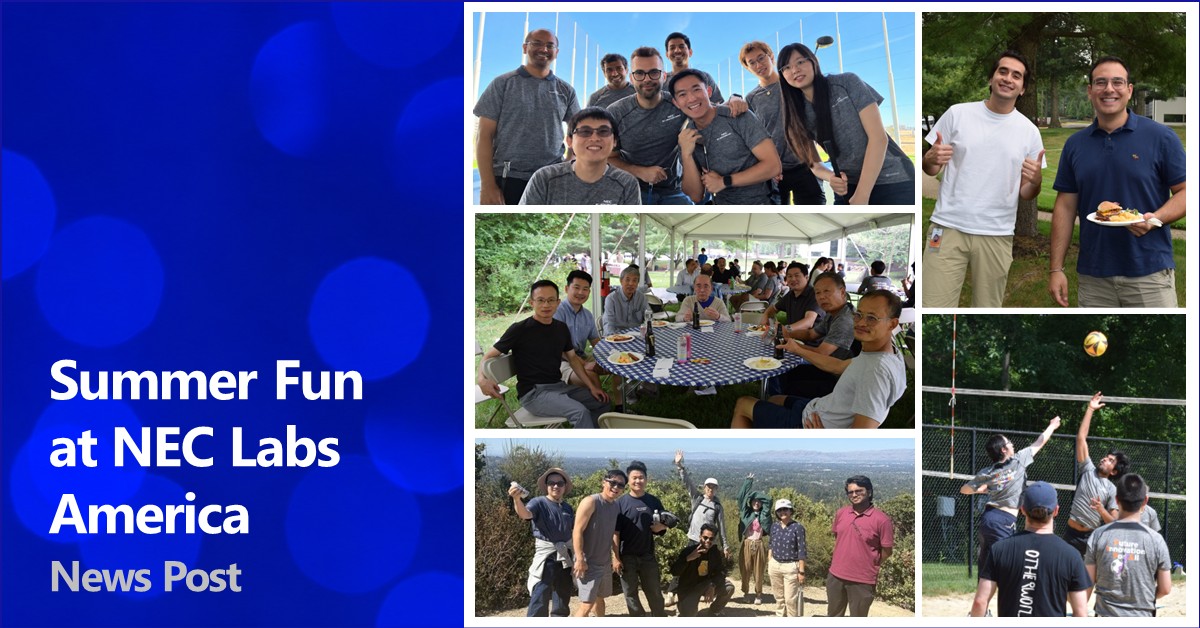 https://www.nec-labs.com/wp-content/uploads/2026/09/NEC-Labs-America-Summer-Fun.jpg
628
1200
NEC Labs America
https://www.nec-labs.com/wp-content/uploads/2025/08/NEC-Laboratories-America-Logo-Aug-2025-2.jpg
NEC Labs America2026-09-22 16:50:282026-10-01 12:18:48Summer Fun at NEC Labs America
https://www.nec-labs.com/wp-content/uploads/2026/09/NEC-Labs-America-Summer-Fun.jpg
628
1200
NEC Labs America
https://www.nec-labs.com/wp-content/uploads/2025/08/NEC-Laboratories-America-Logo-Aug-2025-2.jpg
NEC Labs America2026-09-22 16:50:282026-10-01 12:18:48Summer Fun at NEC Labs America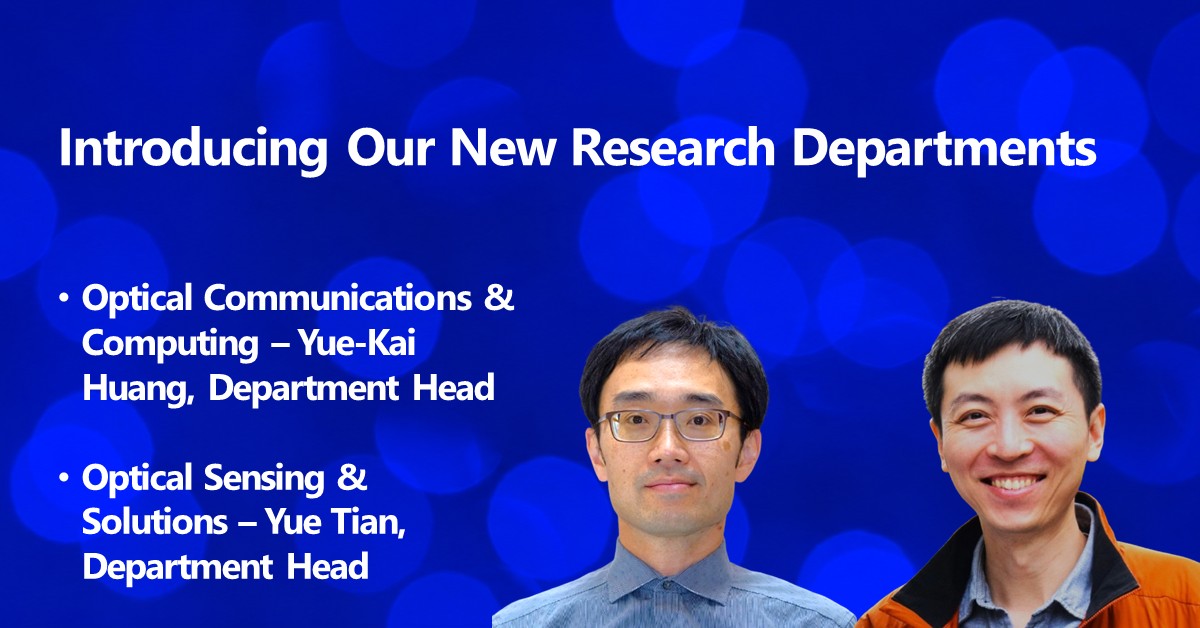 https://www.nec-labs.com/wp-content/uploads/2026/09/OCC-OSS-Blog-Post.jpg
628
1200
NEC Labs America
https://www.nec-labs.com/wp-content/uploads/2025/08/NEC-Laboratories-America-Logo-Aug-2025-2.jpg
NEC Labs America2026-09-01 07:00:042026-09-18 09:42:38NEC Laboratories America Forms Two New Departments: Optical Communications & Computing and Optical Sensing & Solutions
https://www.nec-labs.com/wp-content/uploads/2026/09/OCC-OSS-Blog-Post.jpg
628
1200
NEC Labs America
https://www.nec-labs.com/wp-content/uploads/2025/08/NEC-Laboratories-America-Logo-Aug-2025-2.jpg
NEC Labs America2026-09-01 07:00:042026-09-18 09:42:38NEC Laboratories America Forms Two New Departments: Optical Communications & Computing and Optical Sensing & Solutions