NEC Provides AI-Based Traffic Monitoring System with Fiber-Optic Sensing Technology for NEXCO CENTRAL
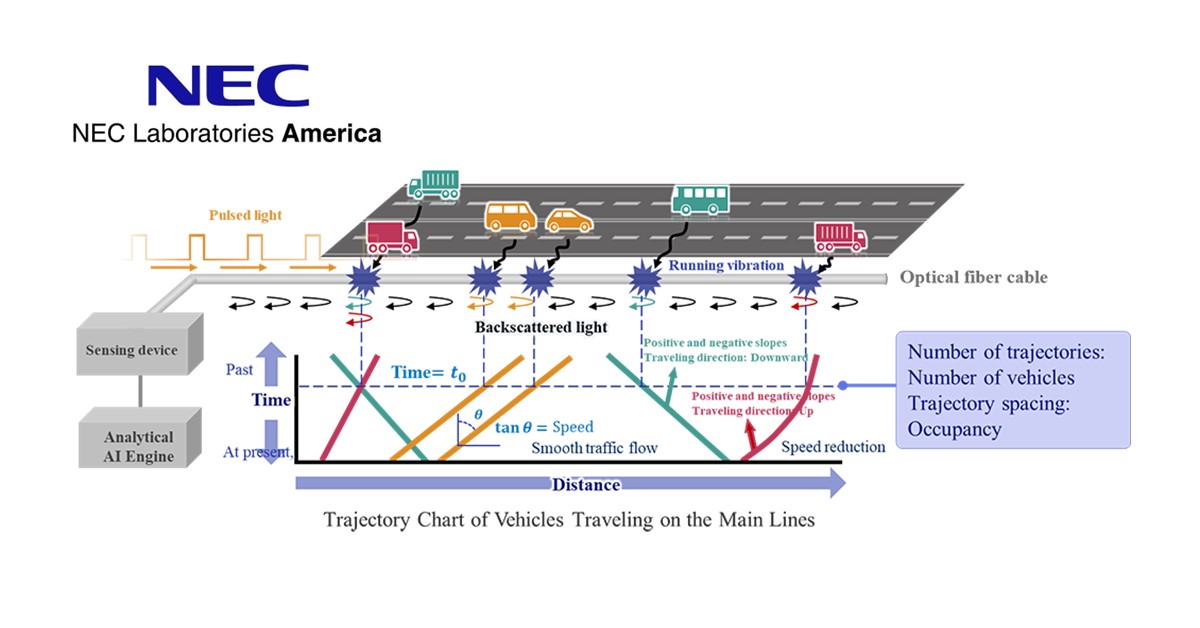
The system includes sensing devices attached to one end of an optical fiber and an analytical AI engine, developed by NEC Laboratories America, that enables continuous monitoring of traffic flow by leveraging existing optical fiber infrastructure laid along highways. NEXCO is the first expressway operator in Japan to continuously monitor traffic conditions using these kinds of technologies.
Highway operators need to monitor traffic flow and detect incidents on expressways to support traffic control. Most sensors used today for this purpose are point sensors or cameras with a limited field of view. A large number of point sensors and/or cameras are needed to perform continuous measurements over a wide area, posing challenges for installation and maintenance and leading to higher system costs.
NEC has a successful track record of conducting joint demonstration projects using optical fiber sensing technology to detect cracks in poles and monitor road traffic (*). Based on these experiences and knowledge, NEC is providing equipment to convert optical fiber cables to sensors. NEC has now developed an analytical AI engine that continuously determines traffic conditions based on the signals from vehicle vibrations. The system can visualize dense traffic conditions with high accuracy. The AI engine converts vibration data into continuous vehicle trajectories along entirely monitored roads. The trajectories can then be used to estimate average speeds at 1-kilometer intervals. The system can record a digital snapshot of traffic conditions across a wide area, enhancing road controls through continuous monitoring of entire roadways and enabling early detection of accidents and congestion.
The newly developed analytical AI engine can extract vehicle trajectories from vibration signals in the presence of multiple environmental noises. Vehicle trajectories are extracted iteratively. First, the clearest vibration signals are used to extract the vehicle trajectory, and then the corresponding signals are masked. Second, the remaining vibration signals are enhanced. The system repeats these two steps until all vehicle trajectories have been extracted.
The AI engine has been trained on synthetic data, including realistic environmental noise, enabling robust extraction of vehicle trajectories even in noisy environments. Then, the system can monitor high-density traffic flow over a wide area with high accuracy.
Going forward, NEC will continue to support the digital transformation (DX) of road operators as part of the “NEC Safer Cities” initiative to contribute to creating safer and more secure cities.
For More Information
Optical Fiber Sensing
Read More Blog Posts
 https://www.nec-labs.com/wp-content/uploads/2025/07/National-Intern-Day-2025.jpg
628
1200
NEC Labs America
https://www.nec-labs.com/wp-content/uploads/2025/08/NEC-Laboratories-America-Logo-Aug-2025-2.jpg
NEC Labs America2025-07-24 10:19:502026-06-24 19:41:13National Intern Day at NEC Laboratories America: Celebrating the Next Generation of Innovators
https://www.nec-labs.com/wp-content/uploads/2025/07/National-Intern-Day-2025.jpg
628
1200
NEC Labs America
https://www.nec-labs.com/wp-content/uploads/2025/08/NEC-Laboratories-America-Logo-Aug-2025-2.jpg
NEC Labs America2025-07-24 10:19:502026-06-24 19:41:13National Intern Day at NEC Laboratories America: Celebrating the Next Generation of Innovators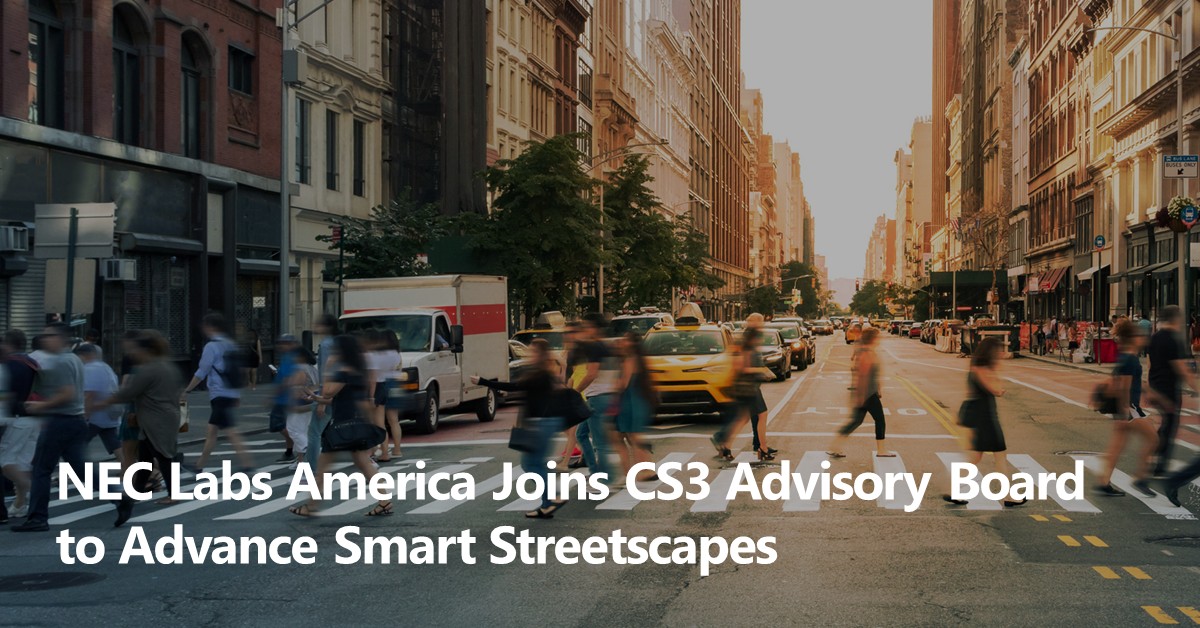 https://www.nec-labs.com/wp-content/uploads/2025/05/NEC-Labs-America-Joins-CS3-Advisory-Board-to-Advance-Smart-Streetscapes.jpg
628
1200
NEC Labs America
https://www.nec-labs.com/wp-content/uploads/2025/08/NEC-Laboratories-America-Logo-Aug-2025-2.jpg
NEC Labs America2025-05-19 10:42:522026-06-26 09:43:19NEC Labs America Joins CS3 Advisory Board to Advance Smart Streetscapes
https://www.nec-labs.com/wp-content/uploads/2025/05/NEC-Labs-America-Joins-CS3-Advisory-Board-to-Advance-Smart-Streetscapes.jpg
628
1200
NEC Labs America
https://www.nec-labs.com/wp-content/uploads/2025/08/NEC-Laboratories-America-Logo-Aug-2025-2.jpg
NEC Labs America2025-05-19 10:42:522026-06-26 09:43:19NEC Labs America Joins CS3 Advisory Board to Advance Smart Streetscapes https://www.nec-labs.com/wp-content/uploads/2025/04/Graph-Neural-Networks-Explained-Our-Role-in-the-Future-of-AI.jpg
628
1200
NEC Labs America
https://www.nec-labs.com/wp-content/uploads/2025/08/NEC-Laboratories-America-Logo-Aug-2025-2.jpg
NEC Labs America2025-04-09 16:43:182026-06-26 10:25:40Graph Neural Networks, Explained: Our Role in the Future of AI
https://www.nec-labs.com/wp-content/uploads/2025/04/Graph-Neural-Networks-Explained-Our-Role-in-the-Future-of-AI.jpg
628
1200
NEC Labs America
https://www.nec-labs.com/wp-content/uploads/2025/08/NEC-Laboratories-America-Logo-Aug-2025-2.jpg
NEC Labs America2025-04-09 16:43:182026-06-26 10:25:40Graph Neural Networks, Explained: Our Role in the Future of AI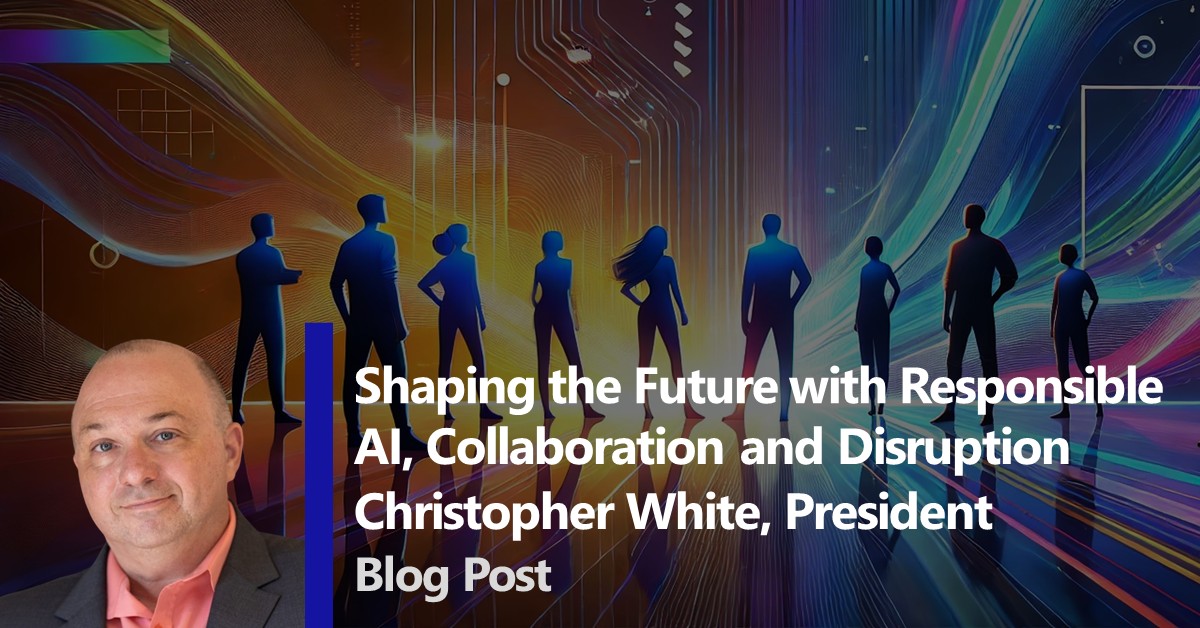 https://www.nec-labs.com/wp-content/uploads/2021/04/Shaping-the-Future-with-Responsible-AI-Collaboration-Disruption-Chris-White-2.jpg
628
1200
Christopher White
https://www.nec-labs.com/wp-content/uploads/2025/08/NEC-Laboratories-America-Logo-Aug-2025-2.jpg
Christopher White2025-04-07 15:15:562026-06-26 11:11:28Shaping the Future with Responsible AI, Collaboration, and Disruption
https://www.nec-labs.com/wp-content/uploads/2021/04/Shaping-the-Future-with-Responsible-AI-Collaboration-Disruption-Chris-White-2.jpg
628
1200
Christopher White
https://www.nec-labs.com/wp-content/uploads/2025/08/NEC-Laboratories-America-Logo-Aug-2025-2.jpg
Christopher White2025-04-07 15:15:562026-06-26 11:11:28Shaping the Future with Responsible AI, Collaboration, and Disruption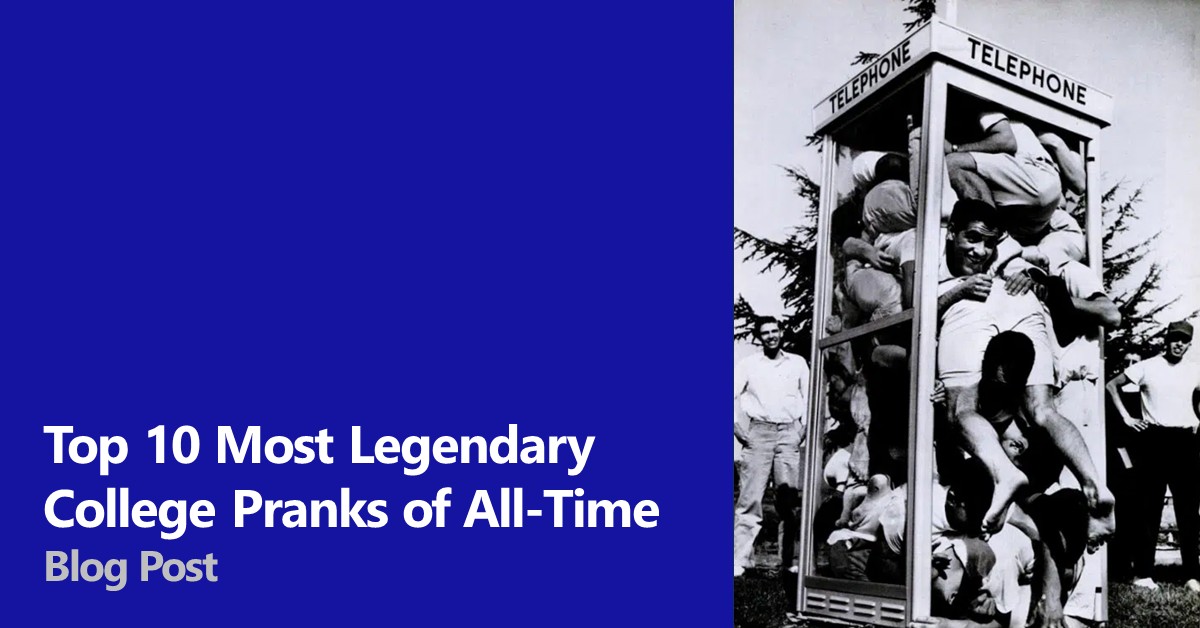 https://www.nec-labs.com/wp-content/uploads/2025/03/College-Pranks.jpg
628
1200
NEC Labs America
https://www.nec-labs.com/wp-content/uploads/2025/08/NEC-Laboratories-America-Logo-Aug-2025-2.jpg
NEC Labs America2025-04-01 03:00:232026-06-26 10:31:08Top 10 Most Legendary College Pranks of All-Time for April Fools’ Day
https://www.nec-labs.com/wp-content/uploads/2025/03/College-Pranks.jpg
628
1200
NEC Labs America
https://www.nec-labs.com/wp-content/uploads/2025/08/NEC-Laboratories-America-Logo-Aug-2025-2.jpg
NEC Labs America2025-04-01 03:00:232026-06-26 10:31:08Top 10 Most Legendary College Pranks of All-Time for April Fools’ Day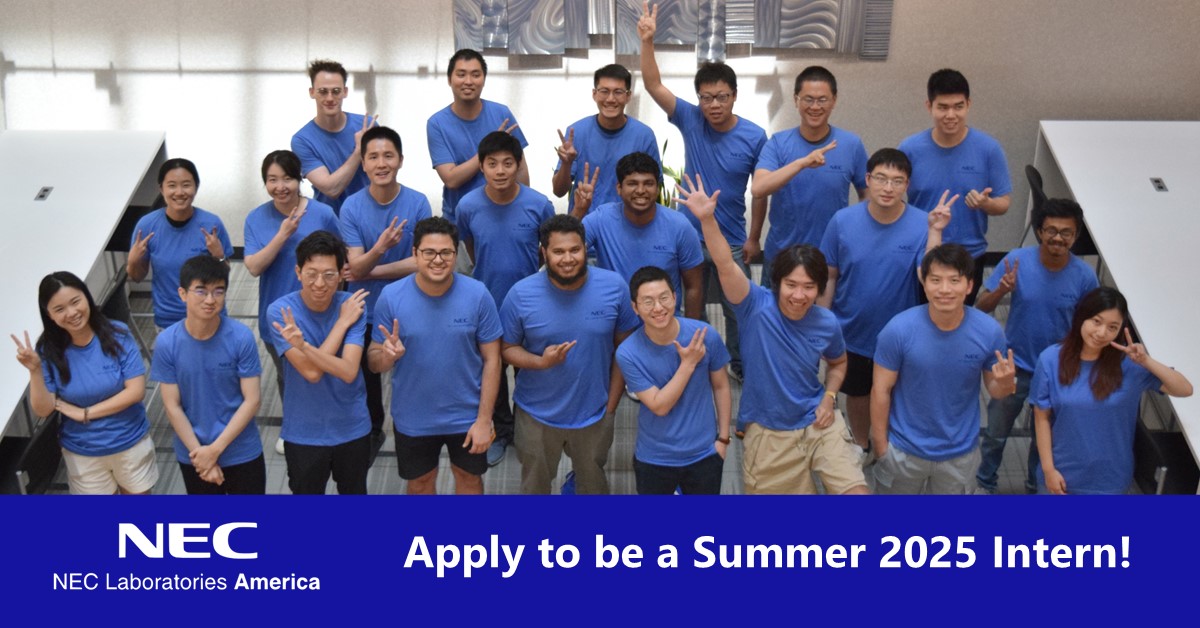 https://www.nec-labs.com/wp-content/uploads/2024/11/Summer-2025-Intern-SMM-1.jpg
628
1200
NEC Labs America
https://www.nec-labs.com/wp-content/uploads/2025/08/NEC-Laboratories-America-Logo-Aug-2025-2.jpg
NEC Labs America2024-11-21 14:27:162026-06-26 10:33:52Apply for a Summer 2025 Internship
https://www.nec-labs.com/wp-content/uploads/2024/11/Summer-2025-Intern-SMM-1.jpg
628
1200
NEC Labs America
https://www.nec-labs.com/wp-content/uploads/2025/08/NEC-Laboratories-America-Logo-Aug-2025-2.jpg
NEC Labs America2024-11-21 14:27:162026-06-26 10:33:52Apply for a Summer 2025 Internship